For commercial beekeepers, queen quality dictates colony productivity, disease resistance, and honey yields. Research shows that larval age—specifically the first 24 hours post-hatching—holds the key to rearing vigorous queens. This guide breaks down the biological imperatives of young larvae and provides field-tested protocols to elevate your queen-rearing outcomes.
The Science Behind the 24-Hour Rule
Hormonal Milestones in Early Larval Development
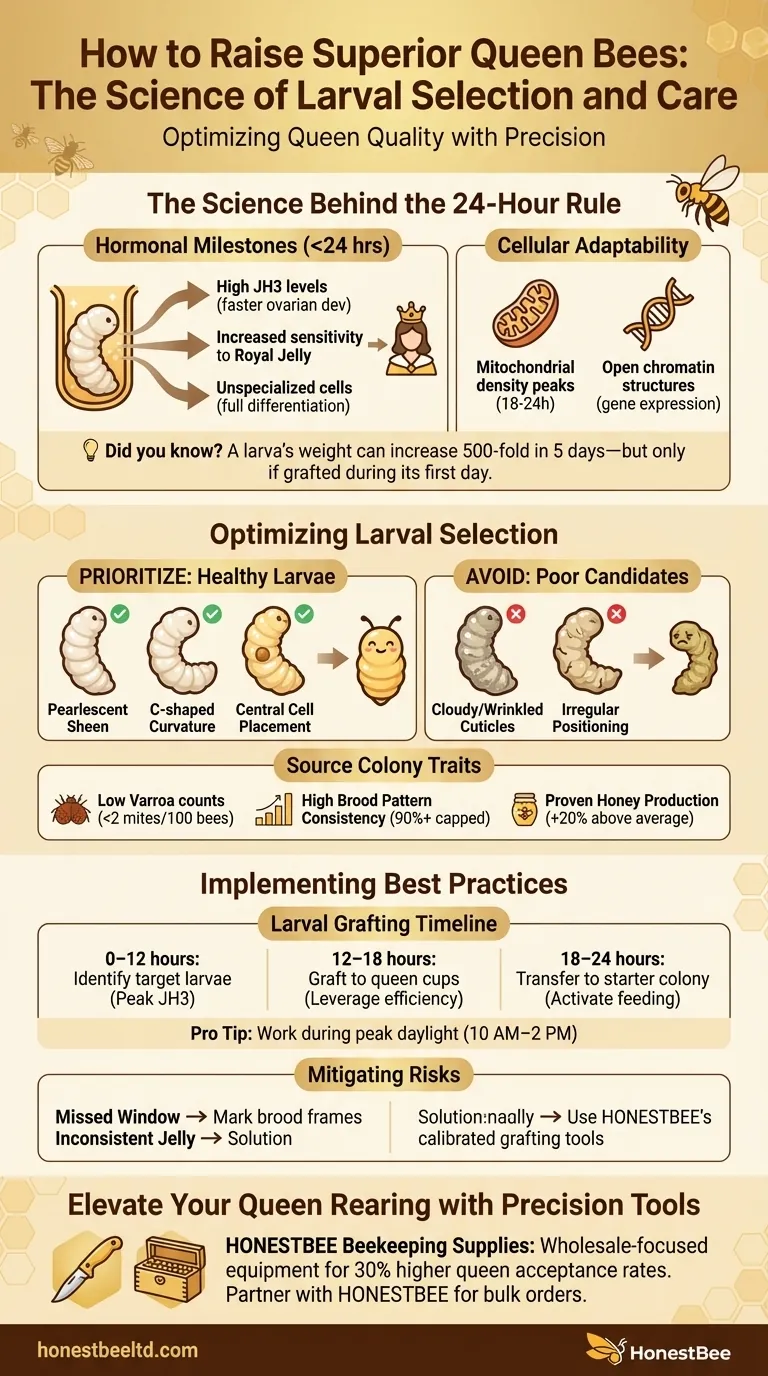
Within hours of hatching, worker bee larvae undergo critical hormonal shifts that determine their developmental trajectory. Studies indicate that larvae younger than 24 hours exhibit:
- Higher juvenile hormone (JH3) levels, triggering faster ovarian development
- Increased sensitivity to royal jelly proteins, which activate queen-specific genes
- Unspecialized cell structures, allowing for full differentiation into reproductive organs
This narrow window is biologically irreplaceable. Larvae grafted after 48 hours often develop worker-like traits, even when fed royal jelly.
Cellular Adaptability and Royal Jelly Utilization
Young larvae efficiently convert royal jelly into body mass and reproductive tissue due to:
- Mitochondrial density: Energy-producing cell components peak at 18–24 hours
- Open chromatin structures: DNA regions remain accessible for queen-specific gene expression
Did you know? A larva’s weight can increase 500-fold in 5 days—but only if grafted during its first day.
Optimizing Larval Selection for Queen Quality
Visual and Behavioral Markers of Healthy Larvae
Prioritize larvae with:
- Pearlescent sheen: Indicates optimal hydration and nutrient absorption
- C-shaped curvature: Signals active feeding posture
- Central cell placement: Brood nest center larvae receive more nurse bee attention
Avoid larvae with:
☐ Cloudy or wrinkled cuticles (dehydration)
☐ Irregular positioning (possible disease exposure)
Colony Traits Linked to Genetic Superiority
Source larvae from colonies demonstrating:
- Low Varroa mite counts (below 2 mites per 100 bees)
- High brood pattern consistency (90%+ capped cell rate)
- Proven honey production (at least 20% above apiary averages)
These traits correlate with disease-resistant, high-yield genetics.
Implementing Best Practices in Apiaries
Step-by-Step Larval Grafting Timeline
| Time Since Hatching | Action | Purpose |
|---|---|---|
| 0–12 hours | Identify target larvae | Capture peak JH3 levels |
| 12–18 hours | Graft to queen cups | Leverage mitochondrial efficiency |
| 18–24 hours | Transfer to starter colony | Activate nurse bee feeding response |
Pro Tip: Work during peak daylight (10 AM–2 PM) when nurse bees are most active.
Mitigating Risks of Overlooked Age Markers
Common pitfalls and solutions:
-
Problem: Missed grafting window → queens with undersized ovaries
Solution: Mark brood frames with hatching dates using non-toxic pens -
Problem: Inconsistent royal jelly distribution → stunted growth
Solution: Use HONESTBEE’s calibrated grafting tools for even cell dosing
Elevate Your Queen Rearing with Precision Tools
Commercial apiaries rely on HONESTBEE’s beekeeping supplies to standardize larval selection and grafting. Our wholesale-focused equipment—like ergonomic grafting knives and temperature-controlled queen banks—helps distributors and large-scale beekeepers achieve 30% higher queen acceptance rates.
Ready to upgrade your operation? Partner with HONESTBEE for bulk orders of research-backed queen-rearing systems.
Visual Guide
Related Products
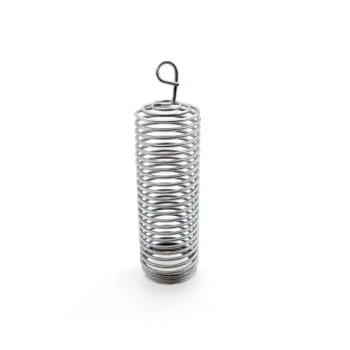
- Durable Galvanized Steel Spring Queen Bee Cage
- Professional Queen Bee Introduction and Transport Cage
- Professional Multi-Functional Queen Bee Cage
- Portable Queen Bee Incubator with 12V Car Adapter for Safe Transport
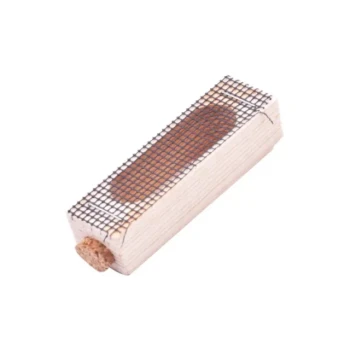
- Classic Wooden and Mesh California Queen Cage
Related Articles
- An Engineered Truce: The Psychology of the Queen Cage
- Maximizing Queen Cage Value: A Beekeeper's Guide to Safe Reuse & Long-Term Savings
- A Timed Release of Power: The Social Engineering of the Queen Cage
- The Queen Cage's Ledger: A Systems Approach to Apiary Biosecurity
- The Diplomatic Interface: Why Queen Cage Maintenance is a Study in Risk Management