The Hive as a Fortress: Managing the Gate
A honey bee colony is a fortress of life, a superorganism operating with a singular focus on survival and growth. Like any fortress, it has a gate—the hive entrance. This opening is both its connection to the world and its single greatest vulnerability.
Everything the colony needs comes through this entrance: nectar, pollen, water. And every threat—robbing bees, wasps, mice—sees it as an opportunity.
The decision to use an entrance reducer is therefore not about simply shrinking a hole. It's a strategic choice about managing this vulnerability. It’s an admission that a colony's ability to defend itself is not constant; it ebbs and flows with the seasons and its own internal strength.
The Case for a Chokepoint: A Calculated Defense
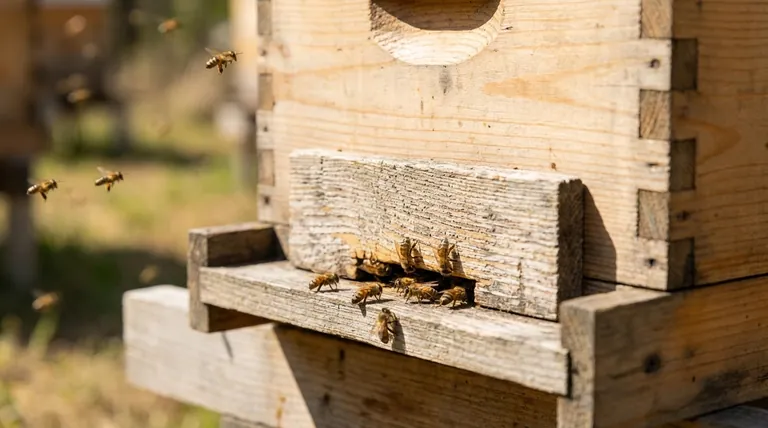
A simple wooden block, the entrance reducer, becomes a powerful tool when you understand the psychological and energetic pressures on a colony. Its primary function is to create a defensible chokepoint.
Defending the Treasury
For a small or newly established colony, the world is a dangerous place. Stronger neighboring hives can quickly overpower their few guard bees and initiate a robbing frenzy, draining their precious food stores in hours. A reducer shrinks the battlefield to a size the colony’s small guard force can manage, effectively turning a wide-open field into a narrow pass.
The Economics of Energy
Every action a bee takes consumes energy. By restricting the entrance, a reducer helps the colony manage its internal climate more efficiently. It reduces drafts in the winter, conserving heat. It helps contain the cool, fanned air in the summer.
This conserved energy is a direct investment in the colony's future. Energy not spent on defense or thermoregulation is energy spent on raising brood and foraging for nectar.
A Physical Barrier Against Invasion
In late fall and winter, as the bees form their tight, life-sustaining cluster, their ability to patrol the hive diminishes. The reducer becomes a simple, physical wall. Its small opening is an impassable barrier for mice and other pests seeking the warmth and food stored within the hive.
When Protection Becomes a Prison
The same tool that protects a weak colony can cripple a strong one. A "set it and forget it" approach to hive management is a failure to recognize that the colony is a dynamic, living system.
The Cost of Congestion
During a heavy nectar flow, a strong colony is a hub of frantic activity. Thousands of foragers are a constant stream of arrivals and departures. A small entrance creates a bottleneck—a traffic jam.
This congestion directly impacts the hive's productivity. Foragers waiting to get in or out aren't collecting resources. The hive's potential to produce honey is capped not by the bees' work ethic, but by logistical failure at the front door.
The Risk of Overheating
In the heat of summer, a populous colony is a massive heat engine. Bees work tirelessly to ventilate the hive, fanning their wings to circulate air and dehydrate nectar into honey.
A restrictive entrance reducer works directly against their efforts. It traps hot, humid air, increasing stress on the colony and sometimes forcing a large portion of the bees to "beard" on the outside of the hive just to cool down.
A Beekeeper's Algorithm: A Dynamic Framework
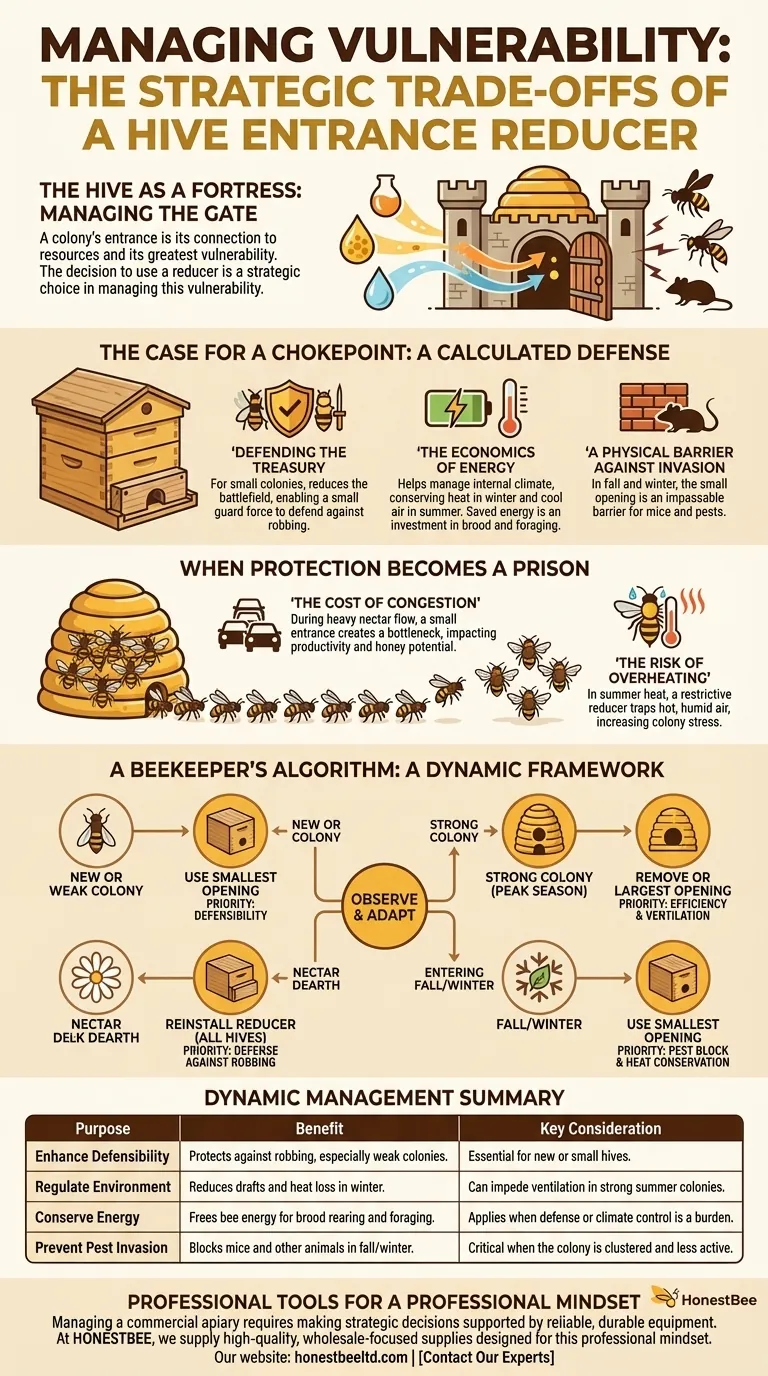
The correct use of an entrance reducer is a test of the beekeeper's judgment. It requires observation and adaptation. Your decision should be based on colony strength, season, and local pressures.
- For a new or weak colony: Use the smallest opening. Prioritize defensibility above all else to allow the population to grow.
- For a strong colony in peak season: Remove the reducer entirely or use its largest opening. Prioritize foraging efficiency and ventilation.
- During a nectar dearth: Reinstall reducers on all hives. Robbing pressure increases dramatically when natural resources become scarce.
- Entering fall and winter: Use the smallest opening. Protect against last-minute robbing, block pests like mice, and help the colony conserve heat for the cold months ahead.
This dynamic management is summarized in the table below:
| Purpose | Benefit | Key Consideration |
|---|---|---|
| Enhance Defensibility | Protects against robbing bees, especially weak colonies. | Essential for new or small hives. |
| Regulate Environment | Reduces drafts and heat loss in winter. | Can impede ventilation in strong summer colonies. |
| Conserve Energy | Frees bee energy for brood rearing and foraging. | Applies when defense or climate control is a burden. |
| Prevent Pest Invasion | Blocks mice and other animals in fall and winter. | Critical when the colony is clustered and less active. |
Professional Tools for a Professional Mindset
Managing a commercial apiary is about making thousands of these small, strategic decisions that have a large, cumulative impact on colony health and productivity. This level of dynamic management requires reliable, durable equipment that performs consistently season after season.
At HONESTBEE, we supply commercial apiaries and beekeeping equipment distributors with the high-quality, wholesale-focused supplies designed for this professional mindset. We understand that a simple tool like an entrance reducer is part of a complex operational strategy. To see how our equipment can support your apiary's success, Contact Our Experts.
Visual Guide
Related Products
- Steel Round Disc Entrance Reducer for Flexzion Bee Hive Nuc Box Gate
- Beehive Entrance Reducer Guardian Metal Hive Entrance for Bees
- Professional Hive Front Entrance Bee Feeder
- Multi-Functional Rotary Hive Entrance Disc for Beekeeping
- HONESTBEE Entrance Bee Feeder Efficient Hive Front Liquid Feeding Solution for Beekeeping
Related Articles
- Strategic Entrance Reducer Management: From Hive Defense to Colony Growth Optimization
- Mastering Entrance Reducers: Seasonal Strategies for Hive Defense and Health
- A Question of Access: Why the Hive Entrance is a Beekeeper's Most Critical Control Point
- Defensible Space: How a Simple Tool Reduces a Bee Colony's Collective Stress
- More Than a Block of Wood: How the Hive Entrance Reducer Governs a Colony's Fate