For beekeepers, the entrance disc isn't just a doorway—it's a vital control panel for hive health. A fully open setting can transform colony dynamics, but only when aligned with seasonal needs and operational goals. Let’s explore how to harness this tool strategically.
The Role of Entrance Discs in Hive Management
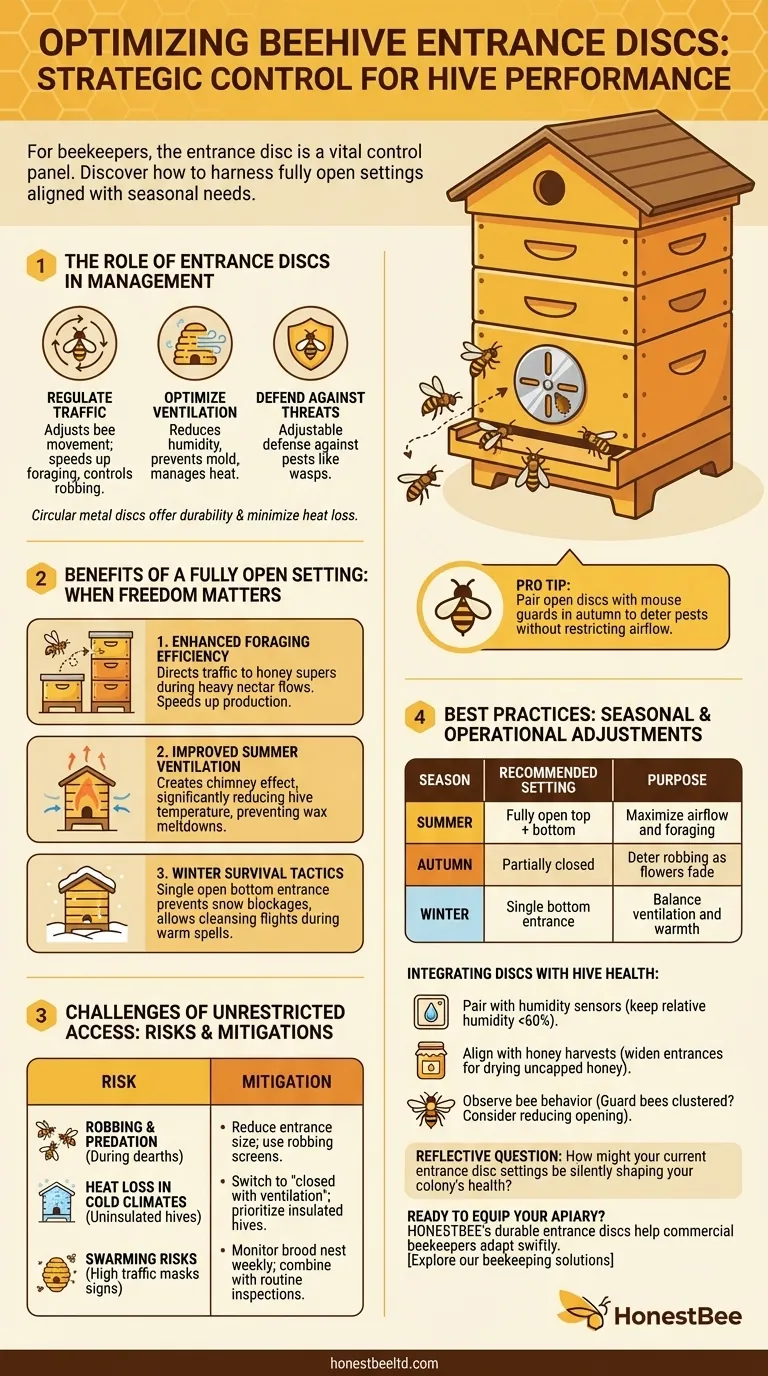
Entrance discs serve three critical functions: regulating bee traffic, optimizing ventilation, and defending against threats. Unlike fixed entrances, adjustable discs let beekeepers respond to changing conditions—whether it’s a summer nectar flow or winter’s chill.
Key considerations for open settings:
- Bee movement: Unrestricted access speeds up foraging but may increase robbing risks.
- Ventilation: Open discs reduce humidity, crucial for preventing mold in honey supers.
- Security: Larger openings require stronger colony defenses against pests like wasps.
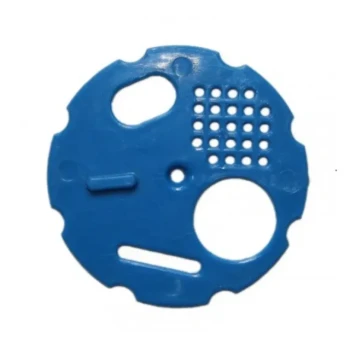
Research shows that circular metal discs (like those from HONESTBEE) offer durability while minimizing heat loss—a balance wooden blocks can’t match.
Benefits of a Fully Open Setting: When Freedom Matters Most
1. Enhanced Foraging Efficiency
Open entrances let bees bypass the brood nest, directing traffic straight to honey supers. This is especially valuable during heavy nectar flows, where every second counts.
2. Improved Summer Ventilation
A top entrance paired with an open disc creates a chimney effect, pulling hot air out. Studies note this can reduce hive temperatures by several degrees—critical for preventing wax meltdowns.
3. Winter Survival Tactics
Contrary to intuition, some well-insulated hives benefit from a single open bottom entrance in winter. It prevents snow blockages while allowing cleansing flights during brief warm spells.
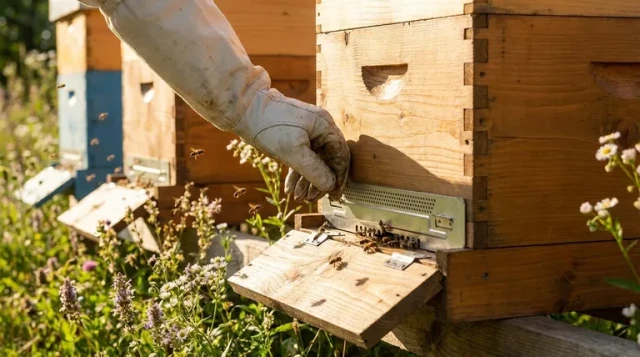
Pro Tip: Pair open discs with mouse guards in autumn to deter pests without restricting airflow.
Challenges of Unrestricted Access: Risks and Mitigations
Robbing and Predation
During nectar dearths, open entrances invite rival colonies to steal honey. Mitigation:
- Reduce entrance size temporarily
- Use robbing screens during lean periods
Heat Loss in Cold Climates
Uninsulated hives with fully open discs struggle to retain warmth. Solution:
- Switch to "closed with ventilation" settings in winter
- Prioritize insulated hives for northern apiaries
Swarming Risks
High traffic can mask early swarming signs. Prevention:
- Monitor brood nest congestion weekly
- Combine disc adjustments with routine hive inspections
Best Practices for Seasonal and Operational Adjustments
Summer vs. Winter Configurations
| Season | Recommended Setting | Purpose |
|---|---|---|
| Summer | Fully open top + bottom | Maximize airflow and foraging |
| Autumn | Partially closed | Deter robbing as flowers fade |
| Winter | Single bottom entrance | Balance ventilation and warmth |
Integrating Discs with Hive Health Monitoring
- Pair with humidity sensors: Open discs work best when relative humidity stays below 60%.
- Align with honey harvests: Temporarily widen entrances to speed up drying uncapped honey.
- Observe bee behavior: Guard bees clustered at the entrance? Consider reducing the opening.
Conclusion: Precision Over Presets
There’s no universal "best" setting—only the right configuration for your hive’s moment. By tuning entrance discs to local conditions and colony behavior, beekeepers unlock productivity without compromising security.
Ready to equip your apiary? HONESTBEE’s durable entrance discs help commercial beekeepers and distributors adapt swiftly, season after season. Explore our beekeeping solutions—because every hive deserves a tailored approach.
Reflective Question: How might your current entrance disc settings be silently shaping your colony’s health?
Visual Guide
Related Products
- Beehive Entrance Discs Plastic Bee Entrance Disc for Bee Hives
- Multi-Functional Rotary Hive Entrance Disc for Beekeeping
- Steel Round Disc Entrance Reducer for Flexzion Bee Hive Nuc Box Gate
- Professional Reversible Beehive Hive Entrance
- Professional Hive Front Entrance Bee Feeder
Related Articles
- The Four States of the Hive Entrance: A Gateway or a Fortress?
- Hive Security is a Geometry Problem: Mastering the Beehive Entrance
- More Than a Door: The Beehive Entrance Disc as a System Controller
- The Four-Way Gate: Mastering the Deceptive Simplicity of the Hive Entrance Disc
- How Hive Entrance Size Shapes Bee Health: Balancing Ventilation and Security