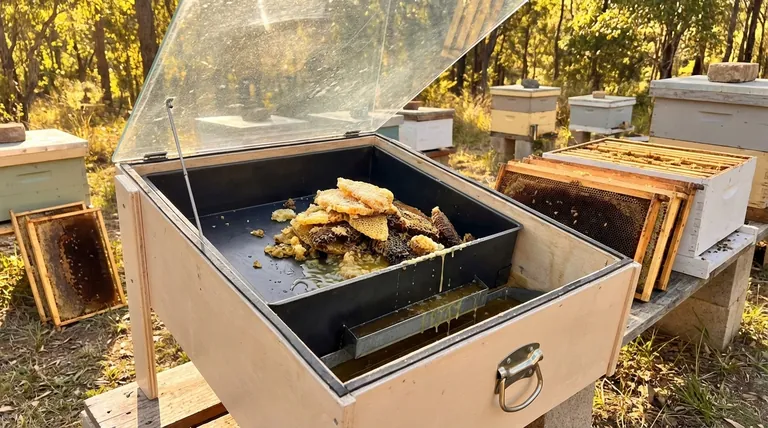
Every commercial beekeeper knows the sight: piles of old frames, buckets of cappings, and scrapings of burr comb. It's pure, valuable beeswax locked away in a messy, difficult-to-process form. Reclaiming that wax is essential, but it often feels like a problem you have to throw money at to solve.
The High Cost of 'Business as Usual'
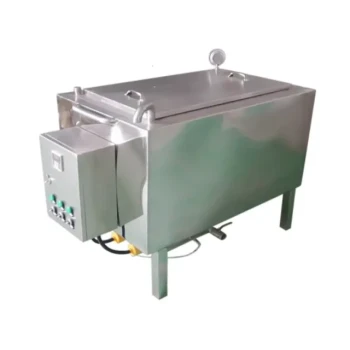
For years, the default solution for serious operations has been a powered melter. Whether electric or gas-fired, it gets the job done quickly. But this predictable performance comes with hidden, recurring costs that eat directly into your profits.
Many apiaries accept these as standard operating expenses:
- Constant Fuel & Electricity Bills: Every batch of wax rendered adds another line item to your utility costs.
- Infrastructure & Safety: Powered units require dedicated space, safe electrical hookups, or fuel storage, adding complexity and potential fire risk.
- Labor & Supervision: These machines need to be monitored, tying up your team's valuable time that could be spent on hives or honey processing.
Some have tried solar alternatives, only to be disappointed. DIY plans or flimsy, hobbyist-grade boxes often perform inconsistently. They take forever to heat up, fail on moderately cloudy days, and give solar technology a reputation for being unreliable and unsuitable for commercial use. This common experience leads to a costly conclusion: that you must rely on powered equipment to get the job done right.
But what if that conclusion is based on the wrong tools?
The Secret Isn't Heat—It's a Heat Trap
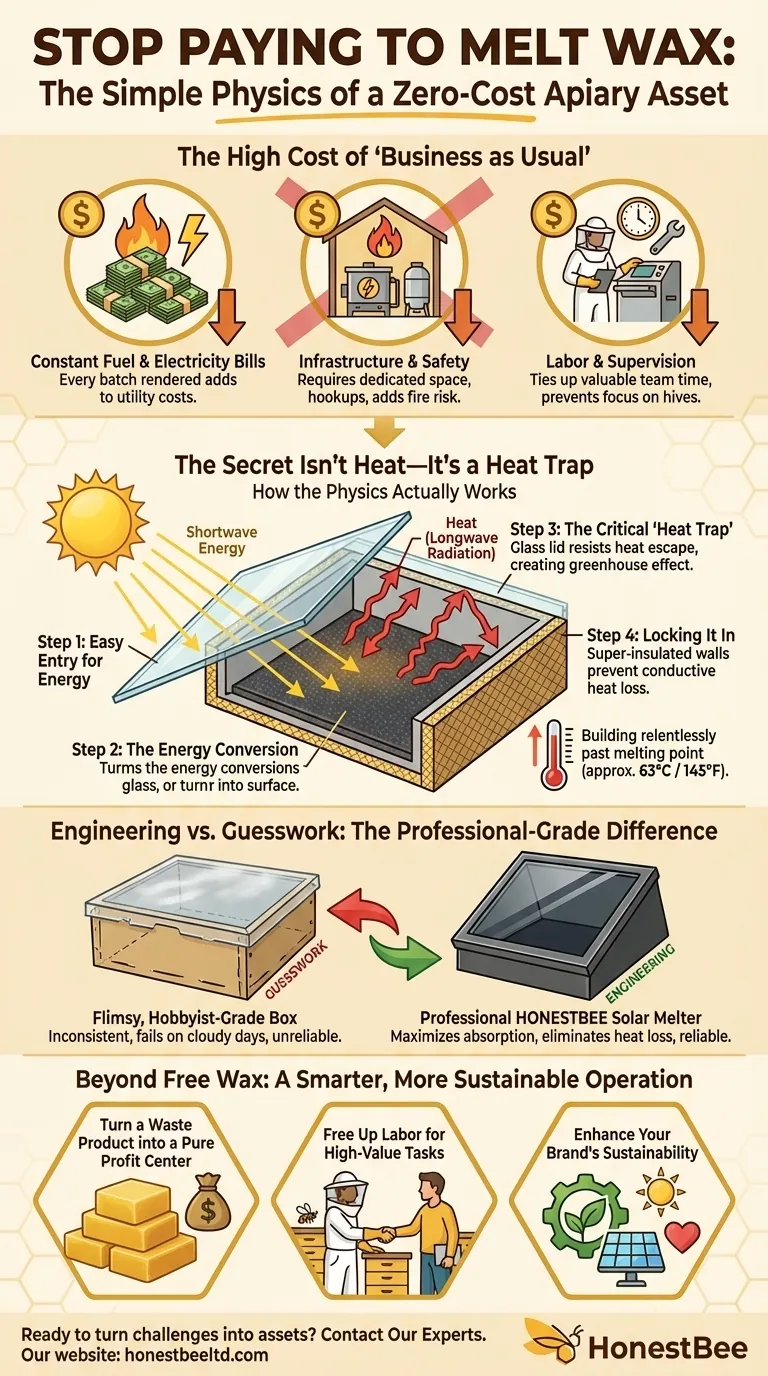
The reason many solar melters fail has nothing to do with the sun's power and everything to do with poor design. A professional solar melter doesn't just get hot; it’s a master of energy manipulation, built around a simple but powerful principle: trap far more energy than you lose.
Here’s how the physics actually works, broken down simply:
Step 1: Easy Entry for Energy
Sunlight is a form of shortwave energy. It passes effortlessly through the glass lid (the glazing) of the melter, just like light through a window.
Step 2: The Energy Conversion
Once inside, this light hits the dark interior surfaces and the comb itself. These dark, matte surfaces are experts at absorbing light and converting it into a different kind of energy: heat (longwave radiation).
Step 3: The Critical "Heat Trap"
Here's the secret. The glass lid that let the sunlight in is highly resistant to letting the heat out. The energy can get in easily but has an extremely difficult time escaping. This creates a powerful greenhouse effect, causing the temperature inside the box to build relentlessly, far past the melting point of beeswax (around 63°C or 145°F).
Step 4: Locking It In
Finally, the super-insulated walls of the melter box prevent that trapped heat from bleeding out through the sides or bottom. While the glass traps radiating heat, the insulation stops conductive heat loss.
The "common solutions" that fail—like a poorly insulated box or one with inefficient glazing—are like trying to fill a leaky bucket. They can't build and retain temperature effectively. The problem isn’t the sun; it's the tool's inability to master the heat trap.
Engineering vs. Guesswork: The Professional-Grade Difference
To truly solve this problem without cost, you don't just need a box that sits in the sun. You need a tool engineered to maximize the principles of the heat trap.
This is where a professional-grade solar wax melter changes the game. It is designed from the ground up to:
- Maximize Absorption: With precisely angled glazing and a deep-black interior, it captures the maximum amount of solar energy possible.
- Eliminate Heat Loss: Commercial-grade insulation and airtight construction ensure that once heat is generated, it stays inside doing its job—melting wax.
A HONESTBEE solar melter isn’t just a sustainable alternative; it is the physical embodiment of this efficient design. It's built not just to work, but to work reliably for commercial operations that can't afford guesswork. It directly solves the root cause of failure in lesser models by creating an overwhelmingly efficient heat trap.
Beyond Free Wax: A Smarter, More Sustainable Operation
When you stop fighting physics with leaky boxes and instead embrace it with an engineered tool, you unlock more than just free wax rendering. The potential for your business transforms.
Suddenly, you can:
- Turn a Waste Product into a Pure Profit Center: Every gram of beeswax is reclaimed with zero operational cost, converting what was once debris into a high-value asset you can sell or use.
- Free Up Labor for High-Value Tasks: The "set it and forget it" nature of a solar melter means your team's time is spent on apiary management and sales, not babysitting equipment.
- Enhance Your Brand's Sustainability: In a market where consumers value eco-friendly practices, operating a solar-powered apiary becomes a powerful story you can tell your customers.
This principle of leveraging smart, efficient design over brute, costly force applies to more than just melting wax. It's the foundation of a more resilient, profitable, and sustainable beekeeping operation. If you are ready to move beyond recurring costs and turn operational challenges into financial assets, our team can help you analyze where engineered solutions can make the biggest impact on your bottom line. Contact Our Experts.
Visual Guide
Related Products
- Solar Beeswax Melter Easy Solar Wax Melter for Beeswax
- Electric Commercial Beeswax Melter for Factory Use
- Beeswax Melter for Candle Making Honey Bee Wax Melter
- Professional Stainless Steel Wax Melter for Beekeeping and Crafts
- Steam Beeswax Melter Wax Warmer for Wax Processing
Related Articles
- How Solar Wax Melters Transform Sustainable Beekeeping: Efficiency, Savings, and Eco-Friendly Practices
- How to Maximize Solar Wax Melter Efficiency Without Compromising Sustainability
- The Beekeeper's Paradox: Why Slow Heat Unlocks the True Value of Beeswax
- How to Melt Beeswax Safely: Expert Methods to Avoid Fire Risks
- The Physics of Patience: Why Controlled Heat is Non-Negotiable for Beeswax