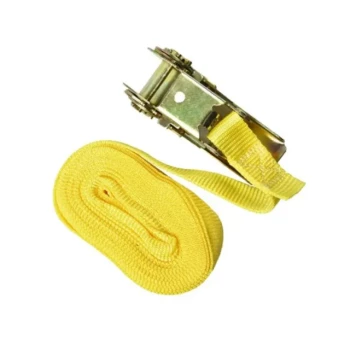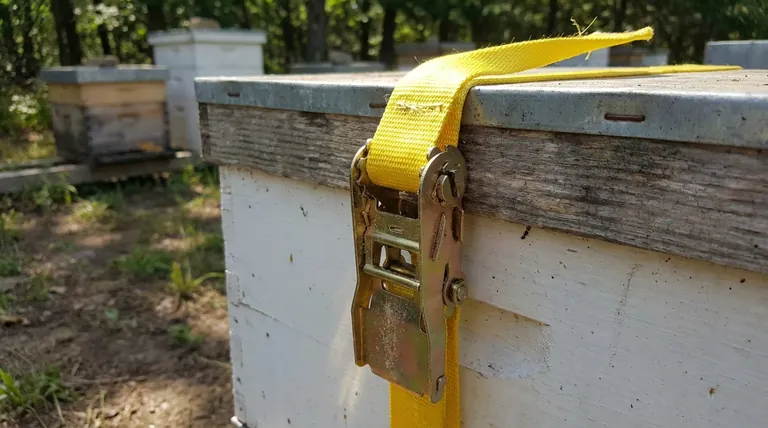
It’s 5 AM on a damp, cold morning. The truck is loaded with hives destined for an almond orchard, a critical pollination contract on the line. Everything is ready, except for one ratchet strap. The mechanism is stiff. The release pawl is frozen with a fine layer of rust and grime. What should have taken thirty seconds now becomes a ten-minute struggle with pliers and penetrating oil, a frustrating delay caused by a problem that was completely preventable.
This small moment of failure isn't just an annoyance; it's a symptom of a systemic issue. In beekeeping, as in any complex operation, success hinges on the reliability of every component. The hive strap, a seemingly simple tool, is a perfect case study in the trade-offs between mechanical design, human psychology, and operational risk.
The Anatomy of Two Philosophies
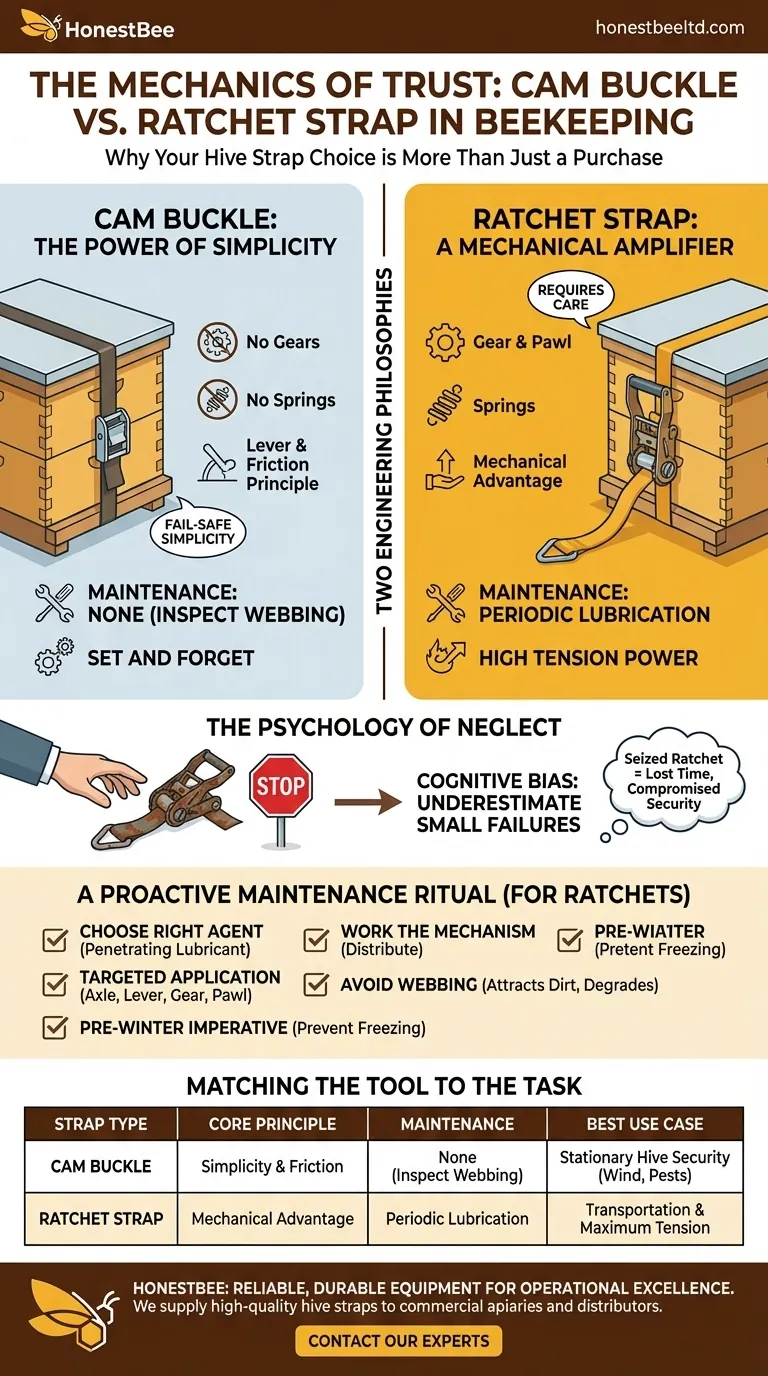
At its core, the choice between a cam buckle and a ratchet strap isn't just about fastening a hive. It's a choice between two fundamentally different engineering philosophies. One prioritizes fail-safe simplicity; the other offers mechanical power at the cost of required maintenance.
The Cam Buckle: The Power of Simplicity
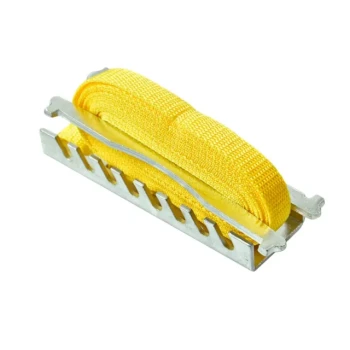
A cam buckle strap is a beautiful example of physics at work. It has no gears, no springs, no complex moving parts. It operates purely on a lever and friction principle. You pull the webbing tight, and a camming lever locks it in place.
Its genius lies in what it lacks. With no mechanical components to corrode, jam, or freeze, it demands nothing from the user except a visual inspection for webbing wear. It is a "set and forget" tool, embodying a design philosophy where ultimate reliability is achieved by eliminating points of failure.
The Ratchet Strap: A Mechanical Amplifier
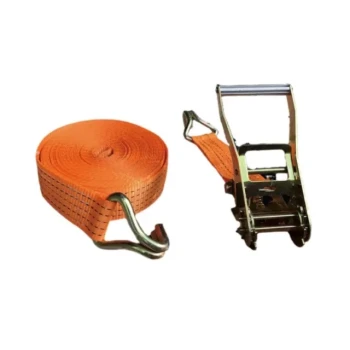
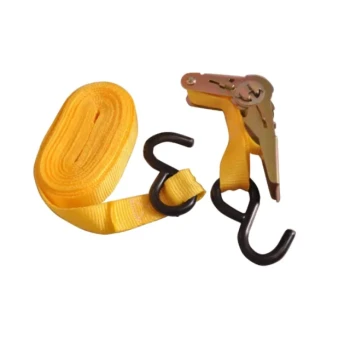
A ratchet strap is a machine. It's a tensioning device that uses a gear, a pawl, and springs to multiply human force into powerful, secure tension. For transporting hives across bumpy roads or ensuring maximum security against large pests, its mechanical advantage is undeniable.
But like any machine, it requires care. Its moving parts are its strength and its vulnerability. They are susceptible to the same enemies of all mechanical tools: moisture, dirt, and neglect.
The Psychology of Neglect
Why does a tool as critical as a ratchet strap get neglected? It's rarely about laziness. It's about cognitive bias. We systematically underestimate the probability of small, simple failures causing large, complex problems.
A quick spray of lubricant seems trivial—an easily deferred task. But deferring it introduces a hidden risk into your operation. A seized ratchet in the field isn't just an inconvenience. It's lost time, compromised hive security, and a spike in frustration that can lead to other mistakes. In a business governed by seasons and logistics, these unforced errors are costly.
A Proactive Maintenance Ritual
Treating a ratchet strap like the mechanical tool it is transforms it from a potential liability into a trusted asset. This doesn't require a workshop, just a simple, proactive ritual.
- Choose the Right Agent: Use a high-quality penetrating lubricant (like WD-40™). Its purpose is to displace moisture and protect the metal from corrosion.
- Targeted Application: Apply the lubricant directly and only to the moving parts: the axle, the release lever, the gear, and the pawl.
- Work the Mechanism: Operate the handle and release several times to distribute the lubricant evenly into every crevice.
- Avoid the Webbing: Critically, keep lubricant off the fabric strap. Oil attracts dirt and grit, which can act like sandpaper on the fibers, and can degrade the material over time.
- The Pre-Winter Imperative: A thorough application before the cold, wet season is the single best thing you can do to prevent a mechanism from freezing solid when you need it most.
Matching the Tool to the Task
The right choice is not about which strap is "better," but which is the appropriate tool for the specific job. This is a strategic decision based on your operational context.
| Strap Type | Core Principle | Maintenance | Best Use Case |
|---|---|---|---|
| Cam Buckle | Simplicity & Friction | None (Inspect Webbing) | Stationary Hive Security |
| Ratchet Strap | Mechanical Advantage | Periodic Lubrication | Transportation & Maximum Tension |
If your primary goal is securing hives in an apiary against wind or pests, the cam buckle's maintenance-free reliability is unmatched. You set it, and you can trust it will work months later.
If you are a commercial beekeeper focused on transportation, the superior tension of a ratchet strap is essential. This power, however, comes with the non-negotiable responsibility of basic mechanical care.
Ultimately, the integrity of your operation depends on thoughtful equipment choices and disciplined maintenance. At HONESTBEE, we understand that professional beekeepers need more than just supplies; they need reliable, durable equipment that performs under pressure. We supply high-quality hive straps and other beekeeping essentials to commercial apiaries and distributors who value operational excellence.
Let us help you build a more secure and efficient operation with the right tools for the job. Contact Our Experts
Visual Guide
Related Products
- Professional Galvanized Hive Strap with Secure Locking Buckle for Beekeeping
- Heavy-Duty Nylon Beehive Hive Strap with Stainless Steel Cinch Buckle
- Heavy Duty Ratchet Hive Strap
- Versatile Ratchet Hive Strap with S-Hooks for Secure Fastening
- High Security Emlock Strap System
Related Articles
- How to Store Hive Straps Properly to Prevent Damage and Boost Efficiency
- The Physics of Apiary Security: Why Your Hive Strap Material Matters More Than You Think
- The Hidden Reason Your Hive Straps Keep Loosening—And How to Fix It for Good
- The Unseen Force: Why Preload is the Most Critical, Misunderstood Factor in Hive Transportation
- The Physics and Psychology of Securing a Beehive: A Guide to Hive Straps