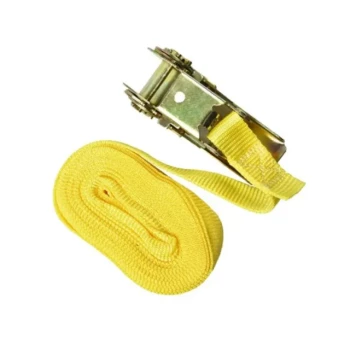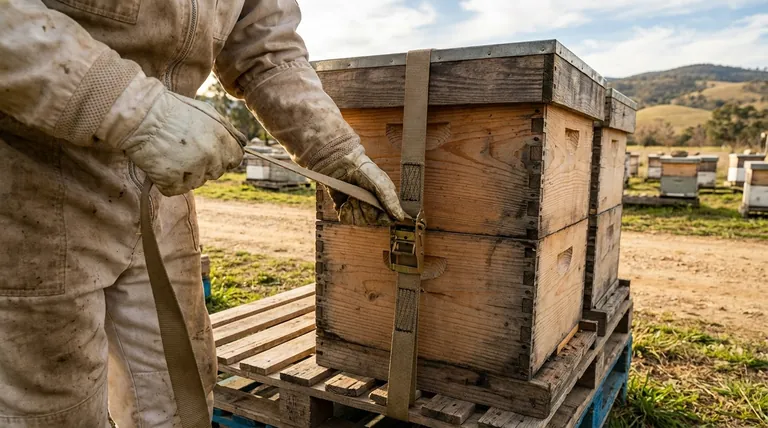
It’s a familiar, sinking feeling for any beekeeper. You arrive at your apiary after a windy night, or you open the truck after a long haul, and you see it: a hive lid askew, a top box shifted, or worse, an entire hive tipped on its side. The cam buckle strap you yanked on with all your might is now hanging limp, a testament to a failure you can’t quite explain.
You’re left cleaning up the mess, calming a stressed-out colony, and wondering, "What did I do wrong?"
The Vicious Cycle of Re-Tightening and Worrying
If this scenario sounds familiar, you're not alone. This is one of the most persistent and frustrating "small problems" in beekeeping—and it has significant consequences. Many commercial beekeepers find themselves trapped in a cycle of fighting with their equipment.
You’ve likely tried the common fixes:
- Buying "heavy-duty" straps, only to see them loosen just the same.
- Using two straps instead of one, adding cost and time to securing every pallet.
- Pulling horizontally with all your strength, straining your back in a battle of brute force against the webbing.
Despite your best efforts, the straps still fail. This isn't just an annoyance; it's a direct threat to your bottom line. A single tipped hive can mean a lost queen, a dead-out colony, and a full season of lost honey production. During transport for pollination contracts, arriving with shifted or damaged hives looks unprofessional and puts your assets at risk.
The constant worry and repeated labor of checking and re-tightening straps is a drain on your most valuable resource: your time.
It's Not Your Strength, It's Physics: Unlocking the Cam Buckle's Secret
Here is the turning point: The problem isn't your strength, the wind, or bad luck. It's that you're using the tool incorrectly. A cam buckle isn’t just a simple fastener; it’s a machine that relies on a specific mechanical principle to work.
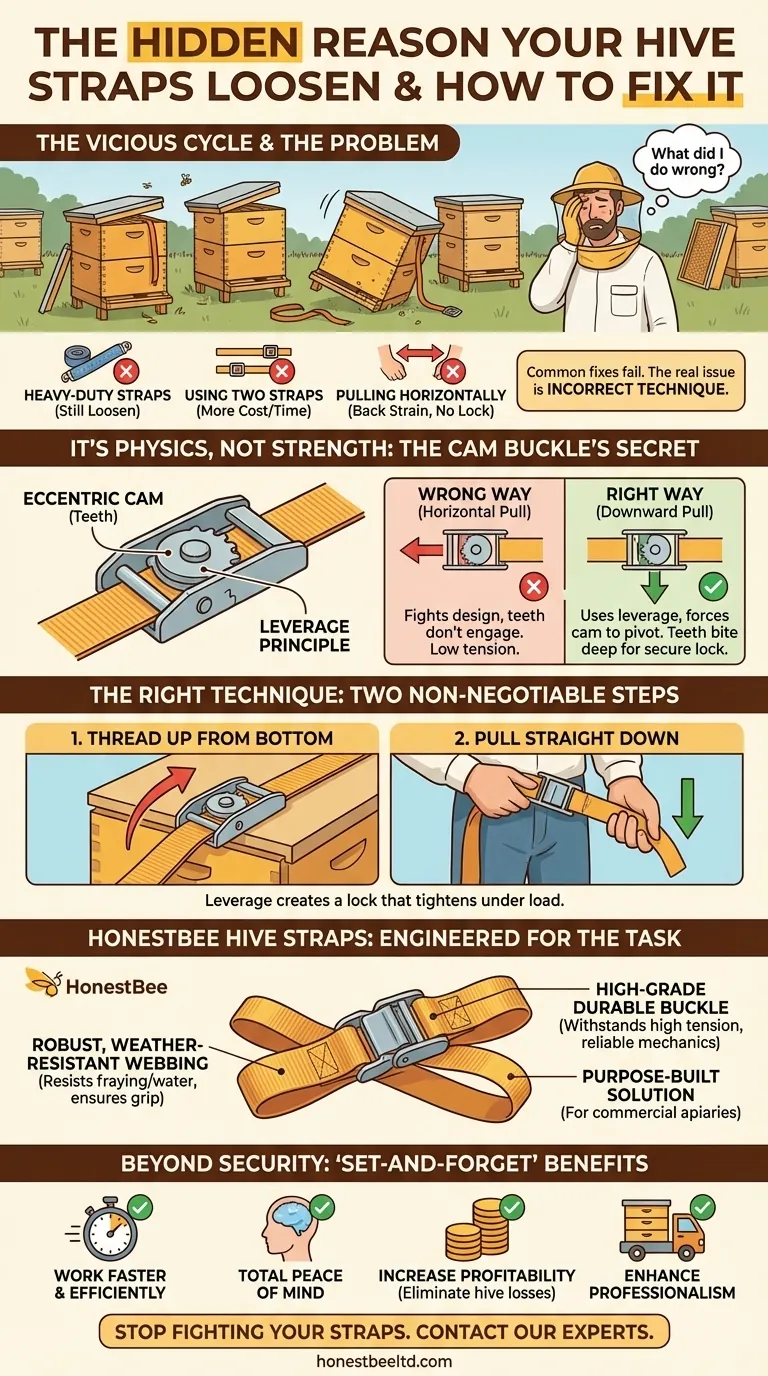
At the heart of the buckle is a small, spring-loaded lever with teeth—the "cam." This cam is eccentric, meaning its axle is off-center. Its locking power comes from using leverage, not brute force.
Why Pulling Harder (Horizontally) Doesn't Work
When you thread the strap and pull it horizontally, you’re essentially fighting the buckle's design. The force doesn’t properly rotate the cam to engage its teeth. It’s like trying to open a heavy door by pushing near the hinges instead of the handle. You can apply a ton of force and get very little result.
The only way to achieve maximum tension and a secure lock is to work with the tool's mechanics. This involves two non-negotiable steps:
- Thread Up from the Bottom: The webbing must be fed up through the slot from underneath the buckle.
- Pull Straight Down: By pulling the loose end of the strap straight down, you use your body weight as leverage. This motion forces the cam to pivot correctly, causing its teeth to bite deep into the webbing and create a lock that only gets tighter under load.
The common "solutions" fail because they ignore this fundamental principle. A more expensive strap will loosen just like a cheap one if the physics are wrong. The secret isn't a better strap; it's the right technique.
The Right Technique Meets the Right Tool
Of course, even perfect technique is useless if your equipment isn't up to the task. The cam's teeth need a firm, reliable surface to grip. A strap with old, frayed, or water-logged webbing won't hold, no matter how well you pull it. A weak buckle can bend or fail under the high tension generated by the proper technique.
This is where your choice of equipment becomes critical. To truly solve this problem for good, you need a strap designed not just to be strong, but to work flawlessly with this mechanical principle.
HONESTBEE's hive straps are engineered specifically for the demands of commercial apiaries.
- Built for Grip: We use robust, weather-resistant polyester webbing that resists fraying and water absorption. This ensures the cam's teeth have a solid surface to bite into, delivering a secure lock in sunny, wet, or icy conditions.
- Reliable Mechanics: Our buckles are made from high-grade, durable materials. They are built to withstand the high-tension forces you generate when using the correct downward-pulling technique, ensuring the locking mechanism engages perfectly every time, year after year.
Our straps aren't just an accessory; they are a purpose-built solution, designed from a deep understanding of the problem you face.
Beyond Security: What 'Set-and-Forget' Straps Mean for Your Business
When you combine the right technique with reliable equipment, the problem of loosening straps simply disappears. But the real benefit isn't just secure hives; it's the new potential you unlock.
Imagine what you can do when you no longer have to worry about your equipment:
- Work Faster and More Efficiently: Strap down an entire yard of hives in record time, with the confidence that they will stay put.
- Gain Total Peace of Mind: Stop worrying during windstorms or long-distance transport. Your assets are protected.
- Increase Profitability: Eliminate hive losses from tipping, keeping your colonies healthy, productive, and focused on making honey.
- Enhance Your Professionalism: Arrive at every pollination site with your hives in perfect condition, reinforcing your reputation as a reliable operator.
Solving this single, persistent issue frees you to focus on what truly matters: managing healthy bees and growing your business.
Your operation deserves equipment that works as hard as you do. Stop fighting your straps and start securing your success. If you're ready to eliminate one of your most persistent operational headaches, let's talk about how the right supplies can make a difference. Contact Our Experts to discuss your apiary's specific needs.
Visual Guide
Related Products
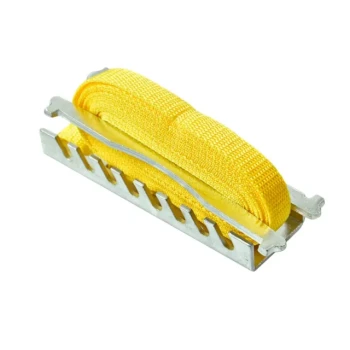
- Professional Galvanized Hive Strap with Secure Locking Buckle for Beekeeping
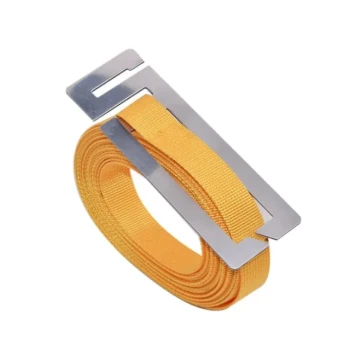
- Heavy-Duty Nylon Beehive Hive Strap with Stainless Steel Cinch Buckle
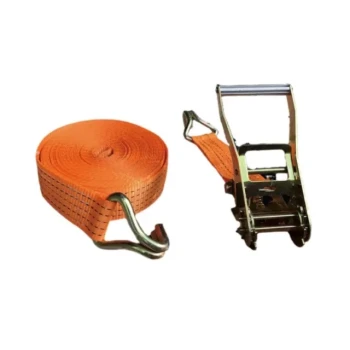
- Heavy Duty Ratchet Hive Strap
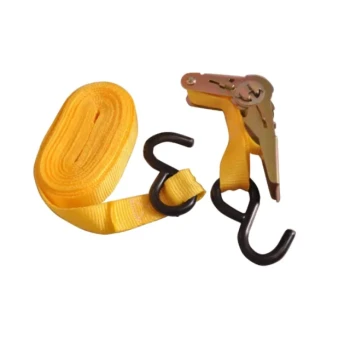
- Versatile Ratchet Hive Strap with S-Hooks for Secure Fastening
- High Security Emlock Strap System
Related Articles
- How to Store Hive Straps Properly to Prevent Damage and Boost Efficiency
- The Physics of Apiary Security: Why Your Hive Strap Material Matters More Than You Think
- The Unseen Force: Why Preload is the Most Critical, Misunderstood Factor in Hive Transportation
- The Physics and Psychology of Securing a Beehive: A Guide to Hive Straps
- The Mechanics of Trust: Why Your Hive Strap Choice is More Than Just a Purchase