The Silent Battle Inside the Box
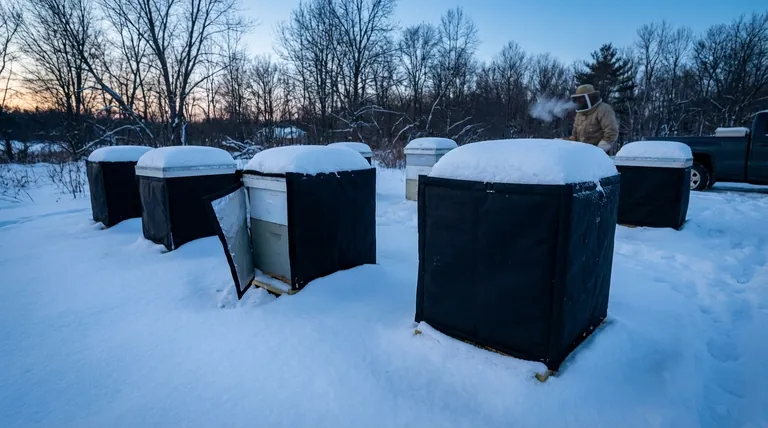
Imagine a beekeeper on a frigid January night. The wind is sharp, and the air is still. Outside, the hives stand as silent, dark boxes in the snow. But inside each, a life-or-death battle against physics is underway.
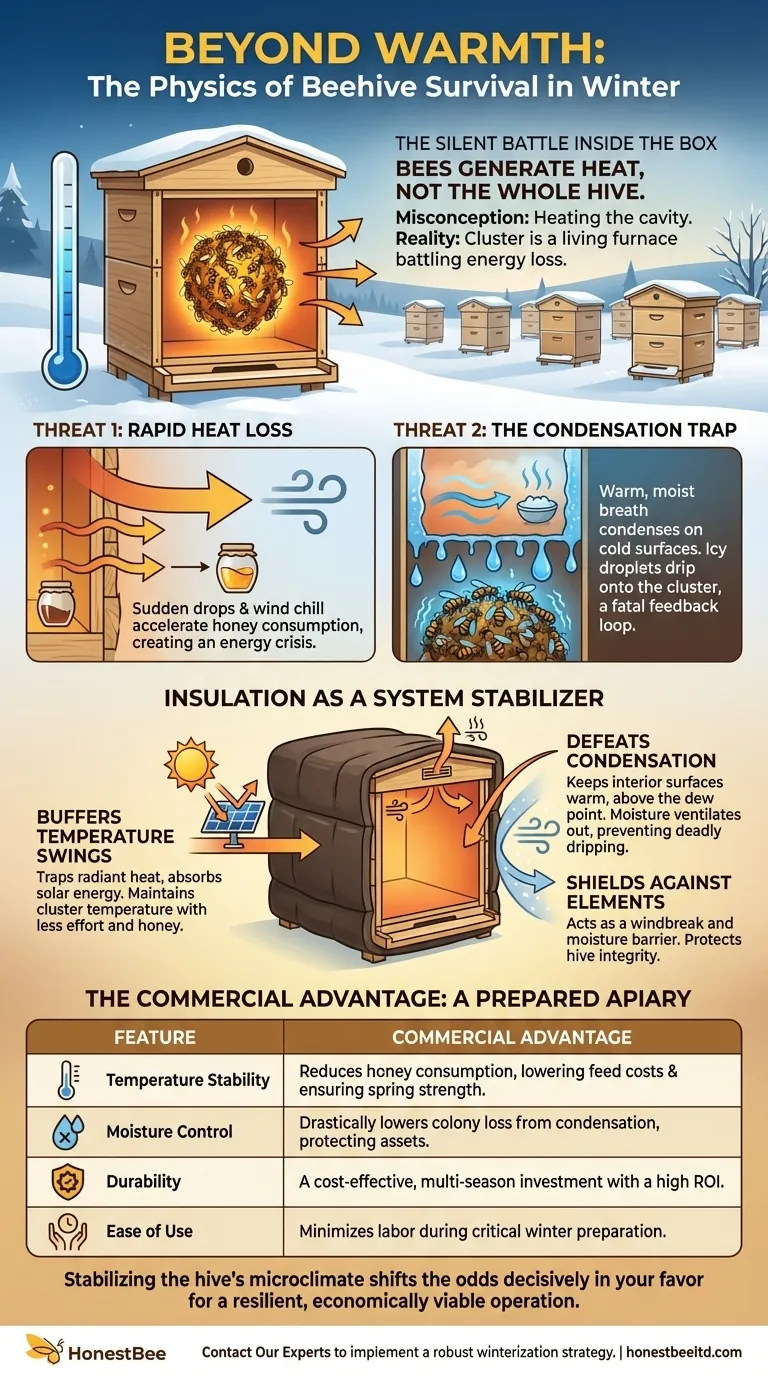
The common misconception is that winterizing a hive is about keeping it "warm." We think of it like insulating a house. But the bees aren't trying to heat the entire cavity; they are a living, breathing furnace at the core, generating just enough heat to keep their cluster alive.
The real enemies are not the cold itself, but instability and moisture—two silent killers that can decimate a colony long before starvation.
An Energy Crisis in Miniature
A winter cluster of bees is a marvel of thermal regulation. By vibrating their flight muscles, they generate heat. But this process consumes a tremendous amount of energy, which comes from their precious honey stores. Every calorie burned to fight the cold is a calorie they won't have in March.
This is where the two primary threats emerge:
- Rapid Heat Loss: A sudden drop in temperature, especially when driven by wind, forces the cluster to burn through honey at an accelerated rate. It’s an unsustainable energy crisis.
- The Condensation Trap: As the bees respire, they release warm, moist air. In an uninsulated hive, this air hits the cold interior walls and ceiling, instantly condensing into water. These icy droplets then drip down onto the cluster, chilling and killing the very bees that produced the warmth. It's a cruel, fatal feedback loop.
Solving this isn't about adding an external heater. It's about creating an environment where the bees' own efforts are maximized. It's about creating stability.
Insulation as a System Stabilizer
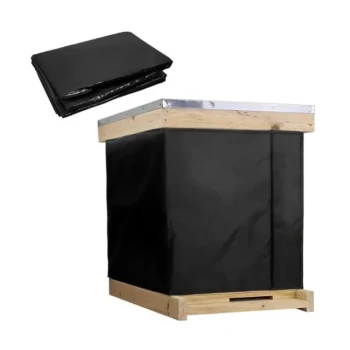
This is the elegant role of a beehive insulation wrap. It’s not a blanket; it’s a buffer. It changes the physics of the hive environment to give the colony a decisive advantage.
Buffering Against Temperature Swings
A quality wrap, especially one with a dark surface, performs two critical functions. First, it traps the radiant heat generated by the bee cluster, creating a thermal buffer zone that slows heat loss. Second, it absorbs solar energy on clear winter days, providing a gentle, passive warmth that eases the colony's energy burden.
This stability means the hive's internal temperature doesn't plummet the moment the sun sets. The bees can maintain their cluster temperature with far less effort and, therefore, less honey consumption.
Defeating the Condensation Trap
This is perhaps the most critical function. By insulating the hive walls, the wrap keeps the interior surfaces warmer. They stay above the dew point.
The warm, moist air from the bees no longer finds a frigid surface to condense upon. Instead of forming deadly droplets, the moisture can be properly ventilated out of the hive. The wrap doesn't seal the hive; it simply prevents the internal climate from turning against itself.
A Shield Against the Elements
Finally, the wrap serves as a crucial windbreak and moisture shield. It stops the wind from stripping heat away from the hive walls and prevents driving rain and snow from soaking the wood, which would further compromise its minimal insulative properties.
The Psychology of a Prepared Apiary
For a beekeeper, especially a commercial operator, winter is a period of calculated risk. The investment in each colony—in time, labor, and resources—is significant. Winter losses are not just a disappointment; they are a direct financial blow.
An insulation wrap is more than a piece of equipment; it's a tool for managing uncertainty.
| Feature | Commercial Advantage |
|---|---|
| Temperature Stability | Reduces honey consumption, lowering feed costs and ensuring spring strength. |
| Moisture Control | Drastically lowers colony loss from condensation, protecting assets. |
| Durability | A cost-effective, multi-season investment with a high ROI. |
| Ease of Use | Minimizes labor during the critical winter preparation phase. |
By stabilizing the hive's microclimate, you aren't just helping the bees; you are creating a more predictable, resilient, and economically viable operation. You are shifting the odds decisively in your favor.
This proactive approach—seeing the hive as a delicate physical system and using simple tools to optimize its function—is the foundation of successful winter management. It’s about empowering the colony to do what it has evolved to do: survive. For commercial apiaries and distributors, providing this level of stability isn't a luxury; it's essential for consistent success.
If you're looking to implement a robust winterization strategy across your operation, ensuring your colonies have the best possible chance of thriving into the spring, we can help you select the right equipment. Contact Our Experts
Visual Guide
Related Products
- Professional Insulated Winter Hive Wrap for Beekeeping
- Inner Beehive Cover for Beekeeping Bee Hive Inner Cover
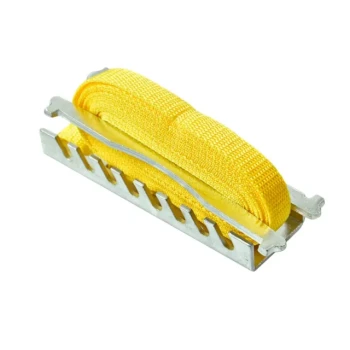
- Heavy-Duty Nylon Beehive Hive Strap with Stainless Steel Cinch Buckle
- Professional Galvanized Hive Strap with Secure Locking Buckle for Beekeeping
- Wooden Bee Hive Frames for Beekeeping and Wholesale
Related Articles
- The Cold Deception: Why Beehive Wintering is About Moisture, Not Warmth
- How to Secure Beehive Covers: Weatherproof Strategies for Every Hive Type
- Beyond the Cold: The Physics of a Winter Beehive and Why Our Instincts Fail Us
- How to Time Hive Insulation for Maximum Winter Bee Survival
- Beyond Warmth: The Critical Thermodynamics of Wintering Honey Bees