The Illusion of Stillness
An apiary on a calm day projects an image of perfect stability. But this stillness is an illusion. A beehive is a system under constant, quiet pressure from the outside world—a sudden gust of wind, the persistent curiosity of a raccoon, the subtle vibrations of being transported to a new nectar flow.
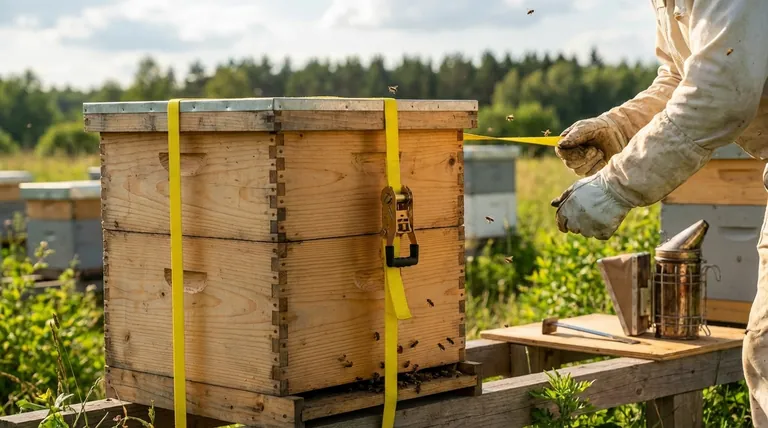
The integrity of that hive, a delicate structure held together by propolis and gravity, is the single most important physical factor in a colony's survival. A hive strap is not an accessory; it is a low-cost, high-impact tool for managing this ever-present risk. It is an engineer's solution to a biological problem.
A Single Point of Failure
The primary job of a hive strap is to protect the propolis seal. This resinous glue is the hive’s immune system and its weatherproofing, meticulously applied by the bees. When that seal is broken, the colony is catastrophically exposed.
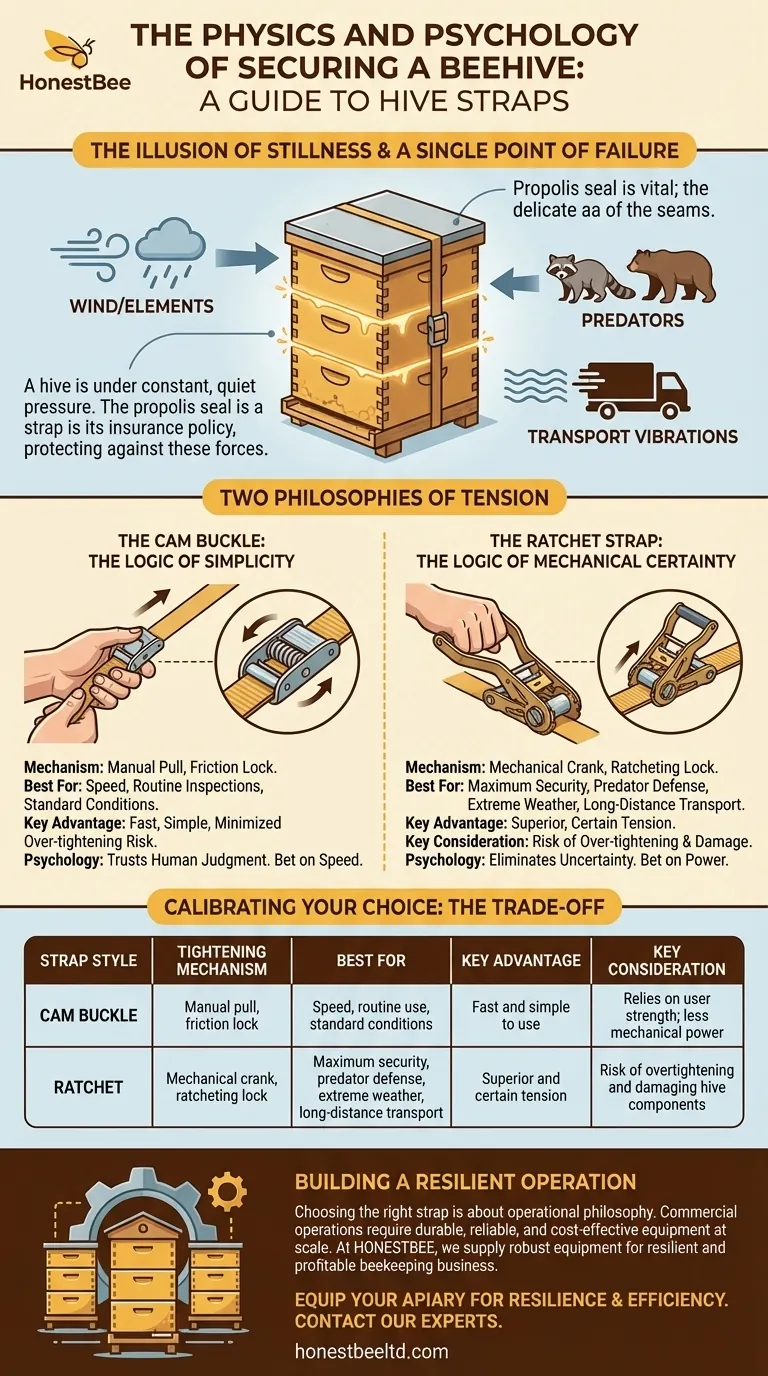
A strap is an insurance policy against three primary forces:
- The Elements: High winds, falling branches, or heavy snow can shift or topple boxes, exposing the colony to fatal cold and moisture.
- Predators: Animals from bears to raccoons often target the seams between hive boxes. A taut strap transforms a vulnerable stack into a formidable, solid block.
- Transport: For commercial operations, moving hives is a necessity. A strap ensures the hive arrives as a single, intact unit, not a shifted, stressed, and broken mess.
Two Philosophies of Tension
The choice between the two main styles of hive strap is not merely about hardware. It's about two different philosophies of applying force and managing risk.
The Cam Buckle: The Logic of Simplicity
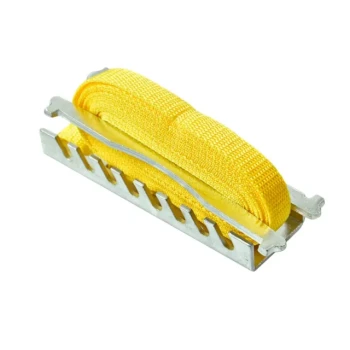
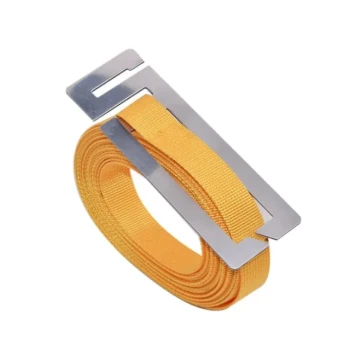
A cam buckle is an exercise in elegant simplicity. It operates on friction. You pull the strap tight by hand, and a spring-loaded cam with small teeth bites into the webbing, preventing it from slipping back. The tension is limited by your own strength.
This design represents a bet on speed and human judgment. It's incredibly fast to apply and release, perfect for routine inspections. Psychologically, it trusts the operator not to cause harm. Because you can't easily generate excessive force, the risk of crushing comb or warping woodenware is minimized.
The Ratchet Strap: The Logic of Mechanical Certainty
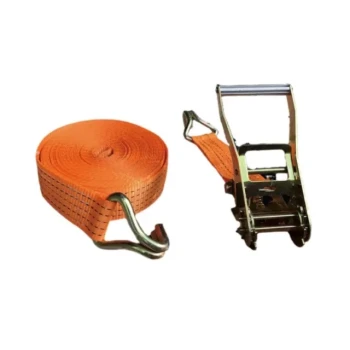
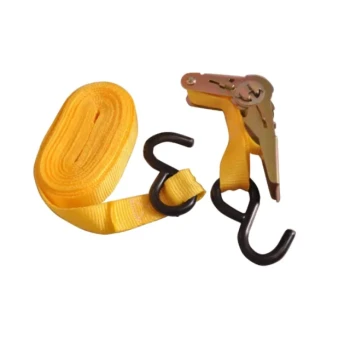
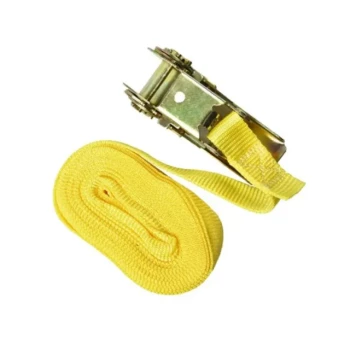
A ratchet strap introduces a machine to do the work. By cranking a handle, you use mechanical advantage to apply immense, unwavering tension—far more than any person could achieve alone.
This design is for the beekeeper who wants to eliminate uncertainty. When facing the possibility of a bear attack or securing a pallet of hives for a cross-country trip, "good enough" is not good enough. The ratchet provides definitive, measurable security. Its primary risk, however, is its own power. It requires a mindful operator, one who understands that it's just as easy to damage a hive with too much force as it is to lose one with too little.
Calibrating Your Choice to Your Reality
The decision is a classic trade-off. It’s not about which strap is better, but which risk you are more concerned about: the external threat or the internal error. Your specific environment, predators, and operational tempo should dictate your choice.
This summary table clarifies the trade-offs:
| Strap Style | Tightening Mechanism | Best For | Key Advantage | Key Consideration |
|---|---|---|---|---|
| Cam Buckle | Manual pull, friction lock | Speed, routine use, standard conditions | Fast and simple to use | Relies on user strength; less mechanical power |
| Ratchet | Mechanical crank, ratcheting lock | Maximum security, predator defense, extreme weather, long-distance transport | Superior and certain tension | Risk of overtightening and damaging hive components |
Building a Resilient Operation
Choosing the right hive strap is a small decision that reflects a larger operational philosophy. Commercial beekeepers and large-scale apiaries think in systems. They require equipment that is not just effective, but durable, reliable, and cost-effective at scale. The integrity of hundreds or thousands of hives depends on simple tools that work, every time.
At HONESTBEE, we supply the robust equipment that professional operations depend on. We understand that for our commercial and distributor clients, every component—from the hive bodies to the straps that hold them together—is a critical part of a resilient and profitable business. We provide the tools built for the demanding realities of beekeeping at scale.
If you are equipping your apiary for resilience and efficiency, we can help. Contact Our Experts
Visual Guide
Related Products
- Professional Galvanized Hive Strap with Secure Locking Buckle for Beekeeping
- Heavy-Duty Nylon Beehive Hive Strap with Stainless Steel Cinch Buckle
- Heavy Duty Ratchet Hive Strap
- Versatile Ratchet Hive Strap with S-Hooks for Secure Fastening
- High Security Emlock Strap System
Related Articles
- How to Store Hive Straps Properly to Prevent Damage and Boost Efficiency
- The Physics of Apiary Security: Why Your Hive Strap Material Matters More Than You Think
- The Hidden Reason Your Hive Straps Keep Loosening—And How to Fix It for Good
- The Unseen Force: Why Preload is the Most Critical, Misunderstood Factor in Hive Transportation
- The Mechanics of Trust: Why Your Hive Strap Choice is More Than Just a Purchase