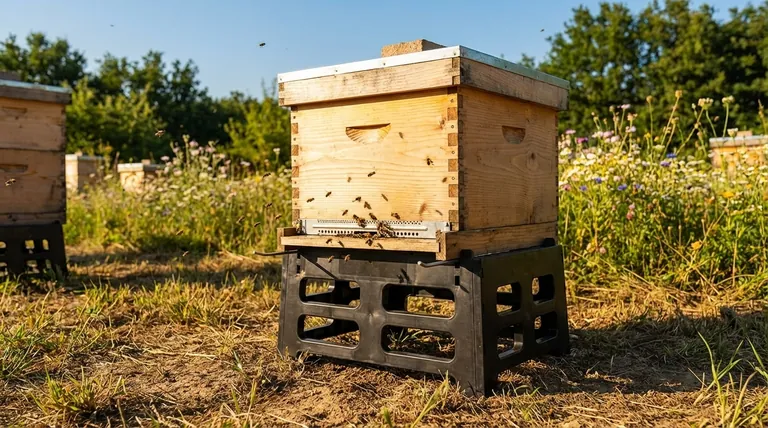
The Anatomy of a Silent Failure
An experienced beekeeper can tell a lot before even opening a hive. In early spring, the sight of a silent entrance is a dreaded one. But the real diagnosis comes from the autopsy.
Often, the cause of a winter loss isn't starvation—honey stores are still present. The culprit is more subtle. It’s the damp, musty smell. It’s the spongy, blackened wood of the bottom board that was in direct contact with the cold, wet ground for months.
This isn't a dramatic failure. It's a slow, silent decay—a systems failure that begins with a single, overlooked decision: where to place the hive.
Beyond Wood and Nails: A Hive as a System
We tend to think of a beehive as a box. But a better mental model is that of a complex, self-regulating superorganism. The colony is constantly managing thermodynamics, airflow, and resource logistics.
The ground, however, is an unpredictable variable. It introduces moisture, harbors pests, and obstructs traffic.
A hive stand is not merely a piece of furniture for bees. It is the critical interface between the controlled system of the colony and the chaotic environment of the earth. It is a strategic decision to decouple the hive from unpredictable ground-level risks.
The Physics of Dryness and Durability
The most immediate impact of a hive stand is on the physical equipment itself. For commercial apiaries, where hives represent significant capital investment, protecting that hardware is paramount.
Combating the Unseen Enemy: Ground Moisture
Wood is porous. Placed on the ground, a hive's bottom board acts like a sponge, wicking moisture relentlessly. This creates the perfect breeding ground for mold, mildew, and ultimately, wood rot.
A rotted bottom board is more than just a maintenance issue; it's a breach in the system's integrity.
Elevating the hive by just a few inches creates an air gap. This simple separation promotes constant airflow, allowing the wood to remain dry and dramatically extending the life of your equipment. It is the cheapest insurance you can buy for your assets.
The Thermodynamics of a Healthy Colony
Proper ventilation is work. Bees expend enormous energy fanning their wings to regulate internal temperature and humidity.
A hive sitting on damp ground is fighting a losing battle. The cold and moisture from below increase the risk of internal condensation, especially during winter—a primary driver of colony mortality. By promoting airflow underneath the hive, a stand reduces the energetic load on the colony, allowing them to devote more resources to brood-rearing and honey production.
Biological Imperatives: A Colony's First Line of Defense
Elevation fundamentally changes the colony's relationship with its immediate surroundings, strengthening its natural defenses and improving its efficiency.
The Entrance as a Superhighway
For a honeybee colony, the hive entrance is a bustling airport runway. Thousands of foragers come and go, and any obstruction creates a bottleneck.
Grass, weeds, debris, and snow can easily block an entrance at ground level. This slows foraging, hinders the removal of dead bees, and compromises the guards' ability to defend the colony. A clear, elevated entrance ensures this superhighway runs at peak efficiency.
An Uninviting Climb for Pests
Pests like ants and hive beetles, and predators like skunks, are creatures of opportunity. A hive on the ground is an easy target.
Elevation creates a simple but effective barrier. It forces pests to make a more arduous journey and prevents predators like skunks from comfortably scratching at the entrance to lure out and eat bees. It’s a passive security system that works 24/7.
The Human Factor: Engineering a Sustainable Operation
Beekeeping is a physical job. For a commercial operator, efficiency and longevity are not about the bees; they're about the beekeeper.
The Ergonomics of Profitability
Bending over hundreds of hives puts immense strain on the back and knees. This isn't just a matter of comfort; it's a matter of operational sustainability. Physical fatigue leads to rushed inspections, costly mistakes, and eventual burnout.
A waist-high hive stand transforms the work. It turns a physically taxing chore into a sustainable practice, protecting the health of your team and the consistency of your management.
The Clarity of a Better Viewpoint
When you are comfortable, you see more. Working at a proper height allows for calmer, more thorough inspections. You are more likely to spot the subtle signs of disease, a failing queen, or the beginnings of a swarm preparation.
Better ergonomics leads to better data collection, which leads to better decision-making.
Choosing the Right Foundation
A hive stand is a small investment with a disproportionately massive return, impacting everything from asset longevity to colony health and operator well-being. The choice is a reflection of your operational priorities.
| Focus Area | Key Advantage of Elevation |
|---|---|
| Asset Protection | Prevents bottom board rot, extending equipment lifespan. |
| Colony Productivity | Reduces moisture stress and ensures a clear foraging path. |
| Pest Management | Creates a physical barrier against ground-based threats. |
| Human Efficiency | Reduces physical strain, enabling better, safer work. |
For commercial apiaries dedicated to building a resilient and efficient operation, selecting the right foundational equipment is the first step. HONESTBEE provides durable, commercial-grade hive stands designed for the rigors of large-scale beekeeping, ensuring your investment is protected from the ground up. Contact Our Experts to learn how our solutions can support your goals.
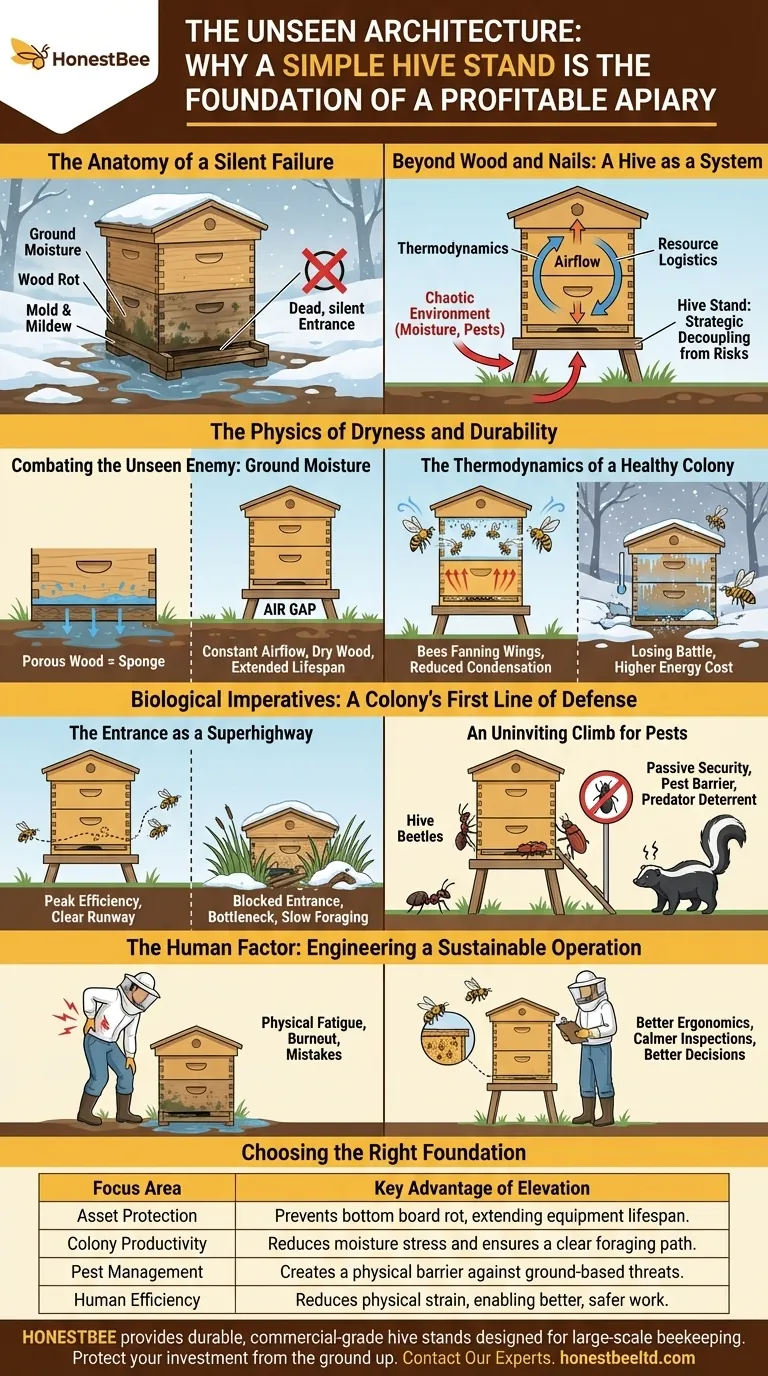
Visual Guide
Related Products
- Metal Hive Feet Bee Hive Stand for Ant Protection
- Plastic Bee Hive Stand for Beekeeping
- Metal Bee Hive Stand Bee Box Stand for Beekeeping
- Professional Ant-Proof Beehive Stand with Integrated Moat for Beekeeping
- Plastic Bee Frame Beekeeping Hive Frames for Wholesale
Related Articles
- How to Stabilize Beehive Stands in Wet Soil: Proven Techniques for Beekeepers
- How to Choose and Install a Beehive Stand for Pest Control and Colony Health
- The Unseen Foundation: Why a Beehive Stand Dictates Your Apiary's Success
- Beyond the Box: How a Simple Stand Prevents Compounding Failures in Beekeeping
- The Unseen Architecture of a Productive Apiary: Why Your Beehive Stand Height is a System Design Choice