The Anatomy of a Silent Failure
An apiary can feel like a library of quiet mysteries. A beekeeper might find a colony weakened, productivity dropping without an obvious culprit. The immediate suspects are familiar: varroa mites, a failing queen, or disease. But often, the problem isn't a dramatic event, but a slow, cascading failure that began where no one was looking—at the ground.
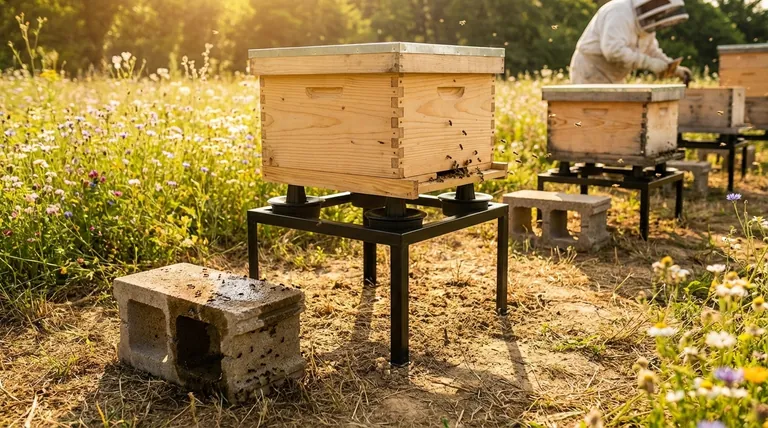
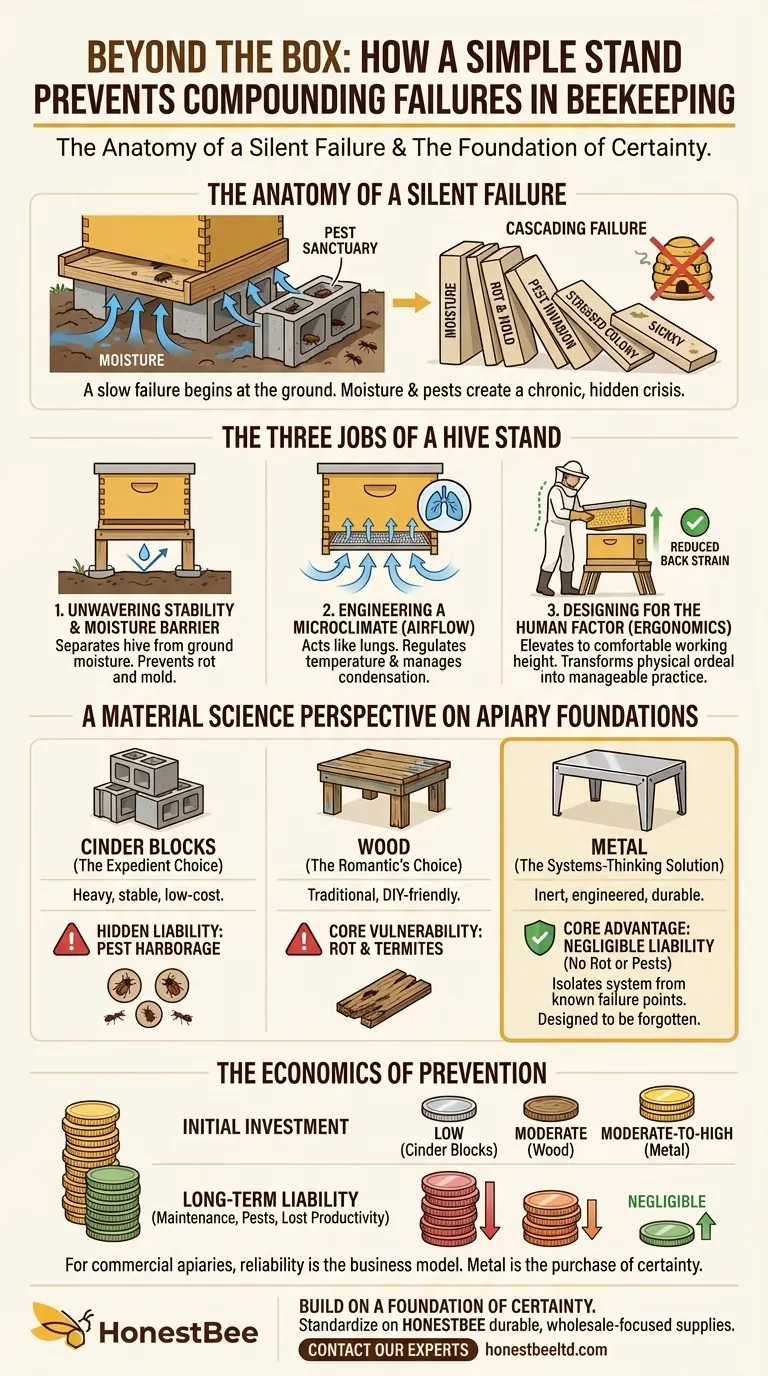
It starts with a wooden bottom board resting on damp soil or cinder blocks. Moisture wicks upward, creating a perpetually humid environment. This subtle stress weakens the colony, making it more susceptible to pathogens. The dark, sheltered cavities of the blocks become a five-star hotel for small hive beetles and ants, creating a permanent staging ground for invasion.
We have a psychological bias to focus on the active, visible parts of a system—the bees, the brood, the honey. We neglect the foundation. Yet the hive stand is not just a piece of furniture; it is the first and most critical component of the hive's environmental control system. Its design dictates the future, preventing problems before they can begin.
The Three Jobs of a Hive Stand
To appreciate its importance, we must stop seeing a stand as a passive object and start seeing it as an active employee with three critical responsibilities.
1. The War Against Moisture and Entropy
A hive full of honey is a tall, heavy, and precarious tower. Its base must provide unwavering stability. More importantly, it must create a zone of separation from the ground—a relentless source of moisture. By elevating the hive, a stand breaks the chain of moisture transfer that leads to rot, mold, and a stressed, unhealthy colony.
2. Engineering a Microclimate
A colony breathes. It must regulate its internal temperature and humidity. A stand that lifts the hive and allows for free airflow underneath is like a pair of healthy lungs. This ventilation is crucial for helping the bees manage condensation, especially during cold winters and humid summers. A damp hive is a sick hive.
3. Designing for the Human Factor
A system that injures its operator is a poorly designed system. Constantly bending to the ground to lift 80-pound honey supers is a recipe for back strain. Elevating the hive to a comfortable working height isn't a luxury; it's a fundamental part of a sustainable, long-term beekeeping operation. It transforms beekeeping from a physical ordeal into a manageable practice.
A Material Science Perspective on Apiary Foundations
The material you choose for your hive stand is not an aesthetic decision. It is a strategic choice that reflects a philosophy on durability, maintenance, and risk management.
The Expedient Choice: Cinder Blocks
Cinder blocks are the classic, low-cost solution. They are heavy, stable, and readily available. They solve the immediate problem of elevation.
But they introduce a hidden, long-term liability. Their hollow cores are a perfect, prefabricated home for ants, wasps, and hive beetles. In solving one problem, you've created a pest sanctuary directly beneath your colony. This is the psychological trap of expediency—a quick fix that generates chronic, low-grade problems for years to come.
The Romantic's Choice: Wood
Wood feels traditional and natural. It's easy to work with for the DIY-inclined beekeeper.
The flaw, however, is poetic: it shares the same core vulnerability as the hive it supports. Wood in contact with the ground is in a constant battle with moisture, rot, and termites. You are building planned obsolescence into the most foundational part of your setup, guaranteeing a future of maintenance and replacement.
The Systems-Thinking Solution: Metal
A purpose-built metal hive stand represents a different philosophy: isolate the system from known points of failure.
Metal is inert to the forces that destroy wood. It is immune to rot and termites. Its slim, engineered profile offers minimal surface area and zero cavities for pests to colonize. It solves the problems of elevation, stability, and airflow without introducing secondary complications. It is a solution designed to be forgotten, because it simply works.
The Economics of Prevention
Choosing a hive stand is an economic decision, but the true cost is often miscalculated. We fixate on the initial price tag and ignore the long-term costs of maintenance, pest control, and lost productivity.
| Material | Initial Investment | Long-Term Liability | Core Advantage |
|---|---|---|---|
| Cinder Blocks | Lowest | High (Pest Harborage, Labor) | Simplicity & Stability |
| Wooden Stand | Low-to-Moderate | Moderate (Rot, Replacement) | DIY & Aesthetics |
| Metal Stand | Moderate-to-High | Negligible (No Rot or Pests) | Durability & Problem Prevention |
For a commercial apiary, where every failure is multiplied across hundreds of hives, reliability is not a feature—it is the business model. The upfront investment in a metal stand is not a cost; it is the purchase of certainty. It eliminates a whole class of variables, freeing up time and resources to focus on the bees themselves.
Build on a Foundation of Certainty
A beehive stand is the physical manifestation of your strategy for managing the persistent forces of nature. A weak foundation invites chaos. A strong one establishes order from the very beginning.
For commercial apiaries and equipment distributors focused on building resilient, low-maintenance, and profitable operations, standardizing on a solution that eliminates variables is the only logical choice. At HONESTBEE, we provide the durable, wholesale-focused supplies that form the bedrock of such operations.
Start with a foundation that won't fail you. Contact Our Experts
Visual Guide
Related Products
- Metal Hive Feet Bee Hive Stand for Ant Protection
- Metal Bee Hive Stand Bee Box Stand for Beekeeping
- Plastic Bee Hive Stand for Beekeeping
- Professional Ant-Proof Beehive Stand with Integrated Moat for Beekeeping
- Wooden Bee Hive Frames for Beekeeping and Wholesale
Related Articles
- How to Stabilize Beehive Stands in Wet Soil: Proven Techniques for Beekeepers
- The Unseen Architecture of a Productive Apiary: Why Your Beehive Stand Height is a System Design Choice
- The Unseen Foundation: Why a Beehive Stand Dictates Your Apiary's Success
- How to Choose and Install a Beehive Stand for Pest Control and Colony Health
- How to Determine the Optimal Beehive Stand Height for Comfort and Efficiency