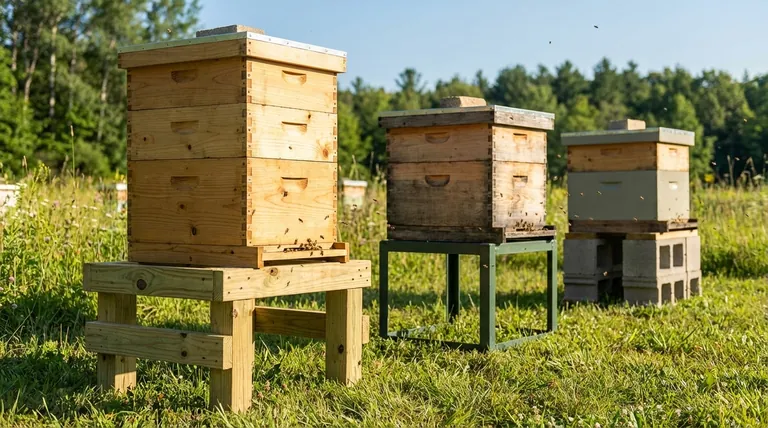
The Beginner’s Most Expensive Mistake
Picture a new beekeeper's first hive. It arrives on a perfect spring day, buzzing with promise. In a moment of enthusiasm, they place it directly on a lush patch of grass. It looks idyllic. It feels natural.
And it is a profound, slow-motion mistake.
Over weeks, unseen forces go to work. Ground moisture wicks into the bottom board, creating a perpetual dampness that invites mold and stresses the colony. Ants discover a direct, undefended highway to the hive's precious resources. When the first honey-filled box, or "super," needs lifting, the beekeeper realizes they must bend and awkwardly lift 50 pounds from shoe-level.
The humble beehive stand is designed to prevent this exact cascade of failures. It’s not an accessory; it's the first and most critical piece of infrastructure in your apiary. Its purpose is not about a single "best" material, but about solving three fundamental problems.
The Three Jobs of a Beehive Stand
A good stand is a silent partner, tirelessly performing three critical tasks that separate a thriving colony from a struggling one.
1. It Fights Beekeeper Fatigue
The decision to inspect a hive is a psychological one. If you know the process involves aching back muscles from repeatedly lifting heavy boxes from the ground, you are subtly discouraged from performing essential checks.
By raising the hive to a comfortable working height, a stand removes this physical and mental barrier. It transforms hive management from a chore into an efficient, ergonomic task, ensuring your bees get the attention they need.
2. It Wins the War Against Entropy
Nature relentlessly tries to reclaim everything. Wood rots, fungus grows, and dampness persists. Placing a hive on the ground accelerates this process of decay.
A stand elevates the colony, allowing air to circulate underneath. This simple act of separation is a powerful defense against moisture, keeping the hive interior dry and healthy. It is a low-tech, elegant solution to the universal problem of entropy.
3. It Fortifies the Castle Walls
To a skunk or a column of ants, a ground-level hive is an easy target. The entrance is exposed and the colony’s guard bees are easily overwhelmed.
Lifting the hive just 12-18 inches off the ground creates a crucial defensive barrier. It makes the entrance a more defensible chokepoint and puts the hive out of reach of many small predators. The stand acts as the fortress wall, giving the colony a strategic advantage.
The Psychology of Material Choice
Your choice of stand material is a reflection of your resources, skills, and long-term vision for your apiary.
The Pragmatist’s Choice: Wood
Wood is the most common material for a reason. It's inexpensive, widely available, and can be fashioned into a functional stand with basic tools.
A beekeeper choosing wood is prioritizing action over perfection. They are making a rational trade-off: accepting future maintenance (or replacement) in exchange for a low barrier to entry. It is the perfect choice for getting started quickly and effectively.
The Lifer’s Investment: Metal
A welded metal stand is a statement of intent. It is impervious to rot and termites. It will outlast the beekeeper.
This choice reflects a mindset focused on permanence and efficiency at scale. Building one requires specialized skills and equipment, representing a higher upfront investment. For commercial operations, where every point of failure is a potential loss of revenue, the durability of metal isn't a luxury; it's a sound business decision. It eliminates a variable, allowing the focus to remain on the bees.
The Homesteader’s Foundation: Masonry
Cinder blocks or bricks create an immovable, rock-solid foundation. They are weatherproof, stable, and require zero maintenance.
This choice signifies a commitment to a specific location. The beekeeper who chooses masonry views their apiary as a permanent feature of their landscape. They trade portability for absolute stability, creating a permanent home for their colonies.
Two Unforgiving Laws of Setup
Regardless of material, the success of your stand hinges on two principles of physics.
1. The Non-Negotiable: Side-to-Side Level
Your stand must be perfectly level from left to right. Bees build their comb using gravity as a perfect vertical guide. If the hive is tilted, they will build wavy, cross-connected comb that is impossible to inspect without destroying it and angering the colony. Use a level. There is no substitute.
2. The Engineer’s Trick: A Slight Forward Tilt
While level side-to-side, a slight forward tilt of a few degrees is incredibly beneficial. This ensures any rainwater that enters the hive drains out immediately, rather than pooling on the bottom board. It is a small detail that demonstrates a deep understanding of the system.
| Material | Pros | Cons | Best For |
|---|---|---|---|
| Metal | Maximum durability, pest/rot proof | Requires welding skills/equipment | Commercial apiaries, long-term operations |
| Masonry | Extremely stable, weatherproof | Difficult to move or relocate | Permanent, fixed apiary locations |
| Wood | Low cost, easy to build, accessible | Susceptible to rot and pests | Hobbyists, budget-conscious starters |
For commercial apiaries and beekeeping distributors, thinking in terms of durability and long-term efficiency isn't just a philosophy—it's essential for a sustainable business. At HONESTBEE, we specialize in supplying wholesale equipment designed to withstand the demands of large-scale operations. Your foundation matters, and we provide the tools to build it right.
If you’re ready to equip your operation with durable, professional-grade supplies that reflect a commitment to quality, we can help. Contact Our Experts
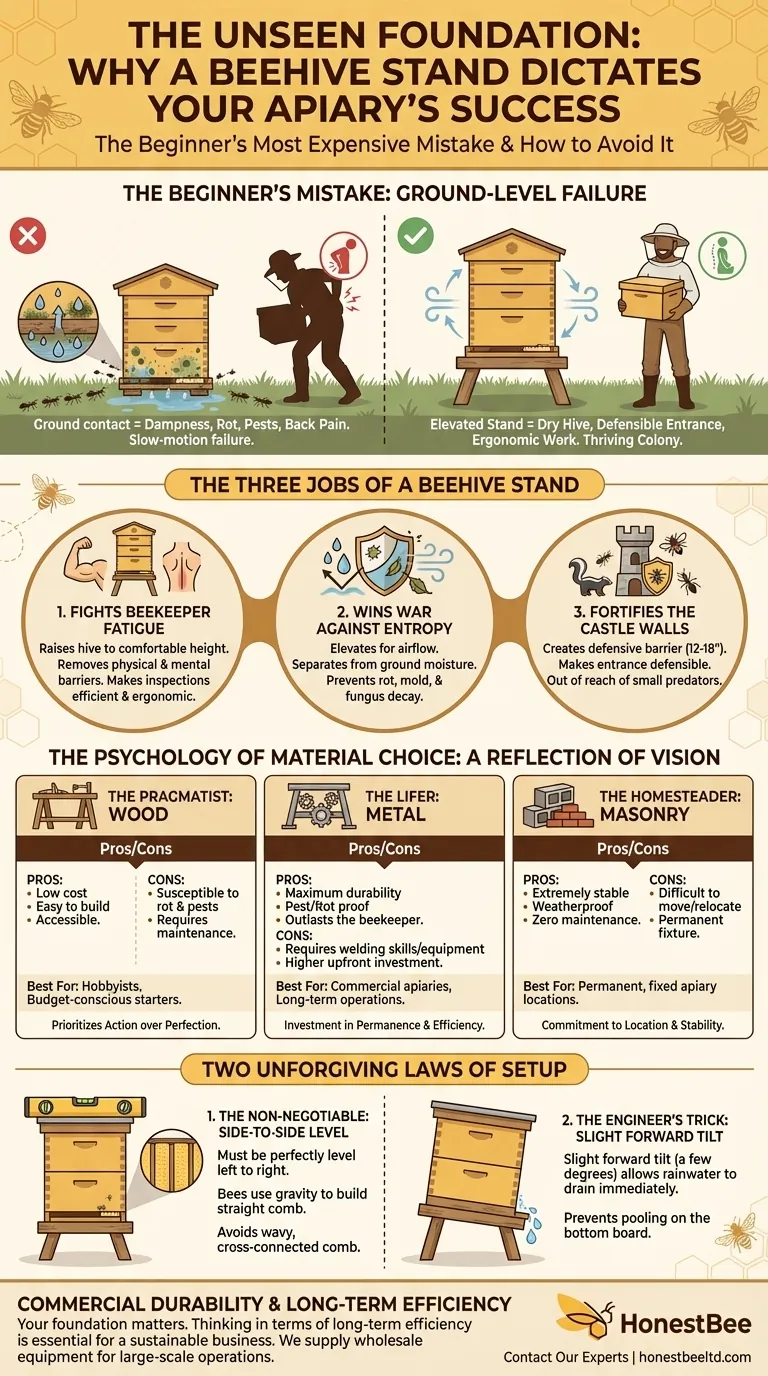
Visual Guide
Related Products
- Metal Hive Feet Bee Hive Stand for Ant Protection
- Metal Bee Hive Stand Bee Box Stand for Beekeeping
- Plastic Bee Hive Stand for Beekeeping
- Professional Ant-Proof Beehive Stand with Integrated Moat for Beekeeping
- Wooden Bee Hive Frames for Beekeeping and Wholesale
Related Articles
- How to Stabilize Beehive Stands in Wet Soil: Proven Techniques for Beekeepers
- The Unseen Architecture of a Productive Apiary: Why Your Beehive Stand Height is a System Design Choice
- Beyond the Box: How a Simple Stand Prevents Compounding Failures in Beekeeping
- How to Choose and Install a Beehive Stand for Pest Control and Colony Health
- How to Determine the Optimal Beehive Stand Height for Comfort and Efficiency