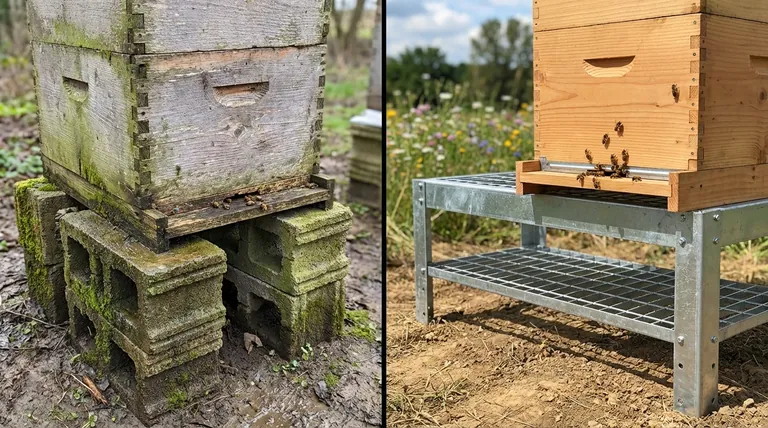
It's a scene every commercial beekeeper dreads. You crack open a hive in early spring, anticipating the low hum of a thriving colony ready for the season's first nectar flow. Instead, you're met with silence. The combs are damp, a faint smell of mildew hangs in the air, and the cluster is gone—another deadout. You did everything you thought was right, including putting the hive on cinder blocks to keep it off the wet ground. So, what went wrong?
The Cycle of Frustration: Why Cinder Blocks and Pallets Are a Losing Bet
This isn't just bad luck; it's a recurring, costly problem for apiaries everywhere. Many beekeepers see a hive on the ground, recognize the danger of dampness, and reach for the most convenient solution: a few cinder blocks, some wooden pallets, or leftover lumber. The logic seems sound: elevation equals dryness.
Yet, the losses continue. Hives that should be strong are plagued by chalkbrood. Colonies that look healthy in the fall perish before spring. This isn't just a loss of bees; it's a direct blow to your bottom line. Every deadout represents:
- Lost Revenue: No honey production and no bees for critical pollination contracts.
- Replacement Costs: The significant expense of purchasing new packages or nucs to rebuild your numbers.
- Wasted Labor: Hours spent on colonies that ultimately fail, detracting from the care of your productive hives.
The common "solutions" often fail because they only address half of the problem. They treat the symptom—a wet bottom board—without understanding the true disease.
The Real Enemy: It's Not Just the Rain, It's the Breath
The critical mistake is assuming moisture is only an external threat. In reality, your hives are fighting a war on two fronts.
Front #1: External Moisture (The Obvious Foe)
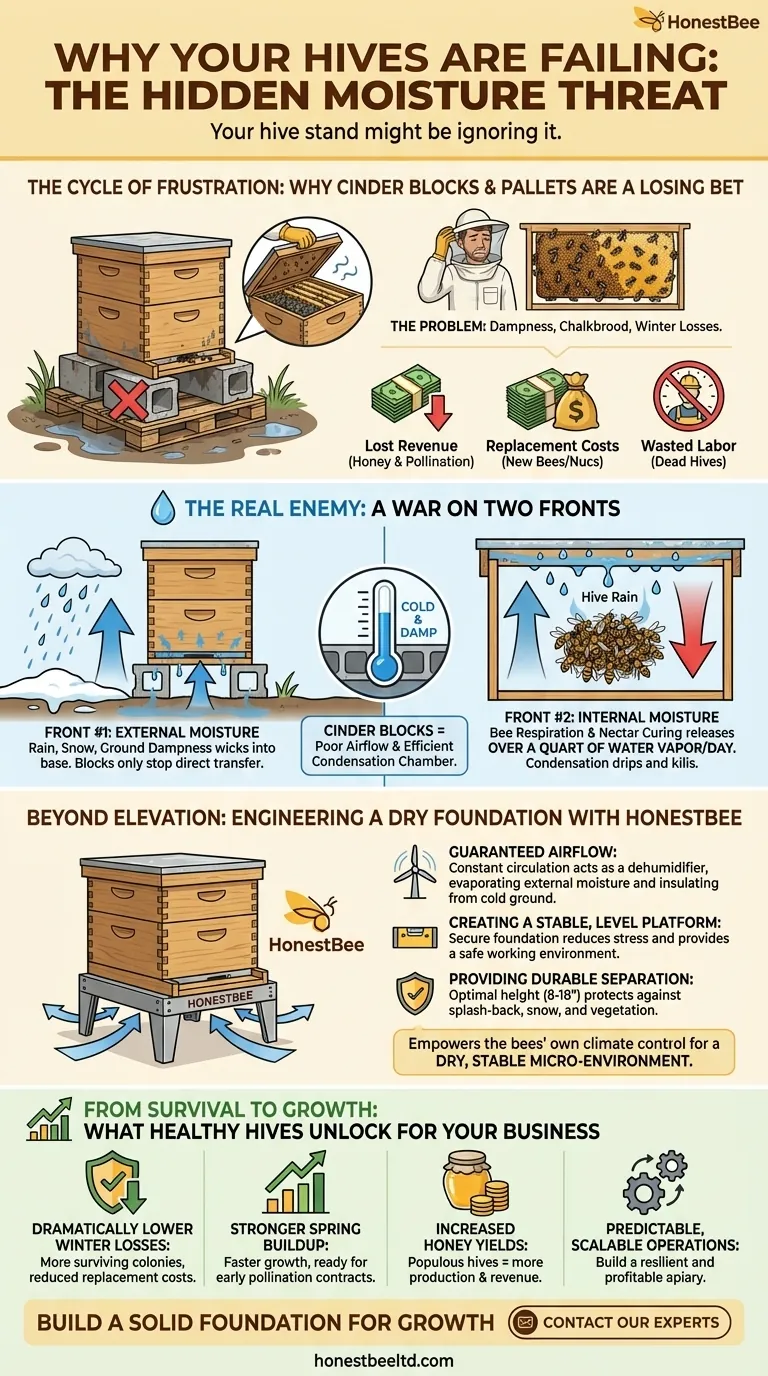
This is the enemy you see: rain, melting snow, and persistent ground dampness. A hive sitting directly on the ground will wick this moisture into its wooden base, promoting rot and creating a perpetually damp foundation. Cinder blocks do a decent job of blocking this direct transfer.
Front #2: Internal Moisture (The Hidden Threat)
This is the enemy from within. A healthy, active colony is a living engine that produces a staggering amount of water vapor through simple respiration and the process of curing nectar. A single large colony can release over a quart of water vapor into the hive's air every single day.
When this warm, moist air rises and hits the cold inner cover, it condenses into water droplets. This "hive rain" then drips back down onto the bee cluster, chilling and killing them far more effectively than the cold outside.
This is why your cinder blocks aren't enough. They may stop moisture from wicking up, but they do little to combat the condensation from within. In fact, by providing poor overall airflow, a simple block can keep the hive's foundation cold and damp, making the entire hive a more efficient condensation chamber. You've blocked the front door but sealed the windows shut.
Beyond Elevation: Engineering a Dry Foundation
To truly protect your colonies, you need to defeat both moisture threats simultaneously. This requires more than simple elevation; it requires a tool specifically designed to create a dry, insulated, and well-ventilated base. It requires a system that empowers the bees' own climate control efforts.
This is precisely why professional hive stands are engineered the way they are. They are not just platforms; they are a strategic component of hive health.
A properly designed hive stand from HONESTBEE addresses the root of the problem by:
- Guaranteeing Airflow: Unlike solid blocks, our stands are designed to allow air to circulate freely under the entire surface of the bottom board. This constant airflow acts like a permanent dehumidifier, evaporating external moisture and helping to insulate the hive from the cold, damp ground.
- Creating a Stable, Level Platform: Wobbly, uneven blocks create stress for the colony and are a hazard for the beekeeper. Our stands provide a secure and stable foundation that ensures the hive is sound, safe to work, and functions as it should.
- Providing Durable Separation: By elevating the hive to an optimal height (typically 8-18 inches), our stands create a definitive barrier against rain splash-back and ground moisture, while keeping the entrance clear of snow and overgrown vegetation.
They are designed not just to block water, but to create the dry, stable micro-environment necessary for the bees' own ventilation system to function effectively.
From Survival to Growth: What Healthy Hives Unlock for Your Business
When you solve the chronic moisture problem at its source, you're not just saving a few hives. You are fundamentally changing the potential of your entire operation.
With colonies that are consistently drier and healthier, you move from a defensive position of minimizing losses to an offensive one of maximizing growth. This unlocks new possibilities:
- Dramatically Lower Winter Losses: Go into each season with more surviving colonies, drastically reducing your replacement costs.
- Stronger Spring Buildup: Healthier colonies build up faster, making them ready for valuable early-season pollination contracts.
- Increased Honey Yields: Powerful, populous hives are productive hives. More bees mean more honey and greater revenue.
- Predictable, Scalable Operations: Stop gambling against the weather and start building a more resilient and profitable apiary.
Your equipment shouldn't be part of the problem; it should be the foundation of the solution. Investing in the right tools is the first step toward building a more robust and successful commercial beekeeping business. If you're ready to move beyond the cycle of frustration and unlock the full potential of your apiary, our team is here to help you build a solid foundation for growth. Contact Our Experts to discuss your specific needs and learn how our wholesale solutions can benefit your operation.
Visual Guide
Related Products
- Metal Hive Feet Bee Hive Stand for Ant Protection
- Plastic Bee Hive Stand for Beekeeping
- Metal Bee Hive Stand Bee Box Stand for Beekeeping
- Professional Ant-Proof Beehive Stand with Integrated Moat for Beekeeping
- Plastic Bee Frame Beekeeping Hive Frames for Wholesale
Related Articles
- How to Stabilize Beehive Stands in Wet Soil: Proven Techniques for Beekeepers
- How to Choose and Install a Beehive Stand for Pest Control and Colony Health
- The Unseen Foundation: Why a Beehive Stand Dictates Your Apiary's Success
- Beyond the Box: How a Simple Stand Prevents Compounding Failures in Beekeeping
- The Unseen Architecture of a Productive Apiary: Why Your Beehive Stand Height is a System Design Choice