The Beekeeper's Blind Spot
Imagine a commercial beekeeper managing several apiaries. One yard is struggling with chalkbrood. After an inspection, he drives to another yard across the county, where his strongest colonies reside. He pulls on the same pair of goatskin gloves, still tacky with propolis and wax from the last hive.
He doesn't think twice. The gloves feel like a second skin, a familiar part of the work.
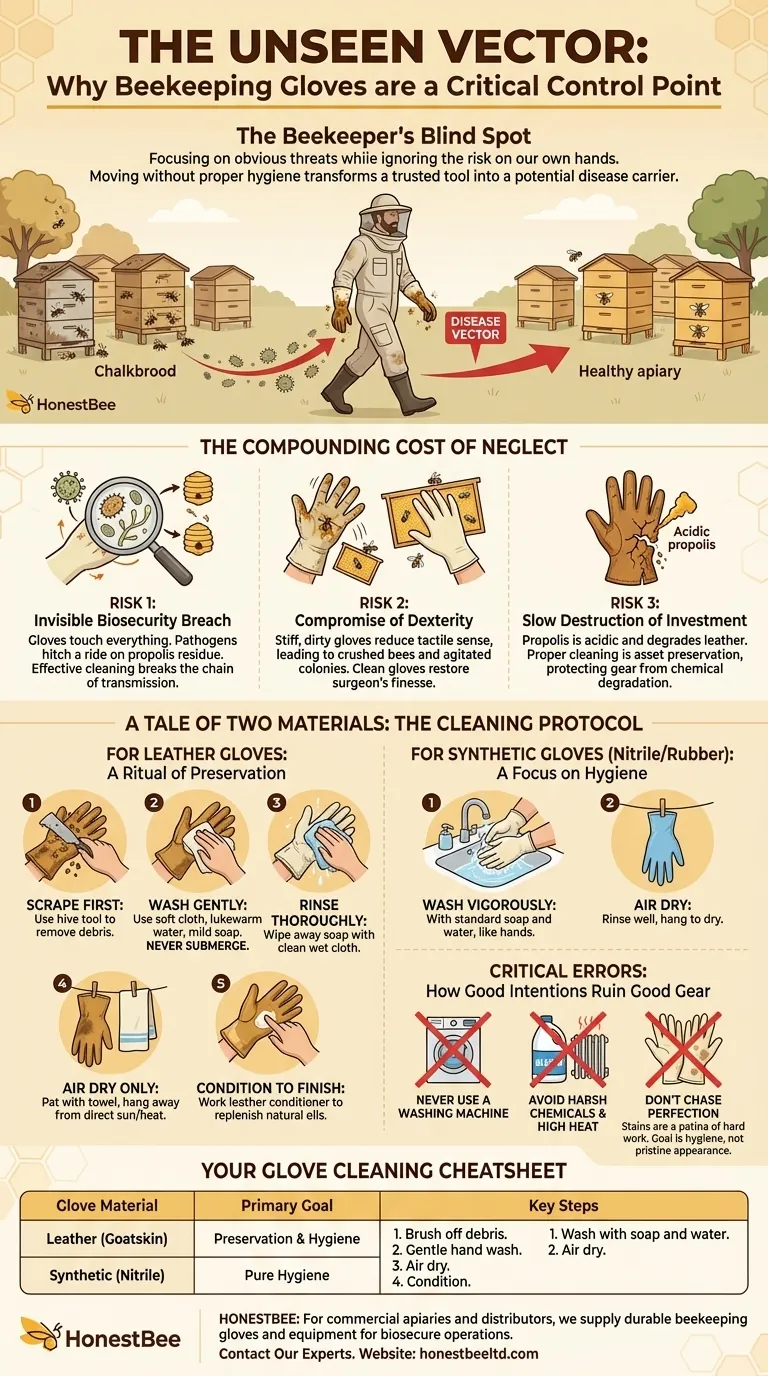
But on their surface, they carry a microscopic payload. The simple, overlooked act of moving from one apiary to another without proper equipment hygiene transforms a trusted tool into a potential vector for disease. This is the beekeeper's blind spot: focusing on the obvious threats like mites and weather, while ignoring the risk we carry on our own hands.
The Compounding Cost of Neglect
We are wired to react to immediate, visible problems. A slow, invisible threat rarely triggers the same urgency. Yet, in a system as complex as an apiary, small, repeated moments of neglect compound into catastrophic failures.
Dirty gloves represent a tiny, recurring debt against the health of your operation. Each time they are used without cleaning, the risk accumulates.
Risk 1: The Invisible Biosecurity Breach
Your gloves are the single most intimate point of contact with the colony. They touch frames, brood, honey, and the bees themselves. Pathogens like American Foulbrood spores or fungal diseases can easily hitch a ride on propolis residue.
Regular, effective cleaning isn't just about tidiness; it is a fundamental biosecurity protocol. It breaks the chain of transmission between hives and yards, insulating your operation from a cascading outbreak.
Risk 2: The Compromise of Dexterity
Gloves caked in hardened propolis and wax become stiff and clumsy. This isn't just an annoyance; it's a safety issue.
Beekeeping requires a surgeon's finesse. Stiff gloves reduce your tactile sense, turning delicate movements into crude ones. You risk crushing bees, jarring frames, or making sudden motions that agitate the colony. Clean, supple gloves restore your dexterity, leading to calmer bees and a safer beekeeper.
Risk 3: The Slow Destruction of an Investment
High-quality leather gloves are a significant investment, designed to last for years. Propolis, however, is acidic. Left to sit, it will slowly eat away at the leather, causing it to become brittle and weak.
Proper cleaning is not an expense; it is asset preservation. It protects your gear from chemical degradation, ensuring it serves you season after season.
A Tale of Two Materials: The Cleaning Protocol
The right cleaning method is not a universal one. It depends entirely on the material of your gloves. The goal for leather is preservation and hygiene; for synthetics, it is sterility above all else.
For Leather Gloves: A Ritual of Preservation
Goatskin and other leather gloves require a methodical approach to clean them without causing irreversible damage.
-
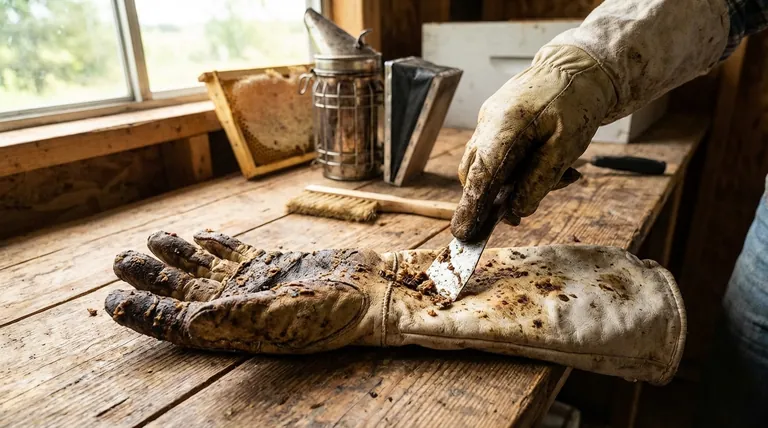
Scrape First: Before any water is involved, use a hive tool or stiff brush to physically remove all loose propolis and wax. Focus on the seams.
-
Wash Gently: Use a soft cloth, lukewarm water, and a mild soap (like saddle soap). Wring the cloth out and gently wipe the gloves. Never submerge them completely in water.
-
Rinse Thoroughly: With a new, clean cloth and fresh water, wipe away all soap residue. Leftover soap will dry out the leather.
-
Air Dry Only: Pat the gloves with a towel and then hang them to dry away from direct sun or heat. Heat will shrink and crack the leather.
-
Condition to Finish: Once completely dry, work a small amount of leather conditioner into the gloves. This replenishes the natural oils, keeping them soft and flexible.
For Synthetic Gloves (Nitrile/Rubber): A Focus on Hygiene
The process for non-porous synthetic gloves is far simpler.
These can be washed vigorously with standard soap and water, just as you would wash your hands. Rinse them well, and hang them to dry. There is no need for conditioning, as the material has no oils to replenish.
Critical Errors: How Good Intentions Ruin Good Gear
Knowing what not to do is as important as the correct procedure.
- Never Use a Washing Machine: This is the fastest way to destroy leather gloves. The total submersion, harsh detergent, and agitation will shrink and stiffen them beyond repair.
- Avoid Harsh Chemicals & High Heat: Bleach, solvents, and strong detergents will strip the oils from leather. A machine dryer or a radiator will cook the material, making it brittle.
- Don't Chase Perfection: Your gloves will retain propolis stains. This is not a sign of failure. The goal is hygiene and function, not a pristine appearance. The stains are a patina of hard work.
Your Glove Cleaning Cheatsheet
| Glove Material | Primary Goal | Key Steps |
|---|---|---|
| Leather (Goatskin) | Preservation & Hygiene | 1. Brush off debris. 2. Gentle hand wash. 3. Air dry. 4. Condition. |
| Synthetic (Nitrile) | Pure Hygiene | 1. Wash with soap and water. 2. Air dry. |
Protecting your bees and your business starts with reliable, high-quality equipment. For commercial apiaries and distributors, ensuring every team member has the right gear is the first step toward building a resilient, biosecure operation. HONESTBEE specializes in supplying durable beekeeping gloves and a full range of equipment designed for the demands of wholesale and commercial use.
Building a successful operation is about mastering the small, consistent disciplines. Let us help you with the tools. Contact Our Experts
Visual Guide
Related Products
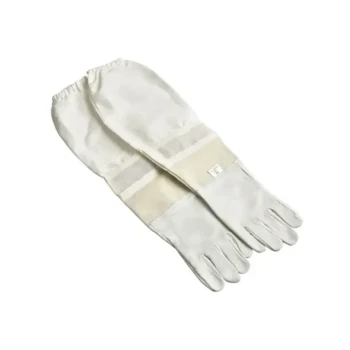
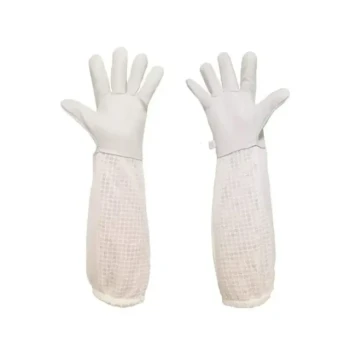
- Beekeeping Gloves Goatskin Leather with Long Cotton Sleeve for Beekeepers
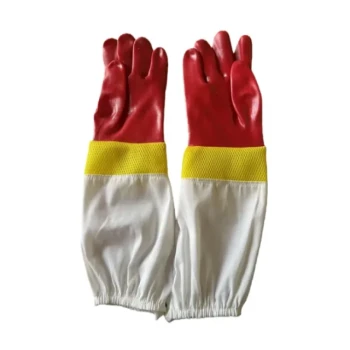
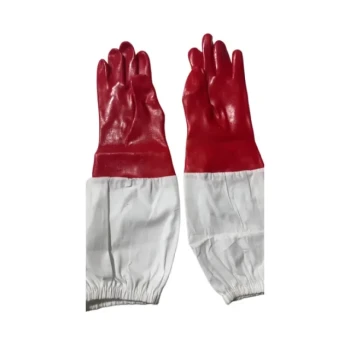
- Heavy Duty Red Rubber Beekeeping Gloves with Vented Mesh Cotton Sleeves
- Heavy Duty Red Rubber Beekeeping Gloves with Extended Pure Cotton Sleeves for Beekeepers
- Goatskin Leather Beekeeper Gloves with Vent Long Sleeve for Beekeeping Honey Bee Sting Proof Protection
- Premium Ventilated Goatskin Beekeeping Gloves with Full 3-Layer Mesh Sleeve
Related Articles
- How Proper Storage Extends Beekeeping Glove Lifespan by Multiple Seasons
- The Second Skin: A Beekeeper's Guide to Glove Longevity and Apiary Health
- How to Choose Beekeeping Gloves: Material Science for Optimal Protection & Dexterity
- How to Choose Beekeeping Gloves: Material, Fit, and Care Explained
- Beyond the Sting: How Glove Hygiene Dictates Apiary Success