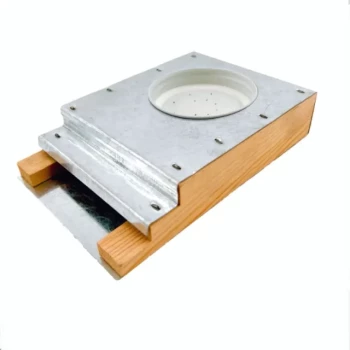
You lift the hive lid, expecting to see a busy colony eagerly taking down the sugar syrup you provided. Instead, you’re met with a sticky, tragic scene: bees drowned in a puddle of their food, the brood nest damp and chilled. Your well-intentioned effort to support the colony has backfired, creating a bigger problem than you were trying to solve.
This isn't a rare accident. It's one of the most common and frustrating failures in beekeeping, turning a vital management task into a high-stakes gamble.
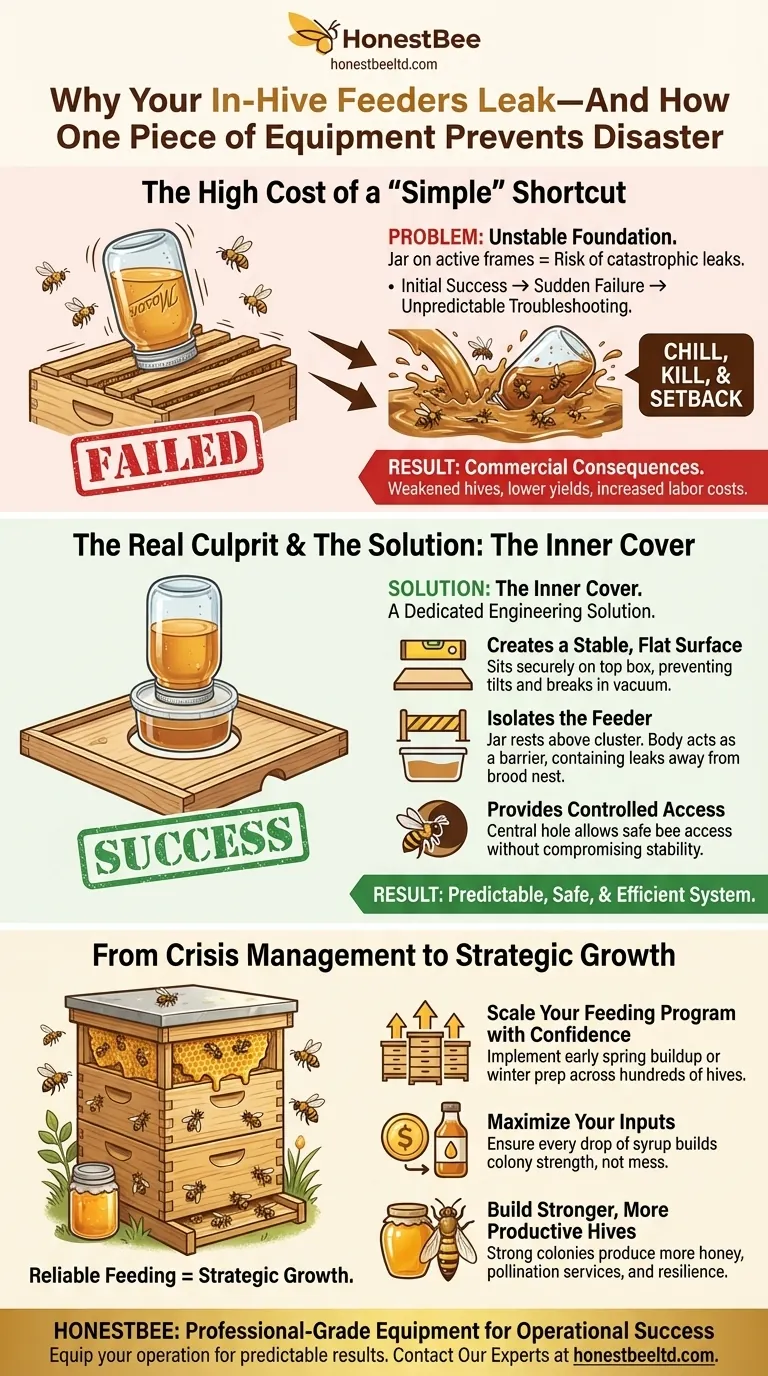
The High Cost of a "Simple" Shortcut
When a colony needs feeding, the logic seems simple: get the food inside the hive, directly to the bees. This leads many beekeepers to the quickest method—inverting a mason jar feeder and placing it directly on the top bars of the uppermost frame. An empty hive box is placed around it for protection, and the job is done.
But this "simple" shortcut is notoriously unreliable. Here’s the cycle so many commercial apiaries experience:
- Initial Success: The first few times, it might work perfectly.
- Sudden Failure: Then, one day, you find a hive soaked in syrup. The jar's vacuum seal broke, and the entire quart of liquid dumped onto the cluster.
- The Troubleshooting Begins: Was the lid on too tight? Not tight enough? Was the jar tilted? You try again, double-checking everything, but the failures remain sporadic and unpredictable.
These aren't just minor setbacks; they have significant commercial consequences. A single feeder leak can chill and kill brood, set back colony development by weeks, and, in the worst cases, lead to the loss of a queen. For a commercial operation, this translates directly to weakened production hives, lower honey yields, and increased labor costs spent on cleanup and crisis management instead of growth.
The Real Culprit: It's Not the Jar, It's the Foundation
The frustrating inconsistency of top-bar feeding leads many to blame the jars, the lids, or even the bees. But the root cause is much more fundamental: instability.
Think of the top bars of a frame. They aren’t a solid, flat surface. They are a series of narrow ridges with gaps in between, all covered in a dynamic, shifting population of bees. Placing a heavy, top-heavy jar of liquid on this uneven and active surface is an invitation for disaster. The slightest shift by the bee cluster can tilt the jar, momentarily break the vacuum seal, and start a catastrophic leak.
The shortcut of placing the jar directly on the frames fails because it ignores a basic principle of engineering: a critical process requires a stable, dedicated platform. You are trying to perform a delicate task on an unstable foundation.
The Inner Cover: Your Hive's Built-in Safety Platform
To solve this problem permanently, you don't need a better jar; you need a better foundation. This is precisely the role the inner cover was designed to fill.
An inner cover is not just an extra lid. When used for feeding, it becomes a dedicated engineering solution that separates the feeder from the colony while providing controlled access.
Here is how it directly solves the root problem:
- Creates a Stable, Flat Surface: The inner cover sits securely on the top hive box, providing a perfectly flat and stable platform for your feeder jar. It cannot be jostled or tilted by the bees below.
- Isolates the Feeder: The jar now rests above the main cluster, not directly on top of it. The body of the inner cover acts as a physical barrier, meaning that even a catastrophic leak is contained on the cover, preventing syrup from flooding the brood nest.
- Provides Controlled Access: The central hole in the inner cover is the key. It allows bees to travel up into the protected space of the empty hive box, access the feeder, and return to the cluster, all without compromising the stability of the jar.
Using an inner cover transforms in-hive feeding from a risky gamble into a predictable, safe, and highly efficient system. It is the tool specifically designed for this job.
From Crisis Management to Strategic Growth
Once you eliminate the risk of feeder disasters, you unlock new strategic possibilities for your operation. Reliable feeding isn't just about preventing losses; it's about driving growth.
With a safe and predictable system built around high-quality inner covers, you can:
- Scale Your Feeding Program with Confidence: Implement early spring buildup or late-season winter preparation across hundreds of hives without the constant fear of random failures.
- Maximize Your Inputs: Ensure every drop of syrup goes to building colony strength, not creating a deadly mess. This efficiency directly impacts your bottom line.
- Build Stronger, More Productive Hives: Consistently strong colonies produce more honey, provide more effective pollination services, and are better able to withstand environmental pressures.
The right feeding strategy, supported by the right equipment, is fundamental to building a more resilient and profitable apiary. At HONESTBEE, we understand that professional-grade equipment isn't a luxury—it's the foundation of operational success. Our durable, precision-made inner covers and hive components are engineered to provide the stability and reliability you need to manage your apiaries at scale. If you're ready to move beyond makeshift solutions and equip your operation for predictable results, we can help. Contact Our Experts to discuss how our wholesale supplies can support your unique goals.
Visual Guide
Related Products
- In-Hive Dual Compartment Frame Bee Feeder for Targeted Colony Nutrition
- Professional In-Hive Frame Bee Feeder by HONESTBEE
- Professional In-Hive Bee Feeder HONESTBEE Frame for Beekeeping
- HONESTBEE Professional Entrance Bee Feeder Hive Nutrition Solution
- HONESTBEE Entrance Bee Feeder Professional Hive Nutrition Solution for Beekeeping
Related Articles
- Why Your Bees Are Starving in Winter (And How the Right Feeder Prevents It)
- How to Choose Between Frame and Gravity Feeders for Healthy Honey Bee Colonies
- How to Choose the Right Bee Feeder for Your Hive’s Health and Efficiency
- An Operator's Calculus: The Hidden Trade-offs of High-Capacity Bee Feeders
- How to Choose Between Frame and Gravity Feeders for Optimal Hive Health