The Pressure of the Calendar
Imagine a commercial beekeeper watching the calendar. A sudden cold snap is forecast, and hundreds of colonies are underweight for winter. The task is monumental: deliver thousands of gallons of sugar syrup, fast. Every hive opened is a disturbance, every trip to the apiary costs fuel and time.
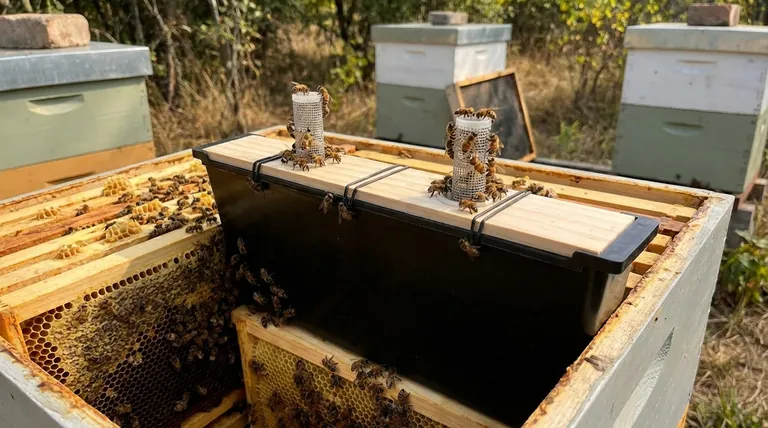
In this scenario, a feeder’s capacity isn't just a number. It's the primary variable in an urgent calculation of survival and profitability. This is why the in-hive frame feeder, a simple box that replaces a frame, becomes an object of intense strategic importance.
The Allure of Volume
The appeal of a frame feeder lies in its impressive volume. It’s a solution born from the logic of scale.
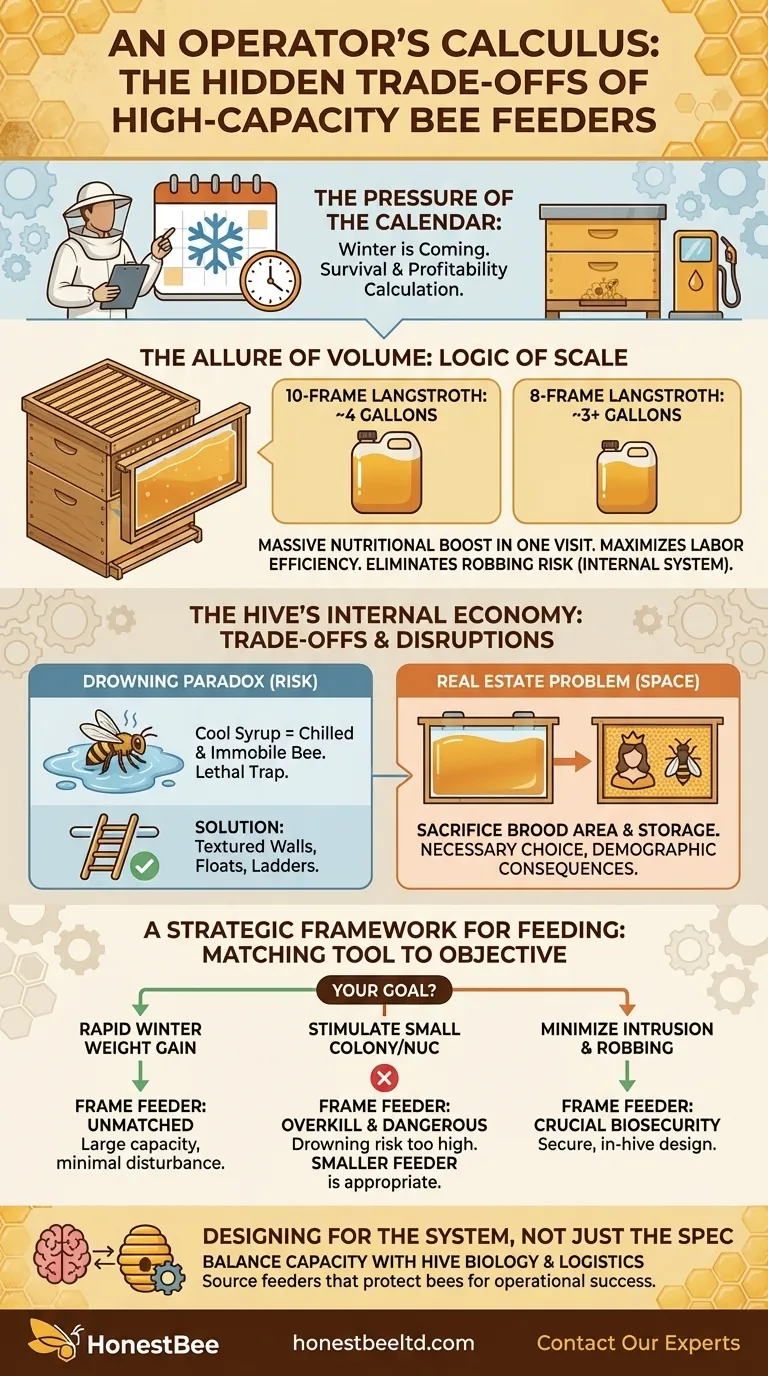
- For a 10-frame Langstroth hive: A standard frame feeder holds approximately 4 gallons.
- For an 8-frame Langstroth hive: The capacity is slightly over 3 gallons.
This isn't a trivial amount. It means a beekeeper can deliver a massive nutritional boost in a single visit, minimizing colony stress and maximizing labor efficiency. For an operation managing hundreds or thousands of hives, reducing feeding visits by a factor of two or three isn't a small gain; it's a fundamental shift in operational capacity.
Furthermore, because the entire system is contained within the hive walls, it virtually eliminates the risk of robbing—a frantic, destructive behavior that external feeders can easily incite by exposing syrup to marauding bees from other colonies.
The Hive's Internal Economy
But intervening in a complex system always comes with trade-offs. The hive is a finely balanced economy of space and resources, and inserting a multi-gallon feeder is a significant disruption.
The Drowning Paradox
The most immediate and heartbreaking risk is drowning. A bee’s body temperature is subject to its environment. If it falls into a vast pool of cool syrup, it can quickly become chilled, unable to move, and drown. The very tool meant to ensure its survival becomes a lethal trap.
This is not a simple flaw but a complex physics problem. It’s a function of surface tension, bee anatomy, and the feeder’s internal design. Well-engineered feeders mitigate this with textured inner walls, floats, or integrated ladders that provide bees a critical lifeline. The quality of the tool directly impacts the outcome.
The Real Estate Problem
A frame feeder occupies the space of one or two brood frames. Inside the hive, every square inch is prime real estate. This space could be used by the queen to lay the next generation of winter bees or by workers to store pollen and honey.
Using a frame feeder is a conscious decision to temporarily sacrifice brood area for rapid energy storage. It's a necessary choice when facing a nectar dearth or an oncoming winter, but it's a choice with consequences for the colony's demographic structure.
A Strategic Framework for Feeding
The decision to use a frame feeder isn't about whether it's "good" or "bad." It's about matching the tool to the objective. The right choice is dictated by your specific goal for the colony.
-
Goal: Rapid Weight Gain for Winter The frame feeder is unmatched. Its large capacity is perfect for quickly delivering the heavy syrup needed to build winter stores with minimal disturbance.
-
Goal: Stimulating a Small Colony or Nuc A high-capacity frame feeder is often overkill and dangerous. The vast surface area of the syrup poses too great a drowning risk for a small population. A smaller feeder is more appropriate.
-
Goal: Minimizing Hive Intrusion & Robbing In densely packed apiaries or during times of nectar scarcity, the secure, in-hive design of a frame feeder is a crucial biosecurity feature.
Capacity at a Glance
| Hive Type | Frame Feeder Capacity |
|---|---|
| Standard 10-Frame Langstroth | ~4 Gallons |
| Standard 8-Frame Langstroth | ~3+ Gallons |
Designing for the System, Not Just the Spec
Ultimately, the capacity of a frame feeder is just one data point. The more important understanding is how that volume interacts with the delicate biology of the hive and the relentless logistics of a commercial operation. The best equipment is designed with this entire system in mind.
For commercial apiaries and distributors, sourcing feeders that balance high capacity with features that protect your bees is essential for both colony health and operational success.
Visual Guide
Related Products
- Professional In-Hive Frame Bee Feeder by HONESTBEE
- 3.5L Plastic Beehive Frame Feeder Deep Frame Water Feeder for In Hive Use
- In-Hive Dual Compartment Frame Bee Feeder for Targeted Colony Nutrition
- Professional In-Hive Bee Feeder HONESTBEE Frame for Beekeeping
- Rapid Bee Feeder White Plastic 2L Round Top Feeder for 8 or 10-Frame Bee Hives
Related Articles
- Why Your Bees Are Starving in Winter (And How the Right Feeder Prevents It)
- How to Choose Between Frame and Gravity Feeders for Healthy Honey Bee Colonies
- How to Choose the Right Bee Feeder for Your Hive’s Health and Efficiency
- How to Choose Between Frame and Gravity Feeders for Optimal Hive Health
- Why Your In-Hive Feeders Leak—And How One Piece of Equipment Prevents Disaster