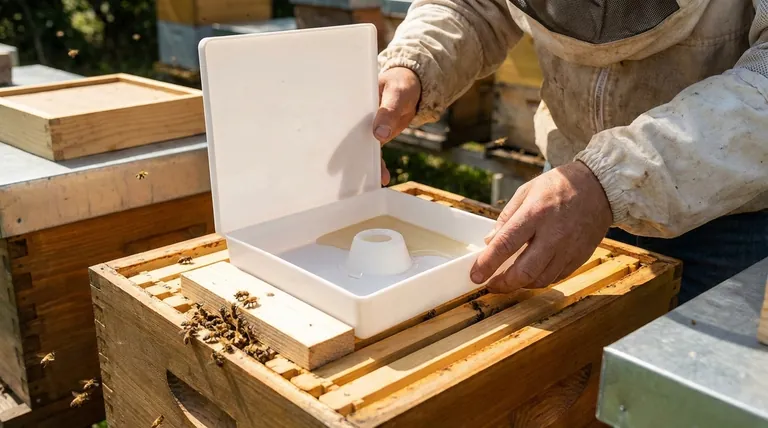
Beekeepers face a critical challenge when feeding their colonies: how to provide essential nutrition while preventing robbing behavior, leaks, and hive intrusions. This guide delivers actionable strategies for protecting weak hives, selecting optimal feeders, and implementing supplemental safety measures—all based on proven beekeeping practices.
Protecting Weak Hives During Feeding
Weak colonies are especially vulnerable during feeding periods. Here’s how to fortify them effectively:
How Entrance Reduction Deters Robbing Behavior
- Narrow the Hive Entrance: Reduce the opening to about 1–2 inches using a wooden block or entrance reducer. This limits access to robber bees while allowing resident bees to defend the hive more efficiently.
- Timing Matters: Implement entrance modifications before feeding begins, as robbing behavior escalates once foreign bees detect syrup.
Seasonal Considerations for Hive Modifications
- Spring/Summer: Prioritize ventilation alongside entrance control to prevent overheating.
- Fall/Winter: Focus on insulation and wind protection, as colder temperatures reduce robbing risks but increase condensation concerns.
Pro Tip: Monitor hive activity after modifications. If bees struggle to enter, slightly widen the opening.
Choosing and Sealing Feeders Effectively
The right feeder minimizes leaks and discourages pests. Research shows internal hive feeders are safest, reducing disease transmission risks by up to 60% compared to external models.
Comparing Frame Feeders vs. Hive-Top Feeders
| Feature | Frame Feeders | Hive-Top Feeders |
|---|---|---|
| Capacity | Moderate (1–2 gallons) | High (3–5 gallons) |
| Accessibility | Requires hive opening to refill | Refillable without disturbing the colony |
| Best For | Small colonies or targeted feeding | Large colonies during nectar dearths |
Step-by-Step Leak Prevention Techniques
- Inspect Seals: Check for gaps between feeder components before filling.
- Use Food-Grade Sealant: Apply a thin layer to feeder seams (avoid areas bees contact directly).
- Test with Water: Fill the feeder with water and observe for leaks before adding syrup.
Supplemental Strategies for Bee Safety
Using Propolis to Reinforce Feeder Seals
Bees naturally seal gaps with propolis. Encourage this behavior by:
- Leaving small gaps (<1/8 inch) near feeder edges for bees to patch.
- Avoiding excessive cleaning of propolis deposits during feeding periods.
Monitoring Hive Health Post-Feeding
- Check for Robbing Signs: Aggressive bee behavior or dead bees near the entrance may indicate intrusions.
- Assess Syrup Consumption: Rapid depletion could signal robbing; slow consumption may imply feeder leaks or hive weakness.
Ready to Elevate Your Beekeeping Practices?
HONESTBEE equips commercial apiaries and distributors with durable, leak-resistant feeders and safety accessories—helping you nurture thriving colonies with confidence. [Explore our beekeeping solutions today.]
Key Takeaway: Successful hive feeding balances nutrition delivery with proactive pest management. By combining entrance controls, sealed feeders, and natural reinforcements, beekeepers can sustain colonies year-round.
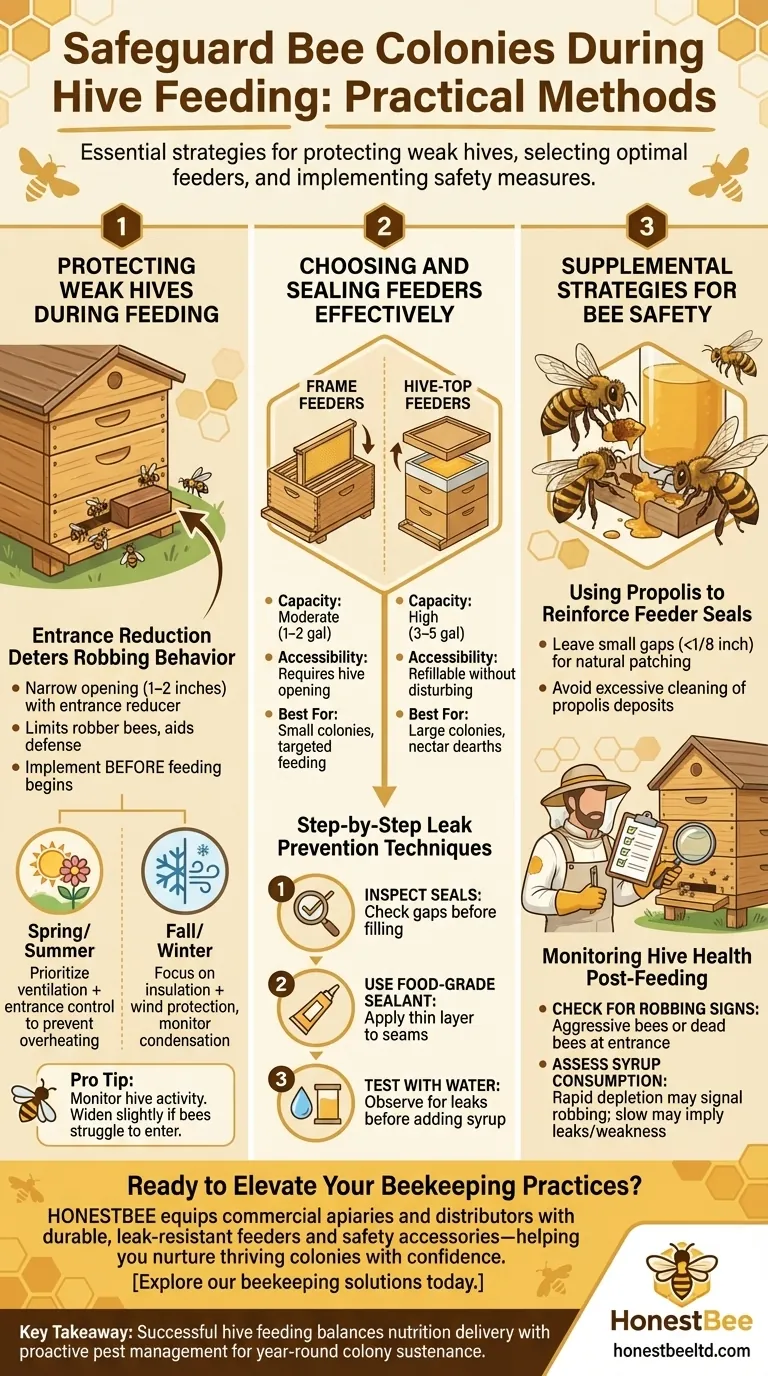
Visual Guide
Related Products
- Professional Hive Top Bee Feeder for Beekeeping
- HONESTBEE Professional Hive Top Bee Feeder Feeding Solution
- HONESTBEE Square Top Hive Bee Feeder Top Bee Feeder
- Professional Hive Front Entrance Bee Feeder
- HONESTBEE Professional Entrance Bee Feeder Hive Nutrition Solution
Related Articles
- The Winter Fortress: Engineering Colony Survival with the Hive Top Feeder
- How to Prevent Bee Drowning in Top Feeders Without Sacrificing Efficiency
- How to Choose Between Frame and Gravity Feeders for Healthy Honey Bee Colonies
- How to Choose the Right Bee Feeder for Your Hive’s Health and Efficiency
- Optimizing Winter Beehive Survival: A Guide to Top Feeders for Cold-Weather Beekeeping



















