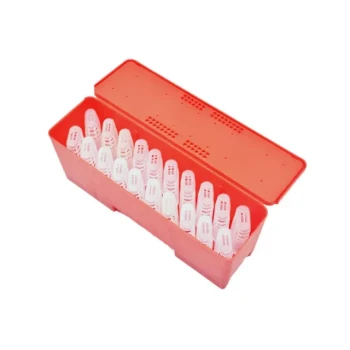
Swarm boxes function as controlled micro-environments designed to replicate specific aspects of bee colony dynamics on a manageable scale. In scientific studies, these standardized containers are utilized to simulate the conditions of colony division and to facilitate the introduction of new queens. By equipping them with essential resources like honey and pollen frames, researchers create a stable "queenless micro-colony" that allows for the isolation of specific biological variables without the noise and unpredictability of a full-sized hive.
By providing a standardized, resource-rich environment lacking a queen, swarm boxes allow researchers to precisely measure the timing of worker bee ovary development and the onset of the laying worker phenomenon.
Creating a Controlled Experimental Baseline
Simulating Colony Division
Swarm boxes are not merely storage units; they are experimental tools used to mimic the natural division of a colony.
By separating a specific population of bees into these standardized containers, researchers can replicate the swarming impulse or the conditions of a colony split. This provides a consistent setting for observing how bees react to isolation from the main hive.
Standardization of Resources
To ensure that biological observations are accurate, variables affecting bee health must be controlled.
The reference notes that swarm boxes are equipped with honey and pollen frames. This standardization ensures that the micro-colony has sufficient nutrition to survive the study duration, eliminating starvation or resource stress as confounding factors in the data.
Investigating Queenless Physiology
The Micro-Colony Concept
Swarm boxes maintain what is described as a "queenless micro-colony."
This reduced scale is critical for observation. It allows scientists to manage the population easily while still maintaining enough social structure to study complex behaviors that would occur in a larger colony.
Measuring the Laying Worker Phenomenon
A primary application of the swarm box is studying reproductive physiology in the absence of a queen.
Normally, queen pheromones suppress worker reproduction. By utilizing these boxes to enforce a queenless state, researchers can observe the "laying worker phenomenon," where worker bees begin to lay unfertilized eggs.
Timing Ovary Development
The standardized nature of the box allows for precise temporal measurements.
Researchers use these containers to track the exact timeline of worker bee ovary development. Because the environment is controlled, they can determine the specific intervals required for ovaries to activate once the queen's suppressive influence is removed.
Understanding the Constraints
Temporal Limitations
It is important to recognize that swarm boxes are explicitly defined as "temporary" containers.
They are designed for specific experimental intervals, such as the induction of queenlessness or the introduction phase of a new queen. They are not intended for long-term colony housing, as the micro-colony dynamic is unstable over extended periods.
The Stress of Queenlessness
While useful for study, the environment created is inherently one of biological stress for the bees.
The "queenless" state is an emergency condition for a colony. Therefore, the behaviors observed—such as worker ovary development—are reactive mechanisms to the loss of a queen, rather than indicators of a stable, thriving colony.
Making the Right Choice for Your Goal
Application Strategy
When designing an experiment or management plan, the utility of the swarm box depends on the specific biological trigger you wish to pull.
- If your primary focus is Queen Introduction: Use the swarm box to create a controlled, resource-rich environment that minimizes variables during the acceptance period.
- If your primary focus is Reproductive Physiology: Use the queenless micro-colony setup to establish a precise timeline for worker ovary development and laying behavior.
Standardizing the physical container ensures that any behavioral changes observed are the result of biological processes, not environmental inconsistencies.
Summary Table:
| Feature | Purpose in Scientific Research | Experimental Benefit |
|---|---|---|
| Micro-Environment | Replicates hive dynamics on a small scale | Simplifies observation and isolation of variables |
| Standardized Resources | Provides fixed honey and pollen frames | Eliminates nutritional stress as a confounding factor |
| Queenless State | Simulates colony division and pheromone loss | Triggers laying worker behavior for physiological study |
| Temporal Control | Facilitates precise timing of interventions | Allows accurate measurement of worker ovary activation |
Scale Your Apiary Operations with HONESTBEE
Maximize your honey production and research efficiency with professional-grade tools from HONESTBEE. As a premier partner for commercial apiaries and global distributors, we provide more than just supplies—we offer complete operational solutions.
Our comprehensive wholesale catalog includes:
- Advanced Machinery: Hive-making equipment and high-precision honey-filling machines.
- Beekeeping Hardware: Durable, standardized tools designed for heavy-duty use.
- Essential Consumables: A full spectrum of industry-standard supplies to keep your colonies thriving.
- Cultural Merchandise: Unique honey-themed retail products for your brand.
Whether you are conducting rigorous bee research or managing a large-scale commercial operation, HONESTBEE delivers the quality and scale you need.
Contact us today to explore our wholesale offerings!
References
- A. Elbassiouny. OCCURANCE OF LAYING WORKERS AT DIFFERENT HONEY BEE COLONIES STATUS. DOI: 10.21608/ajs.2005.15527
This article is also based on technical information from HonestBee Knowledge Base .
Related Products
- Styrofoam Mini Mating Nuc Box with Frames Feeder Styrofoam Bee Hives 3 Frame Nuc Box
- HONESTBEE Collapsible Tiered Bee Swarm Catcher for Beekeeping
- Portable Electric Bee Vacuum with Lithium Battery and 20L Collection Bucket
- Portable Bee Mating Hive Boxes Mini Mating Nucs 8 Frames for Queen Rearing
- Langstroth Honey Bee Box Hive Boxes for Different Depths
People Also Ask
- How are nuc boxes used in queen rearing? The Essential Tool for Reliable Queen Mating
- What is the primary advantage of mini mating nucs? Maximize Queen Production with Minimal Bee Resources
- Why are empty nuc boxes or spare hives used for Small Hive Beetle inspections? Improve Your Pest Detection Accuracy
- Can a nuc box be used for swarm catching? An Effective and Manageable Solution for Beekeepers
- How should a beekeeper relocate a new colony in a nuc box? Master the 5-5 Rule for Success