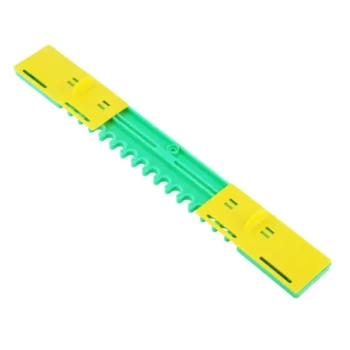
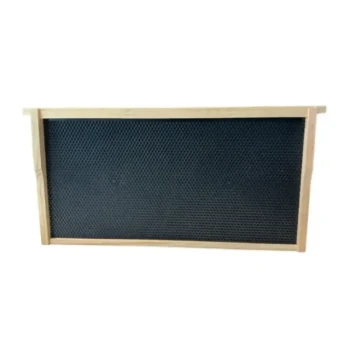
Hive interiors can be designed to make propolis collection a natural bee behavior rather than an occasional response. Rough, unfinished surfaces, narrow grooves, and specially structured propolis traps give resin-foraging workers gaps to fill with plant resin. The resulting propolis envelope forms an antimicrobial barrier around the nest cavity and can strengthen colony defenses against bacterial and fungal brood pathogens, including American Foulbrood (AFB) and chalkbrood.
Smooth commercial hive walls provide few cues for continuous propolis construction. By recreating the rough, irregular interior of a tree cavity—and allowing adequate bee access—hive equipment can encourage bees to build a persistent resin barrier that supports pathogen management and colony health.
Why Interior Design Influences Propolis Construction
Smooth walls do not provide enough collection points
Standard hive boxes are often planed smooth for manufacturing consistency. Although bees may still apply propolis to cracks and joints, smooth walls generally do not stimulate the same continuous resin deposition seen in natural tree cavities.
Bees are more likely to place plant resin where they encounter rough textures, narrow openings, and small gaps that need sealing.
Roughness activates a natural sealing behavior
Resin-foraging bees collect plant resins and use them to close unwanted openings, stabilize surfaces, and regulate the nest environment. Rough-sawn timber and mechanically roughened walls recreate some of the structural cues found inside natural cavities.
The objective is not to make the hive defective. It is to provide controlled, bee-accessible sites where workers can deposit propolis and gradually form a connected envelope.
Hive Wall Modifications That Encourage an Envelope
Use unfinished or rough-sawn interior lumber
Leaving the interior walls unfinished creates a naturally irregular surface for propolis attachment. This approach is simple for manufacturers because it can be incorporated into the lumber specification without adding a separate component.
For commercial equipment, the roughness should be consistent enough to support predictable assembly and handling while remaining visibly more textured than a fully planed interior.
Brush or scrape smooth walls
Existing wooden boxes can be modified by briskly scraping the inner walls with a wire brush. This creates small irregularities that encourage bees to collect resin along the treated surfaces.
The treatment should remain controlled. Excessive splintering, sharp projections, or loose wood fragments can damage bees and reduce equipment durability.
Cut narrow interior grooves
Cutting approximately 3 mm grooves into the inside walls provides linear gaps for bees to fill. These grooves act as deliberate propolis collection channels and can help distribute resin more consistently over the wall surface.
Groove placement should avoid interfering with frame seating, bee-space clearances, entrances, or routine hive inspection.
Install propolis trap sheets
Propolis trap mats provide a more standardized commercial solution. The sheet is fixed to the inner walls with the smooth side against the wood and the rough side facing the colony.
Some trap designs use narrow openings, such as approximately 24 × 3 mm gaps, to imitate the cracks and irregularities of a tree cavity. Bees fill these openings with resin, creating a removable or semi-permanent propolis layer.
Adjust frame capacity for clearance
When propolis trap material is installed inside a standard box, it occupies additional space. In equipment designed for ten frames, reducing the frame count to nine can provide the clearance needed to prevent excessive crowding and difficult frame removal.
This modification must preserve correct bee space. Poor spacing can create unwanted comb bridges, excessive propolization, and disruptive inspections.
How the Propolis Envelope Supports Colony Defense
It creates an antimicrobial boundary
The resin layer functions as an external antimicrobial shield around the nest cavity. Rather than relying only on individual bee immunity, the colony benefits from a defensive material positioned at the boundary between the bees and their environment.
This can help alter the microbial conditions inside the hive and reduce the pressure placed on the colony’s immune system.
It supports immune and brood-protection mechanisms
Research summarized in the references indicates that colonies with a propolis envelope can show stronger immune-related responses when exposed to pathogen spores. Nurse bees may also provide larvae with food containing greater antimicrobial activity.
These effects are particularly relevant to young brood, which is vulnerable to pathogens before its own defenses are fully developed.
It may reduce visible disease symptoms
Propolis-envelope colonies have shown reductions of more than 50% in clinical AFB signs in the referenced trials. Reported benefits also include improved defense against fungal problems such as chalkbrood and better colony performance during key seasons.
These results should be understood as a preventive support measure, not a guarantee that disease will not develop.
Designing Equipment for Commercial Use
Standardize the modification
For distributors and wholesalers, the most practical products are those with repeatable dimensions, clear installation instructions, and compatibility with standard Langstroth equipment.
Factory-installed rough interiors, pre-cut grooves, and correctly sized propolis trap systems can reduce beekeeper labor and make the benefit easier to explain at the point of sale.
Preserve inspection and maintenance access
A propolis-promoting design must not make routine management unnecessarily difficult. Removable trap sheets, accessible wall surfaces, and sufficient frame clearance help balance colony benefits with practical hive handling.
Products should also specify whether the propolis layer is intended to remain in place, be harvested, or be periodically replaced.
Match the product to the operating environment
Different beekeeping systems may require different levels of modification. Migratory operations may prioritize durability and rapid inspection, while research or breeding operations may prioritize consistent envelope formation and controlled comparison between colonies.
A complete product portfolio can therefore include rough-sawn boxes, grooved boxes, retrofit brush tools, and trap mats rather than a single universal design.
Understanding the Trade-offs
More propolis can mean more difficult inspections
Bees may firmly attach frames, boxes, and internal components with resin. This can increase the force required for removal and make inspections slower.
Equipment should therefore encourage wall deposition without unnecessarily increasing propolis bridges between frames.
Propolis does not replace biosecurity
A propolis envelope can support colony defenses, but it does not replace disease monitoring, hygienic management, equipment sanitation, or appropriate veterinary and beekeeping protocols.
Colonies showing suspected AFB or other serious disease symptoms require prompt professional assessment.
Surface modification must be safe and durable
Roughness, grooves, and trap materials should not introduce splinters, toxic coatings, loose fibers, or inaccessible cavities. Materials must withstand moisture, hive tools, cleaning procedures, and repeated seasonal use.
Results vary among colonies
Resin availability, local vegetation, bee genetics, season, colony strength, and management practices all influence propolis collection. A well-designed hive increases the opportunity for envelope formation, but it cannot force every colony to produce the same quantity of resin.
Making the Right Choice for Your Goal
The best design depends on whether the priority is factory efficiency, retrofit convenience, disease-supportive management, or high-volume distribution.
- If your primary focus is large-scale hive equipment supply: Offer standardized boxes with rough-sawn interiors or factory-cut grooves that fit established hive dimensions and preserve normal frame spacing.
- If your primary focus is retrofit sales: Provide wire-brushing tools and correctly sized propolis trap sheets with clear orientation and installation instructions.
- If your primary focus is colony health: Prioritize designs that encourage a continuous wall-to-wall propolis envelope while maintaining inspection access and correct bee space.
- If your primary focus is research or controlled trials: Use uniform trap dimensions, frame counts, and installation procedures so differences in envelope formation can be compared reliably.
- If your primary focus is premium B2B service: Combine compatible hive components, replacement traps, technical guidance, and rapid fulfillment into a complete propolis-management solution.
By treating hive-wall texture and gap structure as functional design features, beekeepers and equipment suppliers can help colonies build a natural antimicrobial boundary that complements—not replaces—sound disease-management practices.
Summary Table:
| Design Modification | How It Works | Key Benefits |
|---|---|---|
| Rough-sawn interior lumber | Provides irregular texture for resin attachment | Encourages consistent propolis deposition |
| Brushed/scraped walls | Creates small irregularities | Stimulates resin foraging and sealing behavior |
| Narrow grooves (~3 mm) | Gives bees linear gaps to fill | Distributes resin across wall surface |
| Propolis trap sheets | Imitates tree cavity cracks | Concentrates propolis in removable layer |
| Reduced frame count (10 to 9) | Accommodates trap thickness | Maintains proper bee space and easy handling |
Ready to optimize your hive equipment for stronger colony health? At HONESTBEE, we supply commercial apiaries and distributors with a full range of beekeeping tools and machinery, including rough-sawn boxes, grooved interiors, and propolis trap systems. Our one-stop sourcing, rapid delivery, and expert support ensure you get the right products to enhance propolis envelope construction and improve disease resistance. Contact us today to discuss your wholesale needs and benefit from our premium B2B services.
Related Products
- Inner Beehive Cover for Beekeeping Bee Hive Inner Cover
- Professional Beekeeping Quilt Box with Multi Vent Moisture Control
- Portable Bee Mating Hive Boxes Mini Mating Nucs 8 Frames for Queen Rearing
- Langstroth Honey Bee Box Hive Boxes for Different Depths
- Professional Observation Hive: The Ultimate Portable Solution for Beekeeping Education, Exhibitions, and Colony Displays
People Also Ask
- What is the purpose of the inner cover in a beehive? A Key to Hive Health & Easy Management
- What is the function and placement of an inner cover in a beehive? Essential Hive Management Guide
- What is the purpose of the inner and outer covers in a beehive? Essential for Hive Health & Management
- What is a beehive's inner cover and how is it used? Essential Guide for Hive Insulation and Ventilation
- What are the functions of the inner and outer covers on a beehive? Essential Guide for Hive Protection and Management