Commercial apiaries can adapt standard equipment for Apis florea, but only as a controlled, trial-based housing system—not as a conventional Apis mellifera hive. The practical method is to transfer an intact section of brood comb into a modified small nucleus box, secure it to a movable frame, and provide enough open space above the frame for the colony to continue its natural comb-building behavior.
Apis florea can sometimes be managed in adapted wooden frames and nucleus boxes for localized crop pollination, but colony acceptance, comb attachment, transport stability, and regulatory compliance must be validated before commercial scaling.
Why Standard Hive Equipment Requires Modification
Apis florea does not naturally nest like cavity bees
Unlike Apis cerana and Apis mellifera, which build several parallel combs inside cavities, Apis florea normally constructs a single exposed comb beneath a branch or similar support.
This means a standard multi-frame hive provides useful protection and handling access, but it does not reproduce the species’ natural nesting geometry perfectly.
The objective is support, not forced domestication
The adapted hive should be viewed as a portable shelter and management platform. The goal is to protect the colony, stabilize the brood comb, and enable field placement—not necessarily to make the colony behave like a conventional frame-hive bee.
Colony acceptance can vary. Some colonies may extend comb onto the frame, while others may attach comb to the box roof or other surfaces.
How to Adapt the Wooden Brood Frame
Select a small, compatible frame
A practical starting point is a frame based on an Apis cerana-type brood frame, approximately 280 × 175 mm, rather than a full-size Apis mellifera frame.
The smaller format reduces the amount of unsupported comb and fits more appropriately within a compact nucleus box.
Transfer brood comb with minimal damage
The brood section should be kept as intact as possible. The honey-storage cap can be trimmed where necessary to expose or separate the brood area, but the operation should avoid cutting through brood cells or excessively deforming the comb.
The transfer should be performed quickly and with minimal handling because open-nesting colonies are vulnerable to chilling, overheating, comb collapse, and abandonment when disturbed.
Secure the comb mechanically
The brood comb can be attached to the wooden frame using:
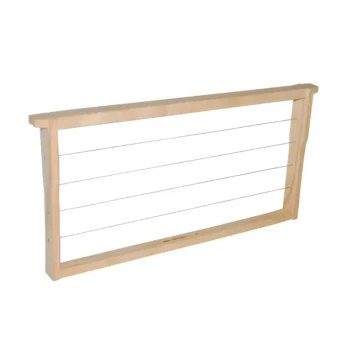
- Fine wire
- Split bamboo supports
- Twin twigs
- Other lightweight, non-toxic mechanical supports suitable for bee contact
The support should hold the comb firmly during handling while leaving the brood area and adult-bee access unobstructed.
Keep the comb in its natural orientation
Comb orientation matters. The transferred section should be mounted in the same general vertical position in which it was built, with the brood area correctly oriented and the lower edge supported.
Incorrect orientation or excessive compression can interfere with bee access and encourage the colony to abandon the transferred section.
How to Modify the Nucleus Box
Use a compact four-frame box
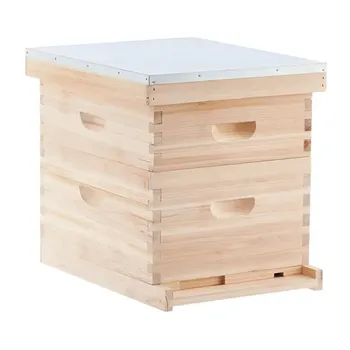
A modified four-frame nucleus box is a practical housing platform for testing and short-distance deployment.
Its smaller volume is easier to shelter, transport, inspect, and position along field margins than a full-sized commercial hive.
Provide clearance above the frame tops
The box must include adequate flight and working clearance above the frame tops. This is a critical modification because A. florea naturally builds an exposed comb beneath an overhead support.
If the frame is pressed tightly against the roof, bees may be unable to establish normal comb attachment or move freely across the upper comb area.
Protect the colony without sealing it too tightly
The box should provide shelter from rain, direct heat, and strong wind while maintaining effective ventilation and a usable entrance.
A practical design may include a weather-resistant outer cover, a secure entrance, and sufficient internal space for bees to extend comb without immediately contacting walls or the roof.
Allow inspection without destroying the nest
Movable frames and removable box components provide a valuable management advantage. Beekeepers can inspect brood condition, comb attachment, population strength, and signs of pest or predator pressure more systematically than they could with an exposed branch nest.
However, inspections should remain brief and infrequent, particularly during colony establishment.
Establishing Colonies for Crop Pollination
Begin with a small pilot program
Commercial operators should first test a limited number of adapted colonies under local conditions.
The pilot should measure:
- Colony acceptance of the transferred comb
- Comb extension onto the frame
- Population stability
- Survival after transport
- Entrance activity at the crop
- Pollination performance
- Response to weather and pesticide exposure
These observations should determine whether the system is suitable for scale-up.
Place boxes near the crop perimeter
The adapted boxes can be positioned along field borders or other protected locations close to flowering crops such as sunflower, mustard, and Apiaceae crops.
Border placement can simplify servicing while keeping the colonies near the target foraging area.
Match colony placement to flowering periods
Managed colonies are mobile biological assets. Their value comes from being positioned when the crop is producing flowers and removed or relocated when the pollination window ends.
A deployment plan should account for transport time, colony establishment, weather, crop flowering intensity, and access for servicing vehicles.
Feeding and Pollination Management
Do not assume syrup automatically improves pollination
Providing concentrated sugar syrup may reduce the colony’s need to collect nectar, but it does not guarantee that workers will collect more pollen from the target crop.
Foragers respond to colony needs, floral rewards, weather, distance, and competing plant species. Feeding should therefore be treated as a management trial, not a universal pollination optimization method.
Use feeding carefully during flowering
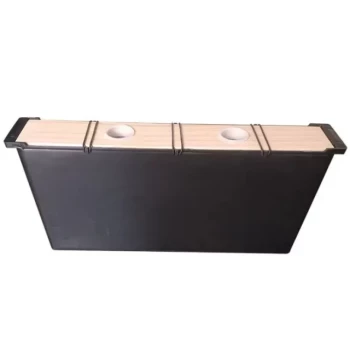
Feeders may help maintain colonies when nectar is scarce or when transport and temporary confinement have reduced available food.
However, excessive feeding can create operational problems, including leakage, robbing, unwanted foraging behavior, and reduced incentive to visit flowers. Feeding equipment should be secure, clean, and used according to the colony’s nutritional condition and the crop objective.
Protect pollination value through pesticide coordination
Placement of any managed bee colony must be coordinated with crop-protection schedules.
Operators should establish communication with growers regarding pesticide products, application timing, spray drift, and re-entry periods. A small open-nesting colony may be particularly vulnerable to direct exposure or poorly controlled field operations.
Understanding the Trade-offs
The system is not equivalent to a standard commercial hive
An adapted A. florea frame does not provide the same predictable performance as a conventional movable-frame colony of A. cerana or A. mellifera.
Comb may be rebuilt in unconventional locations, colonies may abscond, and frame inspection may remain less convenient than with cavity-nesting species.
Transport is a major risk
Open-comb architecture is more vulnerable to vibration, heat, impact, and sudden movement than multiple combs enclosed within a conventional hive.
Transport containers should keep frames secure, prevent comb from swinging, maintain ventilation, and avoid blocking the entrance. Short-distance movement and cool, low-stress transport conditions are preferable during early trials.
Species identification must be confirmed
Not every open-nesting honeybee is Apis florea. Apis dorsata and Apis andreniformis also build exposed single-comb nests, but they should not be assumed to be manageable using the same method.
Correct species identification is essential because a transfer technique that may work experimentally for A. florea is not evidence that other open-nesting species can be domesticated in standard boxes.
Regulatory and ecological risks must be addressed
Collecting wild colonies, moving them between locations, and deploying them near agricultural land may be regulated.
Commercial operators should verify local requirements, avoid removing colonies from sensitive habitats, prevent disease or parasite transmission, and ensure that managed placement does not create ecological conflicts with native pollinators.
Designing a Commercial Supply Program
Offer a complete adaptation package
For distributors and commercial beekeeping suppliers, the relevant product is not merely a wooden box. A useful package can include:
- Compact four-frame nucleus boxes
- Small-format brood frames
- Frame wire or bamboo support components
- Secure covers and entrances
- Feeders suitable for small colonies
- Ventilation and transport accessories
- Inspection and replacement parts
This one-stop approach reduces assembly delays and helps operators standardize field trials.
Prioritize interchangeable, serviceable components
Frames, covers, entrances, and supports should be easy to replace without rebuilding the entire unit.
Consistent dimensions, clear assembly instructions, rapid spare-part availability, and responsive technical support are particularly important when apiaries are preparing colonies for a narrow crop-flowering window.
Separate trial equipment from full-scale deployment
Suppliers should help customers distinguish between experimental adaptation hardware and equipment proven for routine commercial use.
The first phase should prioritize colony safety and data collection. Only after performance is repeatable should operators invest in larger inventories, transport systems, and scheduled pollination contracts.
How to Apply This to Your Project
Use the equipment as a protected, movable support system and scale only after local colony behavior has been documented.
- If your primary focus is equipment distribution: Offer compatible four-frame nucleus boxes, small brood frames, secure comb supports, feeders, and transport hardware as a complete field-ready package.
- If your primary focus is colony establishment: Start with intact brood-comb transfers, minimal disturbance, adequate overhead clearance, and sheltered placement while monitoring comb attachment and colony acceptance.
- If your primary focus is crop pollination: Deploy colonies near flowering field borders, coordinate closely with growers, and measure actual crop visitation rather than assuming feeding will increase pollination.
- If your primary focus is operational reliability: Standardize frame dimensions, inspection procedures, transport methods, replacement parts, and service response before expanding the number of colonies.
- If your primary focus is ecological compliance: Confirm species identity, local permissions, disease controls, pesticide safeguards, and responsible sourcing before moving wild colonies.
With careful adaptation, validation, and responsible deployment, standard hive hardware can become a practical management platform for testing Apis florea in commercial crop-pollination programs.
Summary Table:
| Aspect | Key Recommendation |
|---|---|
| Frame Size | Use small frames (e.g., 280×175 mm) |
| Comb Attachment | Secure with wire or bamboo supports |
| Box Design | Four-frame nucleus box with overhead clearance |
| Colony Transfer | Intact brood comb, minimal disturbance |
| Transport | Short-distance, cool, stable conditions |
| Pollination | Place near crop, coordinate with growers |
| Scaling | Pilot test before full-scale deployment |
Ready to optimize your pollination services? HONESTBEE offers a comprehensive range of beekeeping equipment, including adaptable nucleus boxes, frames, and support accessories for both standard and open-nesting honeybees. Our one-stop sourcing, rapid delivery, and expert support ensure you can deploy efficient pollination solutions quickly. For distributors and commercial apiaries, we provide OEM/ODM options, certifications, and reliable supply. Contact us today to discuss your needs and enhance your crop pollination programs — Get in touch!
Related Products
- 5 Frame Wooden Nuc Box for Beekeeping
- HONESTBEE Wired and Assembled Wooden Bee Frames Foundation for a Thriving Hive
- Automatic Heat Preservation 6 Frame Pro Nuc Box for Honey Bee Queen Mating
- Assembled Wooden Bee Frames with Plastic Foundation for Durability and Convenience by HONESTBEE
- Assembled Wooden Bee Frames with Beeswax Foundation Ready to Use by HONESTBEE
People Also Ask
- What are the options for adding frames to a nuc after taking two frames from the parent colony?
- What frames should be moved into the queenless hive when requeening with a nuc? Ensure a Successful Queen Introduction
- What roles do five-frame nucleus boxes and ten-frame Langstroth hive boxes play in colony standardization?
- What is the primary function of five-frame nuclei boxes? Master Early Colony Establishment for Stronger Hives
- What is the typical composition of frames in a nuc? A 5-Frame Blueprint for a Thriving Hive