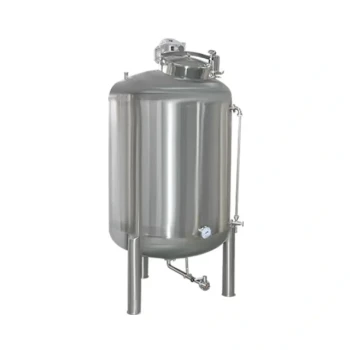
Professional honey processing and storage machinery reduces post-harvest degradation by controlling contamination, moisture, temperature, air exposure, and packaging conditions. Extraction and filtration equipment remove foreign matter, while controlled processing helps manage yeast and crystallization. Airtight, food-grade storage and automated filling then protect honey from moisture absorption and secondary contamination, preserving flavor, clarity, shelf life, and commercial value.
Honey quality is usually lost through uncontrolled handling after harvest. A properly integrated system—from extraction and filtration to temperature-controlled storage and filling—turns this vulnerable stage into a standardized, repeatable quality-control process.
Where Honey Quality Degrades After Harvest
Contamination begins with crude removal
Unhygienic extraction and crude removal methods can introduce wax, debris, dust, microorganisms, and other foreign matter. These impurities reduce visual appeal and can create problems during storage, filling, and distribution.
Moisture creates a fermentation risk
Honey is highly hygroscopic, meaning it can absorb moisture from the surrounding air. Excess moisture increases the risk of abnormal fermentation, particularly when yeast is present.
Temperature affects stability
Excessive heat can damage heat-sensitive enzymes and other bioactive components, while uncontrolled temperature changes can accelerate quality loss or influence crystallization. Storage that is too warm or unstable may also reduce the consistency expected by commercial buyers.
Packaging can reintroduce exposure
Even well-processed honey can deteriorate if filling equipment allows prolonged exposure to air, humidity, or unclean contact surfaces. Packaging is therefore part of the quality system, not merely the final production step.
How Professional Machinery Controls These Risks
Extraction equipment improves hygienic handling
Professional extraction machinery creates a more controlled path from comb to processing tank. Food-grade contact surfaces and standardized handling reduce the opportunity for foreign matter and secondary contamination to enter the product.
Filtration improves purity and appearance
Physical filtration removes wax particles, debris, and other visible impurities without relying on chemical treatment. Cleaner honey has better clarity and a more attractive appearance for retail, food-service, pharmaceutical, and industrial applications.
Controlled processing helps manage yeast and moisture
Heating and filtration systems can be used to support shelf stability by managing fermenting yeasts and reducing the impact of impurities. Processing temperatures should be selected carefully so that stability improvements do not unnecessarily compromise natural enzymes, flavor, color, or other quality attributes.
Storage tanks limit air and moisture exposure
Sealed, food-grade storage tanks help prevent honey from absorbing atmospheric moisture. They also reduce exposure to airborne contamination and provide a more consistent environment before filling or long-distance shipment.
Temperature control supports product consistency
Temperature-controlled facilities and tanks help maintain stable viscosity and manage crystallization. This makes honey easier to pump, filter, fill, and distribute while reducing unnecessary variation between batches.
Automated filling reduces secondary contamination
Automated filling machinery delivers controlled volumes and minimizes manual contact with the product. Sealed or enclosed filling operations help protect honey from air, moisture, and handling-related contamination during packaging.
How an Integrated System Preserves Commercial Value
It protects sensory characteristics
Clean filtration and controlled storage help preserve honey’s natural flavor, color, aroma, and clarity. These attributes directly affect buyer acceptance and the product’s ability to compete with higher-grade imports.
It supports physicochemical consistency
Standardized processing and storage make it easier to control moisture, crystallization behavior, and other quality indicators. Consistent batches are particularly important for wholesalers, industrial users, and distributors serving regulated or specification-driven markets.
It improves shelf stability and transport readiness
Airtight storage, appropriate temperature control, and hygienic filling reduce the conditions that promote fermentation and spoilage. This is especially valuable when honey must withstand long-distance transport or extended warehouse storage.
It enables grading and market segmentation
Professional equipment allows producers and cooperatives to process and package honey according to defined quality specifications. This supports differentiated products for retail, confectionery, pharmaceutical, food-service, and specialty applications.
It strengthens supply reliability
For distributors and B2B resellers, equipment is valuable not only because it improves product quality but also because it supports repeatable output. A standardized system makes procurement more predictable across batches and helps suppliers respond quickly to larger or urgent orders.
Understanding the Trade-offs
Excessive heating can reduce quality
Heat can support processing and shelf stability, but unnecessary or excessive heating may affect enzymes, aroma, color, and flavor. Equipment should provide precise temperature control rather than treating maximum heat as the default solution.
Filtration must match the product and market
Aggressive filtration may improve clarity but can also remove desirable natural particles or alter the characteristics expected in certain honey categories. The filtration level should reflect the target specification and end use.
Storage control requires operational discipline
A sealed tank alone cannot compensate for poor cleaning, incorrect temperature settings, or prolonged storage. Operators need documented sanitation procedures, monitoring, and routine maintenance.
Automation requires the right configuration
Automated filling improves consistency, but the system must match honey viscosity, container format, production volume, and required filling accuracy. An unsuitable machine can create bottlenecks rather than improve throughput.
Equipment selection affects total cost
The lowest purchase price may not represent the lowest operating cost. Buyers should evaluate food-grade construction, cleaning access, temperature control, spare-parts availability, technical support, delivery speed, and long-term serviceability.
How to Build a Practical Equipment Package
Start with the quality risks
Assess the likely sources of degradation: foreign matter, high moisture, fermentation, crystallization, temperature exposure, or packaging contamination. This prevents purchasing isolated machines that do not work together as a process.
Match capacity across the line
Extraction, filtration, storage, and filling capacities should be balanced. If one stage is significantly slower, it can create unnecessary holding time and reduce the benefit of the other equipment.
Specify food-grade and hygienic construction
Prioritize food-grade contact materials, cleanable designs, sealed transfer paths, and storage tanks that limit exposure to air and humidity. These features are central to preventing secondary contamination.
Require temperature and process control
Choose systems that allow operators to monitor and control processing and storage temperatures. Precision is more important than simply having a heating function.
Plan for service and fulfillment
For distributors, wholesalers, and resellers, supplier responsiveness is part of the equipment value. A strong sourcing partner should offer a broad product portfolio, fast technical communication, dependable spare-parts support, and efficient order fulfillment.
Making the Right Choice for Your Goal
A suitable system depends on whether the priority is quality improvement, production scale, market access, or supply reliability.
- If your primary focus is product purity: Prioritize hygienic extraction, appropriately specified physical filtration, food-grade transfer components, and enclosed filling.
- If your primary focus is fermentation prevention: Prioritize moisture control, airtight storage, stable temperature, and processing controls that manage yeast without unnecessary heat exposure.
- If your primary focus is premium market positioning: Invest in equipment that preserves clarity, natural flavor, color, enzymes, and batch-to-batch consistency.
- If your primary focus is large-scale distribution: Select a coordinated line with matched capacities, automated filling, reliable monitoring, and storage designed for long-distance transport.
- If your primary focus is sourcing efficiency: Work with a supplier capable of providing the full equipment range, rapid responses, technical expertise, and dependable delivery from one source.
Professional machinery cannot replace sound harvesting, sanitation, and quality testing, but it can make those practices consistent, scalable, and commercially reliable.
Summary Table:
| Risk Factor | Mitigation Equipment | Key Benefit |
|---|---|---|
| Contamination | Extraction & filtration | Removes impurities, improves clarity |
| Moisture | Sealed storage tanks | Prevents fermentation |
| Temperature | Temperature-controlled processing | Maintains stability & consistency |
| Air exposure | Airtight storage & filling | Avoids moisture absorption |
| Packaging | Automated filling | Reduces secondary contamination |
Protect honey quality and scale your business with reliable machinery from HONESTBEE. Our comprehensive range of extraction, filtration, storage, and filling equipment gives you a one-stop sourcing solution. With certified products, rapid response, and efficient delivery, we help distributors and beekeepers achieve consistent quality and on-time supply. Contact us today to learn how we can support your operations!
Related Products
- Heavy Duty Stainless Steel Honey Processing Machine Decrystallizing Tank
- Fully Automatic Honey Filling Packaging Machine for Processing Line
- Honey Concentrating and Filtering Dehumidifier Machine 2T Capacity for Honey
- Professional Honey Storage Tank with Agitation System
- Electric Double Wall Honey Filtering Machine Purifier Equipment for Honey Processing Plant
People Also Ask
- What are the features of the processing tanks offered? Engineered for Purity and Efficiency
- What types of stainless steel processing tanks are used for honey? Essential Equipment for Quality Honey Production
- What design options are available for honey processing tanks? Optimize Efficiency with Custom Geometries
- What types of stainless steel are used for honey processing? Ensure Food Safety with 304 & 316 Grade Equipment
- Why is industrial-grade stainless steel processing equipment required for honey harvesting? Ensure Purity & Compliance