The industry standard materials for constructing honey processing equipment are 304 and 316 stainless steel. These specific grades are essential for custom-built machinery because they withstand the natural acidity of honey without corroding or contaminating the final product.
Core Takeaway Because honey is naturally acidic (pH 3.2 to 4.5), it acts as a solvent that can erode standard metals. Utilizing 304 or 316 stainless steel is the only way to prevent heavy metals from leaching into the product, ensuring compliance with international food safety standards.
Why Specific Grades Matter
The Acidity Challenge
Natural honey typically possesses a pH value ranging from 3.2 to 4.5.
This acidic environment is aggressive enough to corrode ordinary metal containers over time. If the equipment material is not chemically inert, the honey will slowly eat away at the container walls.
Preventing Chemical Contamination
The primary danger of using incorrect materials is chemical leaching.
When acidic honey interacts with non-compliant materials, it causes the migration of metal ions. This can introduce heavy metal residues—such as zinc, copper, iron, chromium, and lead—into the honey, compromising its safety and flavor.
Hygiene and Sterilization
Food-grade stainless steel allows for superior sanitation practices.
Tanks and pipes made from 304 and 316 stainless steel often feature mirror-polished interior and exterior surfaces. This smoothness prevents bacterial harborage and facilitates the rigorous cleaning and sterilization required to maintain the honey's biological stability.
Understanding the Grades: 304 vs. 316
304 Stainless Steel
This is the most commonly used grade for honey processing equipment.
It offers excellent durability and corrosion resistance, making it ideal for components that come into direct contact with honey. It effectively maintains product purity and is generally the standard for meeting hygiene regulations.
316 Stainless Steel
316 stainless steel is often utilized in high-specification, custom-built processing systems.
While similar to 304, 316 grade typically offers enhanced resistance to chlorides and acids. It provides an extra layer of protection against corrosion in rigorous industrial environments, ensuring the equipment has a long operational lifespan.
Common Pitfalls to Avoid
Prohibited Materials
In many countries, regulations explicitly ban the use of certain older materials for honey extraction.
You must strictly avoid equipment made from tinplate, galvanized metal, or aluminum. While these were used in the past, they are no longer considered safe for modern food processing.
The Risk of "Low-Quality" Alloys
Not all metal equipment is created equal.
Low-quality metal alloys or non-food-grade steels can release dangerous elements like cadmium, nickel, and cobalt into the honey. Relying on "industrial-grade" stainless steel specifically rated as 304 or 316 is the only way to guarantee the physicochemical properties of the honey remain unaltered.
Making the Right Choice for Your Goal
When selecting or fabricating equipment, ensure your specifications align with your safety and production goals.
- If your primary focus is general processing: Specify 304 stainless steel for all contact surfaces to ensure durability and standard regulatory compliance.
- If your primary focus is maximum corrosion resistance: Opt for 316 stainless steel, particularly for custom-built tanks intended for long-term storage or high-volume industrial processing.
- If your primary focus is upgrading old facilities: Immediately replace any extractors made of galvanized steel or aluminum to eliminate the risk of heavy metal contamination.
Invest in the correct metallurgy today to protect the purity of your product tomorrow.
Summary Table:
| Feature | 304 Stainless Steel | 316 Stainless Steel | Prohibited Materials (Galvanized/Al) |
|---|---|---|---|
| Corrosion Resistance | High (Industry Standard) | Superior (Acid/Chloride Resistant) | Low (Corrodes quickly) |
| Food Safety | Excellent | Exceptional | High Risk of Heavy Metal Leaching |
| Primary Use | General extraction & contact | High-volume industrial & storage | Not for food contact |
| Surface Finish | Mirror-polished options | Mirror-polished options | Rough/Porous |
| pH Suitability | 3.2 – 4.5 (Acidic honey) | 3.2 – 4.5+ (Highly acidic) | Unsuitable |
Elevate Your Honey Production Standards with HONESTBEE
At HONESTBEE, we understand that the purity of your honey depends on the quality of your machinery. We specialize in providing commercial apiaries and distributors with high-grade, food-safe solutions, including:
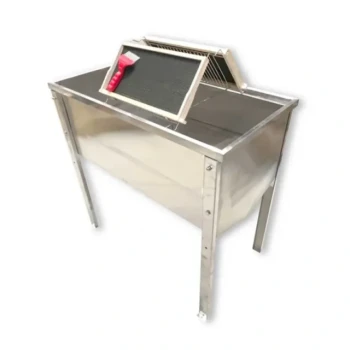
- Premium Equipment: 304/316 stainless steel honey extractors, tanks, and honey-filling machines.
- Industrial Machinery: Professional-grade hive-making tools and advanced processing lines.
- Comprehensive Wholesale: A full spectrum of beekeeping tools and essential consumables.
- Cultural Merchandise: Unique honey-themed retail products to expand your brand.
Whether you are upgrading an industrial facility or stocking a distribution network, our durable metallurgy ensures long-term ROI and regulatory compliance. Contact HONESTBEE today to discuss your custom equipment needs and secure wholesale pricing!
Related Products
- Heavy Duty Stainless Steel Honey Processing Machine Decrystallizing Tank
- Professional Stainless Steel Honey Filtering Machine with Water Bath Heating for Beekeeping
- Stainless Steel Manual Honey Press with Guard for Pressing Honey and Wax
- 10L Stainless Steel Electric Honey Press Machine
- Heavy Duty 304 Stainless Steel Honey Dipper
People Also Ask
- What are the features of the processing tanks offered? Engineered for Purity and Efficiency
- What types of stainless steel processing tanks are used for honey? Essential Equipment for Quality Honey Production
- What design options are available for honey processing tanks? Optimize Efficiency with Custom Geometries
- Why is industrial-grade stainless steel processing equipment required for honey harvesting? Ensure Purity & Compliance
- Why is professional honey de-crystallization equipment essential? Preserve Quality and Maximize Processing Efficiency