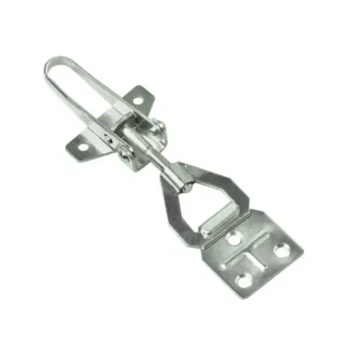
Adjustment is achieved primarily through the threaded mechanism. To alter both the length and the resulting strength of a beehive connector, you must manipulate the threaded eye component. Rotating this eye allows you to fine-tune the physical dimensions of the assembly, which directly dictates the tension and security of the connection.
The threaded eye serves as the central control point for the connector. By screwing this component in or out, you simultaneously modify the length of the assembly and the tension strength applied to the connection.
The Mechanics of Adjustment
Identifying the Control Point
The key to adjusting a beehive connector lies in the threaded eye. This component acts as the variable interface between the connector body and the attachment point. It is designed to be rotated to facilitate precise changes.
Modifying Connection Length
To adjust the length, you simply rotate the threaded eye relative to the connector body. Screwing the eye inward reduces the overall length of the unit. Conversely, unscrewing the eye extends the length of the connection.
The Link Between Length and Strength
It is critical to understand that length and strength are coupled in this design. As you adjust the threaded eye to change the length, you are effectively altering the tension of the system. Generally, shortening the connection increases the tension (strength) applied to the hold, while lengthening it relaxes that tension.
Operational Considerations
Thread Engagement Limits
When extending the connector for greater length, you must be mindful of thread engagement. There is a physical limit to how far the eye can be unscrewed. Leaving too few threads inside the body can significantly weaken the structural integrity of the connector.
Balancing Tension and Reach
A shorter connection provides a stronger, tighter hold, but it offers less geometric reach. You must find the optimal position on the threads that provides the necessary tension without forcing the components into a misalignment or over-stressed state.
Fine-Tuning for Your Application
Proper adjustment depends on balancing your need for physical reach against your need for secure tension.
- If your primary focus is maximum holding strength: Rotate the threaded eye inward to shorten the connection, thereby increasing the tension and security of the hold.
- If your primary focus is extending reach: Rotate the threaded eye outward to increase length, ensuring you maintain sufficient thread engagement for safety.
Master the manipulation of the threaded eye to ensure your beehive connector delivers the exact performance your project requires.
Summary Table:
| Adjustment Goal | Action Required | Resulting Effect |
|---|---|---|
| Increase Strength | Rotate threaded eye inward | Shortens length and increases tension |
| Extend Reach | Rotate threaded eye outward | Increases length and decreases tension |
| Maintain Integrity | Ensure deep thread engagement | Prevents structural failure or stripping |
| Fine-Tuning | Minor rotational increments | Achieves precise balance for specific hive needs |
Maximize Your Apiary Productivity with HONESTBEE
Precise equipment adjustments are vital for successful large-scale beekeeping. At HONESTBEE, we empower commercial apiaries and distributors with high-performance beekeeping tools, specialized machinery, and essential consumables. Whether you need reliable hive connectors, advanced hive-making machines, or premium honey-themed merchandise, our comprehensive wholesale portfolio is designed to scale your operations.
Ready to upgrade your equipment? Contact us today to discuss our wholesale offerings and discover how our expertise can drive your business forward.
Related Products
- Durable Plastic Interlocking Hive Connector for Beekeeping
- Heavy Duty Adjustable Hive Connector
- Stainless Steel Round Beehive Air Vents for Ventilation
- Heavy-Duty Nylon Beehive Hive Strap with Stainless Steel Cinch Buckle
- Steel Round Disc Entrance Reducer for Flexzion Bee Hive Nuc Box Gate
People Also Ask
- How do plastic bee hives compare to wooden hives in handling? Reduce Strain & Boost Efficiency
- Are plastic bee hives any good? Unlock Durability & Efficiency for Your Apiary
- Under what circumstance are beehive connectors particularly beneficial? Optimize Handling for Full Beehive Attachments
- Are plastic bee hives good? Durable, Low-Maintenance Hives for Modern Apiaries
- What is the advantage of using the beehive connector when handling full attachments? Achieve Safe and Efficient Hive Transport