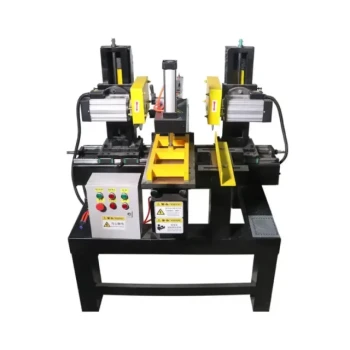
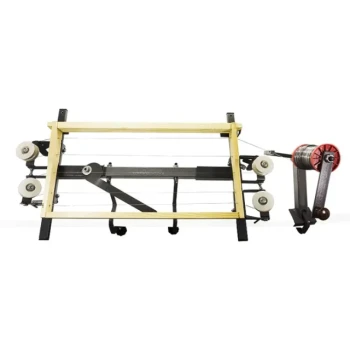
Hive Component Joiners are specialized assembly machines designed to streamline the connection of smaller hive parts, such as inner covers and bottom boards. These systems offer two critical advantages: they significantly enhance the structural integrity of the hive to eliminate gaps that could admit pests, and they drastically reduce the manual effort required to assemble intricate components.
By automating the assembly process with precision, Hive Component Joiners do not just save time; they create seamless, gap-free connections that are essential for maintaining a secure and pest-resistant environment for the colony.
Enhancing Hive Durability and Safety
Preventing Pest Intrusion
The most critical biological advantage of using a Component Joiner is the protection it affords the colony. Manual assembly can result in slight irregularities or loose fits.
These machines ensure precise connections, eliminating gaps where pests could enter. By sealing the hive effectively, you reduce the risk of infestation and disease.
Ensuring Structural Integrity
A hive must withstand the elements and the weight of the colony. Component Joiners often utilize advanced bonding methods, such as glue application systems or dowel insertion.
This creates seamless joints that are stronger than those typically achieved through basic manual nailing. The result is a robust unit capable of enduring long-term use.
Optimizing Assembly Operations
Minimizing Manual Labor
Fitting intricate components together is traditionally a time-consuming, hands-on task. Component Joiners automate the most complex parts of this process.
By handling the precise alignment and fastening of parts, these machines reduce physical strain on workers. This allows for higher production rates with less human effort.
Material Versatility
Modern manufacturing often involves different substrates. These machines are frequently compatible with a range of materials, including traditional wood and polystyrene.
This flexibility allows manufacturers to maintain high assembly standards regardless of the specific material chosen for the hive components.
Understanding the Trade-offs
Specialization vs. General Utility
While highly effective, these are specialized machines intended for specific tasks, such as connecting bottom boards or inner covers.
They are not "all-in-one" workshop tools. Investing in one makes the most sense if you have a consistent volume of specific components to assemble, rather than for general, ad-hoc repairs.
Dependency on Material Uniformity
To achieve the "seamless joints" these machines promise, the input materials (wood or polystyrene cuts) must be reasonably uniform.
Unlike a human who can adjust for a warped board on the fly, a machine relies on consistent material quality to prevent jamming or misalignment.
Making the Right Choice for Your Goal
When evaluating whether to integrate Hive Component Joiners into your workflow, consider your primary objectives:
- If your primary focus is Colony Health: Prioritize machines that guarantee gap-free construction to ensure maximum protection against pests.
- If your primary focus is Manufacturing Volume: Look for systems with automated glue or dowel features to maximize the reduction in manual labor.
The true value of a Hive Component Joiner lies in its ability to transform a labor-intensive chore into a precise mechanical process, ensuring both the efficiency of the beekeeper and the safety of the bees.
Summary Table:
| Key Advantage | Benefit to Operation | Technical Feature |
|---|---|---|
| Pest Protection | Eliminates gaps to prevent infestation | High-precision alignment systems |
| Structural Integrity | Stronger, more durable hive units | Advanced bonding & dowel insertion |
| Labor Efficiency | Drastically reduces manual assembly time | Automated fastening processes |
| Material Versatility | Compatible with wood and polystyrene | Multi-substrate handling |
| Output Quality | Seamless, uniform joints | Mechanical consistency over manual efforts |
Scale Your Apiary Production with HONESTBEE
As a leading supplier for commercial apiaries and global distributors, HONESTBEE provides the industrial-grade machinery you need to streamline your operations. Our specialized Hive Component Joiners are designed to eliminate labor bottlenecks and ensure every hive you produce meets the highest standards of durability and pest resistance.
From advanced hive-making and honey-filling machines to a complete spectrum of wholesale beekeeping tools and consumables, we offer the full-scale solutions your business demands. Partner with us to enhance your manufacturing precision and delivery capacity.
Ready to upgrade your workflow? Contact our expert team today to discuss how our wholesale equipment can drive your success.
Related Products
- Beehive Machine Double End Saw for Precision Hive Component Manufacturing
- Heavy Duty Adjustable Hive Connector
- Durable Plastic Interlocking Hive Connector for Beekeeping
- Automatic Finger Joints Joint Making Machine for Bee Box and Hive Making
- V-Shaped Spring Hive Connector for Beekeeping
People Also Ask
- Why is precision woodworking machinery critical for the standardization of beehive components? Ensure Hive Compatibility
- How does beehive manufacturing machinery benefit large-scale commercial beekeeping? Scale Your Apiary Efficiency
- Why is professional beehive manufacturing machinery essential for raw honey quality? Precision for Commercial Success.
- What are the operational advantages of specialized beehive manufacturing machinery for expanding commercial apiaries?
- What is the significance of specialized beehive manufacturing machinery? Drive Scalability for Commercial Apiaries