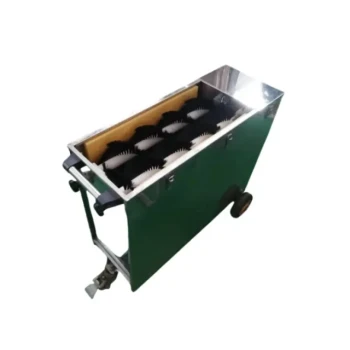
Artificial swarming process tools enhance apiary productivity by systemizing the natural reproductive behaviors of honeybees. Instead of relying on passive growth, these tools allow beekeepers to actively split high-capacity, strong colonies into multiple new units. By utilizing specialized splitting equipment, standardized queen-rearing boxes, and new hive foundations, apiary managers can rapidly multiply their stock to ensure continuity and expansion.
By leveraging the natural biological tendency of hives to split when they reach capacity, artificial swarming tools transform colony restoration from a passive wait into an active, scalable management strategy. This approach is critical for recovering from Colony Collapse Disorder (CCD) and building long-term apiary resilience.
The Mechanics of Induced Expansion
Leveraging Biological Tendencies
Artificial swarming is not about forcing an unnatural process; it is about timing and control. Honeybee colonies possess an innate biological drive to split once they reach a specific population capacity.
Tools designed for artificial swarming identify and capitalize on this peak moment. They channel this natural energy into controlled reproduction rather than losing a swarm to the wild.
The Role of Specialized Equipment
The process relies on a suite of specific hardware to ensure the new units survive and thrive. This includes specialized tools to physically separate the colony and standardized queen-rearing boxes to ensure leadership for the new splits.
Additionally, the introduction of new hive foundations provides the necessary infrastructure for rapid comb building. This hardware combination reduces the variable risks associated with traditional, manual splitting methods.
Strategic Resilience Against Colony Loss
Combating Colony Collapse Disorder (CCD)
The primary strategic value of these tools lies in recovery. Commercial apiaries often face significant devastation due to Colony Collapse Disorder (CCD).
Artificial swarming tools provide a mechanism to "bounce back" quickly. By rapidly turning survivors into multiple new hives, beekeepers can restore their numbers faster than natural recovery would allow.
Increasing Apiary Density
The ultimate goal of using these tools is the rapid increase of total healthy hives. This density is essential for commercial viability and pollination contracts.
By systemizing the creation of new units, the apiary moves from a preservation mindset to an expansion mindset.
Understanding the Prerequisites and Trade-offs
The Necessity of Strong Stock
Artificial swarming is not a solution for weak or struggling hives. The primary reference emphasizes that the process involves splitting healthy, strong colonies.
Attempting to split a colony that has not yet reached capacity or lacks vigor will likely result in the failure of both the original and the new unit.
Equipment Dependency
This method moves beekeeping toward a more industrial, standardized model. It requires an investment in specific queen-rearing boxes and fresh foundations.
Success is therefore dependent not just on biological knowledge, but on the availability and correct application of these standardized tools.
Optimizing Apiary Management Strategies
To effectively implement artificial swarming tools, assess your current colony strength and long-term objectives.
- If your primary focus is Rapid Expansion: Prioritize the use of standardized queen-rearing boxes and new foundations to ensure every split has the infrastructure to grow immediately.
- If your primary focus is Disaster Recovery: Concentrate on identifying your strongest remaining colonies to use as donors for splitting, ensuring you do not over-tax the survivors.
Mastering artificial swarming tools allows you to dictate the pace of your apiary’s growth, turning biological potential into predictable productivity.
Summary Table:
| Tool Type | Primary Function | Key Benefit for Apiary |
|---|---|---|
| Splitting Equipment | Controlled colony separation | Prevents hive loss to the wild |
| Queen-Rearing Boxes | Standardized queen cultivation | Ensures leadership for new splits |
| Hive Foundations | Infrastructure for comb building | Accelerates rapid expansion speed |
| Monitoring Hardware | Identifying biological peak | Optimizes timing for maximum success |
Scale Your Apiary Operations with HONESTBEE
Ready to transform your biological potential into predictable productivity? HONESTBEE caters specifically to commercial apiaries and distributors with a comprehensive wholesale offering. We provide the full spectrum of beekeeping tools and machinery—from specialized hardware like hive-making and honey-filling machines to essential industry consumables and honey-themed merchandise.
Empower your business with reliable equipment designed for large-scale colony restoration and expansion. Contact HONESTBEE today to discuss your wholesale needs and let us help you build a more resilient and productive apiary.
References
- Jessica B. Robbins. Bees in the Balance. DOI: 10.5070/bs3161013969
This article is also based on technical information from HonestBee Knowledge Base .
Related Products
- HONESTBEE Professional Telescopic Pole Bee Swarm Catcher
- HONESTBEE Collapsible Tiered Bee Swarm Catcher for Beekeeping
- Plastic Beekeeping Honey Bee Larvae Grafting Tools for Queen Rearing and Chinese Grafting
- Professional Plastic Honey Dipper for Easy Honey Drizzling
- Ergonomic Plastic Frame Spacer Tool for Rapid Hive Management Beekeeping
People Also Ask
- What should be done if the swarm is situated on the bottom of a tree limb? A Guide to Methodical Bee Capture
- What role do swarm catchers play in maintaining the production scale of an apiary? Turn Colony Loss into Growth.
- What information should be gathered before attempting to catch a swarm of bees? A Safe and Successful Guide
- What precautions can be taken to prevent a newly captured swarm from absconding? Secure Your Swarm with Proven Methods
- What role does a Swarm Catcher play in the process of expanding apiary colony scale? Optimize Growth & Reduce Costs