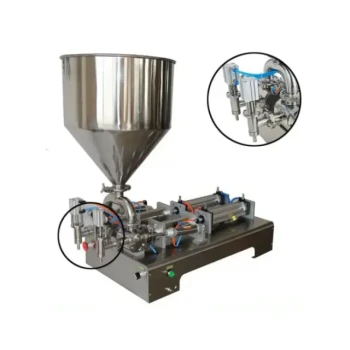
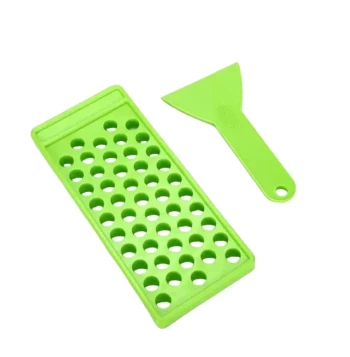
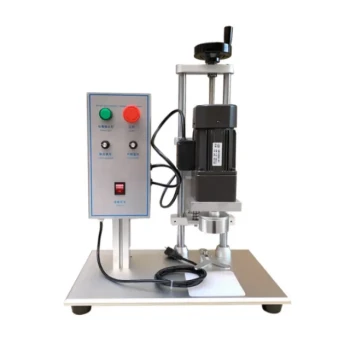
Automated filling machines dominate in speed, consistency, and long-term cost efficiency, capable of processing hundreds of units per hour with high precision. In contrast, manual filling relies entirely on human effort, resulting in lower throughput, higher variability, and significant operational dependencies on labor availability.
Core Takeaway: While manual filling relies on human effort and is prone to inconsistency, automated systems solve the scaling problem. Automation decouples production volume from labor availability, offering precision metering and lower long-term operating costs despite requiring technical maintenance.
Speed and Production Capacity
The Automated Advantage
Automated machines are built for speed and large-scale packaging. They are capable of filling hundreds of containers per hour, far outpaces what is physically possible for a human operator.
The Manual Limitation
Manual filling is inherently slow and restricted by the physical limits of human labor. It is ill-suited for high-volume environments where throughput is a critical performance metric.
Precision and Product Quality
Eliminating Variability
Automated systems offer very high consistency and utilize precision metering systems. This eliminates human error, ensuring every container is filled to the exact same level.
The Impact of Fatigue
Manual filling often results in variability in filling amounts. As operators experience fatigue, errors increase, compromising the uniformity and perceived quality of the final product.
Cost Structure and Labor
Long-term Efficiency
While automated machines require investment, they lead to lower labor costs in the long run. By automating the repetitive task of filling, you reduce the headcount required for production.
Operating Expenses
Manual filling is highly labor-intensive, particularly as quantities increase. This results in high operating costs that recur indefinitely, making it expensive to scale up production.
Adaptability and Setup
Reprogrammable Versatility
Automated machines can often be reprogrammed to handle different bottle sizes. This allows for relatively quick changeovers without extensive physical re-tooling.
Manual Adjustments
Changing bottle sizes in a manual setup requires manual adjustments. This process can be slower and less precise than the digital reconfiguration offered by automated systems.
Understanding the Trade-offs
Maintenance vs. Labor Dependency
Automated machines introduce a need for occasional maintenance to keep complex parts running. However, manual filling creates a dependency on labor availability; if workers are unavailable, production stops entirely.
Hygiene and Stability
Automated systems, specifically features like vacuum sealing technology, ensure high hygiene standards. Manual filling involves more human contact, which poses a greater risk to the hygiene and stability of sensitive products like honey during storage.
Making the Right Choice for Your Production Line
Deciding between these methods requires analyzing your volume targets and your tolerance for operational variance.
- If your primary focus is Scalability and Speed: Choose automated machines to achieve high throughput (hundreds of units per hour) and reduce per-unit labor costs.
- If your primary focus is Consistency and Quality: Choose automated systems to utilize precision metering and eliminate the variability caused by human fatigue.
- If your primary focus is Avoiding Technical Maintenance: Manual filling avoids machine upkeep but trades this convenience for high labor costs and slower production rates.
Automation transforms filling from a variable, labor-heavy task into a predictable, consistent industrial process.
Summary Table:
| Feature | Automated Filling Machines | Manual Filling Machines |
|---|---|---|
| Production Speed | High (Hundreds of units/hour) | Low (Limited by human labor) |
| Consistency | High (Precision metering) | Low (Prone to human error/fatigue) |
| Labor Costs | Low (Minimal headcount needed) | High (Labor-intensive) |
| Scalability | Easy to scale volume | Difficult/Expensive to scale |
| Maintenance | Requires technical upkeep | Low machine maintenance |
| Hygiene | High (Minimal human contact) | Variable (Higher contamination risk) |
Elevate Your Honey Production with HONESTBEE
Are you ready to transition from labor-intensive manual filling to high-precision automation? HONESTBEE specializes in supporting commercial apiaries and distributors with premium beekeeping machinery and tools.
Our advanced honey-filling machines and automated equipment are designed to maximize your throughput, ensure product consistency, and drastically reduce long-term operational costs. Beyond machinery, we provide a full spectrum of hive-making hardware and essential industry consumables tailored for the global wholesale market.
Take your apiary to the next level of efficiency. Contact HONESTBEE today to discuss how our customized equipment solutions can streamline your supply chain and boost your bottom line.
Related Products
- Precision Durable Efficient HONESTBEE Rotary Honey Filling Machine
- Pneumatic Paste Filling Machine Bottling Packaging Machine Single Nozzle
- Pneumatic Double Nozzle Honey Filling Bottling Packaging Machine
- Economy Small Honey Filling Machine Honey Bottle Filler Packaging Machine
- Automatic Honey Filling and Filtering Machine for Beekeeping Bottle Filling
People Also Ask
- How do honey filling and processing machines aid native bee product conservation? Boost Value with HONESTBEE Technology
- How do honey filling machines work? Achieve Precision & Speed for Your Apiary
- What quality control role does professional honey filling equipment perform? Ensure Consistency and Product Stability
- What is a key feature of the new generation of the honey filling machine? The Advanced Electronic Control Unit
- How do high-precision honey filling machines ensure quality? Optimize Your Commercial Production with HONESTBEE