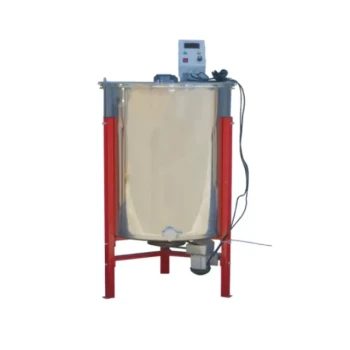
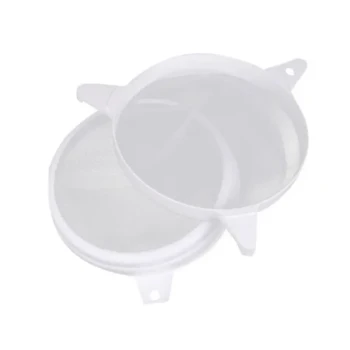
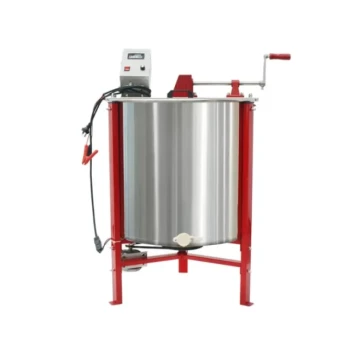
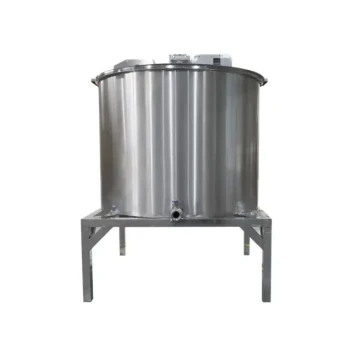
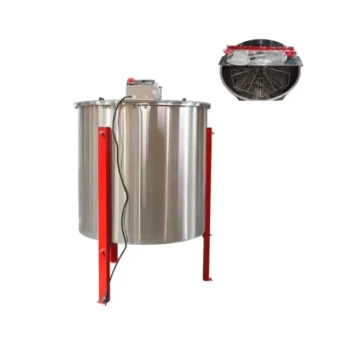
Industrial-grade honey centrifugal and filtering machines fundamentally improve the extraction process by utilizing high-velocity rotational force to separate honey from the comb without destroying the wax structure. This transition from manual pressing to mechanized separation maximizes harvest efficiency while simultaneously refining the product through advanced filtration and dehydration stages.
Core Takeaway: The primary value of these machines is the shift from destructive harvesting to a sustainable production cycle. By preserving the honeycomb for reuse, they allow bee colonies to redirect immense energy from rebuilding wax to producing more honey, while simultaneous filtration ensures a purer, more stable commercial product.
Maximizing Yield Through Non-Destructive Extraction
The Mechanics of Centrifugal Force
Industrial extractors utilize centrifugal force generated by high-frequency rotation to expel honey from uncapped hive frames.
Unlike traditional methods that rely on gravity or crushing, this force effectively pulls the viscous liquid out of the cells. This ensures maximum recovery of the product that would otherwise remain trapped in the comb.
Preserving Structural Integrity
The defining advantage of this technology is that it is a non-destructive process.
Traditional pressing or squeezing destroys the honeycomb, forcing bees to rebuild from scratch. Centrifugal machines leave the beeswax structure within the frames intact, allowing the physical assets of the hive to be recycled immediately.
The Biological "Energy Save"
Reusing honeycombs has a profound impact on the biological efficiency of the apiary.
Bees consume significant amounts of honey and energy to secrete the wax needed to build combs. By returning intact combs to the hive, the colony spends less energy on construction and more on foraging, significantly increasing the overall honey yield per colony.
Elevating Hygiene and Product Stability
Advanced Filtration and Dehydration
Beyond simple extraction, industrial systems integrate heat and mechanical force to treat the honey.
These stages include filtration and dehydration, which reduce the moisture content of both mature and immature honey. Lowering moisture is critical for preventing fermentation and increasing the storage stability of the final product.
Eliminating Physical Contaminants
Mechanized processing effectively removes physical impurities that are common in manual harvesting.
Through multi-stage filtration, the machinery removes wax particles, bee parts, and other debris. This results in a product with superior clarity and physical properties, meeting strict commercial food safety standards.
Preventing Secondary Contamination
Manual squeezing methods often introduce human contact and environmental impurities, known as secondary contamination.
Industrial centrifuges operate as closed or semi-closed systems, significantly improving hygiene levels. This mechanized approach ensures the color and purity of the honey are maintained without the degradation associated with manual handling.
Understanding the Trade-offs
The Requirement for Precision Speed
While powerful, centrifugal force acts as a double-edged sword that requires precise control.
If the rotational speed is too low, honey remains trapped in the cells; if it is too high, the force can fracture the wax comb, negating the benefit of preservation. Operators must balance extraction speed against the structural limits of the wax frames.
Energy Consumption vs. Biological Gain
These machines represent the primary energy-consuming equipment in the extraction phase.
While they reduce the biological energy expenditure of the bees, they increase the electrical energy consumption of the facility. This is an operational cost that must be weighed against the increased production volume and speed.
Making the Right Choice for Your Goal
To select the right extraction setup, align the equipment capabilities with your specific production targets:
- If your primary focus is Production Volume: Prioritize centrifuges with precise rotational controls to maximize comb preservation, allowing for immediate reuse and faster colony turnaround.
- If your primary focus is Product Shelf-Life: Prioritize systems with integrated dehydration and advanced filtration modules to minimize moisture content and ensure long-term stability.
Summary: Industrial extraction technology transforms honey production by substituting mechanical precision for biological labor, preserving the hive's infrastructure while delivering a cleaner, more stable product.
Summary Table:
| Feature | Traditional Manual Pressing | Industrial Centrifugal Extraction |
|---|---|---|
| Comb Integrity | Destroyed during harvest | Preserved for hive reuse |
| Honey Yield | Moderate (loss in wax) | Maximized through high-velocity force |
| Hygiene Level | High risk of contamination | Closed system, high food safety |
| Efficiency | Labor-intensive and slow | High-speed, high-volume production |
| Product Quality | Often contains debris | Filtered, clarified, and dehydrated |
Elevate Your Apiary Production with HONESTBEE
At HONESTBEE, we specialize in empowering commercial apiaries and distributors with the industry's most reliable honey extraction technology. Whether you need high-precision centrifugal extractors that preserve your valuable honeycombs or advanced honey-filling and hive-making machinery, our comprehensive wholesale portfolio has you covered.
From essential consumables to industrial-grade processing hardware and honey-themed cultural merchandise, we provide the tools you need to increase yield and ensure product stability. Partner with the experts to scale your beekeeping business.
Contact HONESTBEE Today for a Professional Consultation
References
- Ahlam Ahmed Hassan, Dalia M. Nasr El Batran. An Economic Study of a Honeybee Breeding Project. DOI: 10.32861/jac.94.553.565
This article is also based on technical information from HonestBee Knowledge Base .
Related Products
- Honey Concentrating and Filtering Dehumidifier Machine 2T Capacity for Honey
- Electric Double Wall Honey Filtering Machine Purifier Equipment for Honey Processing Plant
- Automatic Honey Filling and Filtering Machine for Beekeeping Bottle Filling
- Professional Stainless Steel Honey Filtering Machine with Water Bath Heating for Beekeeping
- 0.5T Capacity Honey Dehumidifier Dryer with Vacuum Heating and Thickening Filtering Machine
People Also Ask
- What heating methods can be used with the honey concentrating equipment? Electric vs. Boiler Options
- How does honey filtration and processing machinery transform raw honey? Scale Your Production for Global Markets
- What are the main functions of the honey concentrating equipment? Essential Machinery for Commercial Quality
- What electrical safety precaution is necessary when operating the honey concentrating equipment? Essential Grounding Tips
- What maintenance should be performed when the honey concentrating equipment is not in use? Key Safety & Care Tips