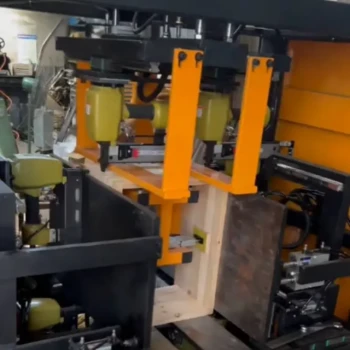
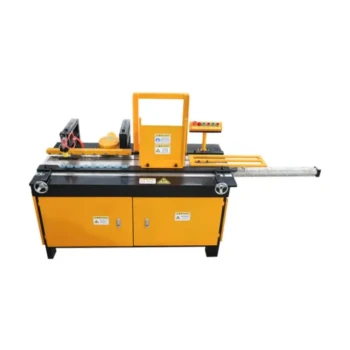
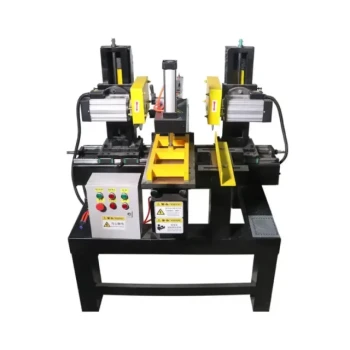
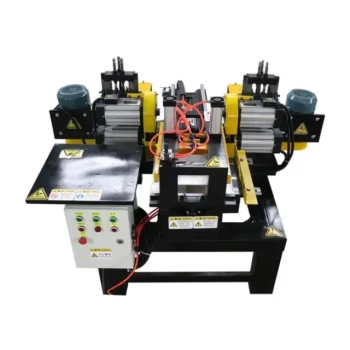
Automated hive-making machines act as the critical infrastructure for industrial expansion. They contribute to scaling by enabling the rapid, precise mass production of hive components that are specifically tailored to local environmental conditions. By replacing manual construction with automated precision, these machines ensure consistent structural integrity and sealing quality, providing the essential hardware foundation needed to support large-scale colony management.
Core Takeaway: Automated manufacturing transforms hive construction from a manual bottleneck into a scalable workflow. It delivers the high-precision standardization required for commercial efficiency while enabling structural customization to protect colonies in challenging climatic zones.
The Foundation of Industrial Scaling: Standardization
Precision and Interchangeability
Industrial-grade machinery utilizes high-precision cutting and assembly processes to ensure every component has uniform dimensions. This guarantees that parts such as frames, bottom boards, and supers are fully interchangeable across thousands of hives. This standardization is non-negotiable for large-scale operations, allowing for seamless equipment swapping and maintenance.
Alignment with Bee Biology
Precision manufacturing ensures that internal hive dimensions strictly adhere to "bee space" requirements. When internal spaces align perfectly with bee biology, it reduces the construction of burr comb and unwanted propolis. This improves colony health and significantly increases the efficiency of mechanized management workflows.
Enabling Scientific Management
With standardized equipment, beekeepers can implement scientific colony splitting and standardized management protocols. This moves the operation away from artisanal, hive-by-hive intuition toward reproducible, industrial-scale processes essential for commercial agriculture.
Adaptation to Specific Climatic Zones
Tailoring for Environmental Extremes
Automated machines allow for the customization of hive components to suit specific local climates, such as subtropical regions. Unlike generic manual construction, these machines can produce specialized designs, such as high-porosity parts or specific brood cells, that align with the nesting habits of local subspecies.
Stabilizing the Micro-environment
In regions with extreme heat or specific weather patterns, machine-made hives offer superior sealing quality and structural stability. This creates a consistent physical defense environment. By optimizing the internal micro-environment, these hives help reduce colony loss rates caused by environmental stress.
Economic and Operational Impact
Removing Supply Bottlenecks
Automation addresses the technical bottleneck of hive acquisition. It allows operations to transition from small-scale holdings to commercial apiaries (exceeding 50 hives) without relying on expensive third-party suppliers or labor-intensive manual collection.
Reducing Production Costs
The mechanized approach significantly lowers the manufacturing cycle time and labor costs per unit. This reduction in overhead allows practitioners to quickly expand their raw production capacity in response to market demand.
Understanding the Trade-offs
The Shift from Natural to Artificial
While beneficial for scaling, these machines facilitate a transition from natural nesting environments to controlled, artificial structures. This maximizes efficiency for honey storage and mobility but requires beekeepers to be vigilant in managing the biological needs of the colony within a strictly standardized system.
Dependence on Infrastructure
Adopting this technology shifts reliance from manual labor to machine maintenance and capital investment. The operation becomes dependent on the reliability of the manufacturing hardware to maintain growth, requiring a shift in skills from carpentry to machine operation and maintenance.
Making the Right Choice for Your Goal
To leverage automated hive manufacturing effectively, align the technology with your specific operational targets:
- If your primary focus is rapid expansion: Prioritize machines that offer high-speed output and strict component interchangeability to lower the cost per unit and streamline logistics.
- If your primary focus is climate resilience: Select machinery capable of producing customized, high-sealing, or high-porosity components to stabilize the colony's micro-environment in extreme weather.
Success in industrial beekeeping lies not just in managing bees, but in mastering the precise, scalable production of their habitats.
Summary Table:
| Feature | Impact on Industrial Scaling | Benefit for Commercial Operations |
|---|---|---|
| High-Precision Standardization | Ensures 100% component interchangeability | Facilitates seamless equipment maintenance and swapping |
| Climate-Specific Customization | Adapts hive design to local environmental extremes | Reduces colony loss by stabilizing the internal micro-environment |
| Automated Mass Production | Removes manual manufacturing bottlenecks | Enables rapid expansion of hive counts with lower labor costs |
| Biological Alignment | Maintains strict "bee space" dimensions | Minimizes burr comb and improves mechanized management efficiency |
Scale Your Beekeeping Operation with HONESTBEE Precision
Transition from artisanal methods to industrial efficiency with HONESTBEE. As a premier provider for commercial apiaries and global distributors, we offer the comprehensive hardware foundation you need to scale. From high-speed automated hive-making machines and honey-filling lines to specialized beekeeping tools and industry consumables, our portfolio is designed to maximize your productivity.
Partner with HONESTBEE to:
- Standardize Your Infrastructure: Ensure perfect interchangeability across thousands of hives.
- Lower Production Overheads: Reduce manual labor costs with high-output machinery.
- Enhance Colony Resilience: Deploy climate-optimized equipment tailored to your region.
Ready to transform your workflow? Contact our experts today to discuss our wholesale solutions and custom machinery offerings.
References
- Shiva Rijal, Yubak Dhoj. BEE FLORAL CALENDAR OF CULTIVATED AND WILD PLANTS AVAILABLE IN DIFFERENT AGROECOSYTEMS OF CHITWAN, NEPAL. DOI: 10.29121/granthaalayah.v6.i11.2018.1121
This article is also based on technical information from HonestBee Knowledge Base .
Related Products
- Automatic High-Speed Bee Hive Box Stapling Machine
- High-Efficiency Pneumatic Bee Hive Making Machine for Rapid Box Assembly
- Mini Desktop Bee Hive Frame Forming Making Machine
- Beehive Handle and Frame Rest Cutting Machine: Your Specialized Hive Machine
- Beehive Machine Double End Saw for Precision Hive Component Manufacturing
People Also Ask
- How is the Bee Box machine adjusted for different box sizes? Maximize Your Woodworking Versatility and Precision
- How is the Bee Box machine operated? Optimize Your Commercial Hive Production with Scalable Staffing Solutions
- How was the Bee Box machine designed? Industrial Engineering for High-Volume Beekeeping Production
- What is the production capacity of the Bee Box machine? Boost Output up to 1,000 Boxes Daily
- What are the power requirements and control system for the Bee Box machine? Optimize Your Apiary Equipment Production