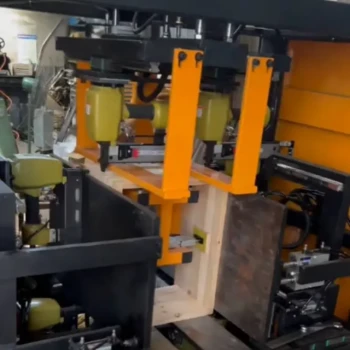
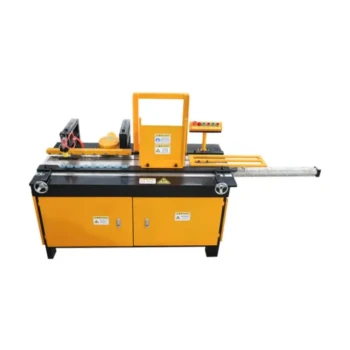
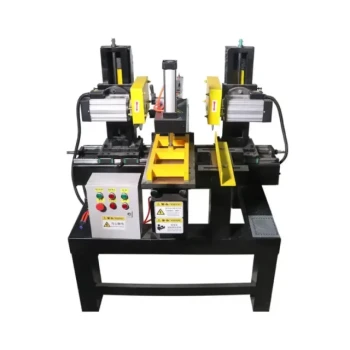
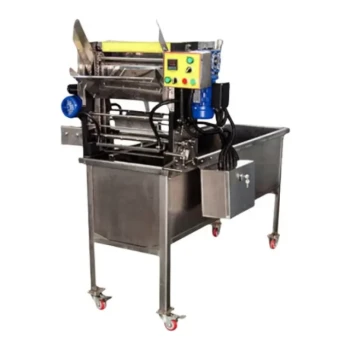
Automated hive-making machines provide critical dimensional precision that manual production methods struggle to match, a factor that is directly linked to colony manageability. By strictly adhering to minute tolerance ranges, these machines eliminate the irregular internal gaps that cause Africanized honeybees to build disorganized burr combs, thereby significantly reducing colony agitation during inspections.
Core Takeaway In large-scale operations managing Africanized honeybees, the value of automated manufacturing extends far beyond production speed. The strict adherence to tolerance ranges prevents structural irregularities that trigger defensive behavior, while simultaneously establishing the standardized infrastructure required for future mechanized harvesting and logicstics.
Precision as a Management Tool
Reducing Colony Irritability
The primary advantage of automated manufacturing is the ability to maintain extremely small tolerance ranges. Manual production often results in slight variances in the internal dimensions of the hive.
Africanized honeybees are genetically prone to filling these irregular gaps with "burr comb" (disorganized wax structures). Breaking these structures during inspections agitates the bees and releases alarm pheromones; eliminating these gaps via precision manufacturing keeps the colony calmer and safer to manage.
Optimizing Biological Bee Space
Automated machinery ensures that every component—from frames to bottom boards—strictly adheres to biological "bee space" requirements.
This consistency creates a stable physical environment that minimizes heat loss and prevents the intrusion of external pests. When the internal environment is biologically optimized, the colony is healthier and more productive.
Standardization and Operational Efficiency
Total Component Interchangeability
In a large-scale apiary, you cannot afford to have frames that only fit specific boxes. Industrial machinery ensures that components produced today are identical to those produced years ago.
This standardization allows for the seamless interchangeability of parts like queen excluders and frames across different colonies. It drastically simplifies maintenance, as beekeepers do not need to sort equipment to find matching pieces.
Facilitating Cross-Regional Transport
For operations that provide pollination services or migrate for honey flows, structural consistency is vital. Standardized, machine-cut hives stack securely and withstand the rigors of transport better than inconsistent manual boxes.
This uniformity improves airflow and humidity management during transport, which is critical for reducing stress on the colonies during migration.
Enabling Advanced Automation
The Foundation for Mechanized Harvesting
The decision to use automated hive-making machines is often a prerequisite for adopting other advanced technologies.
Automated honey harvesting tools and de-capping lines require inputs with exact dimensions to function correctly. Precision-manufactured hives provide the necessary physical foundation to integrate these labor-saving technologies later in your operation's lifecycle.
Meeting Infrastructure Demands for Expansion
Manual production creates a bottleneck when an apiary attempts to scale rapidly. Mechanized manufacturing significantly increases production speed, ensuring that infrastructure availability never limits colony expansion.
Understanding the Trade-offs
High Initial Capital Expenditure
Transitioning to automated hive-making requires a significant upfront investment in specialized machinery compared to the low cost of manual carpentry tools. This cost must be amortized over a large volume of hives to be establishing a return on investment.
Maintenance and Technical Expertise
While you save on manual labor hours, you introduce a need for technical maintenance. Operating high-precision woodworking machinery requires a skillset focused on equipment calibration and maintenance to ensure the "strict adherence to tolerances" remains true over time.
Making the Right Choice for Your Goal
To determine if automated hive-making is the right step for your apiary, consider your primary operational objectives:
- If your primary focus is Safety and Behavior Management: Prioritize automation to eliminate internal gaps and burr comb, which is the leading physical cause of agitation in Africanized colonies during inspection.
- If your primary focus is Rapid Scalability: Use automation to remove the manufacturing bottleneck, ensuring you can produce standardized housing faster than you can split colonies.
- If your primary focus is Future Modernization: Invest in precision machinery now to ensure your hive inventory is compatible with the automated harvesting lines and mobile operations you plan to implement later.
Standardization is not just a convenience; it is the structural discipline required to turn beekeeping into an industrial-scale operation.
Summary Table:
| Feature | Manual Production | Automated Hive-Making | Impact on Apiary |
|---|---|---|---|
| Dimensional Precision | Low (High variance) | High (Strict tolerances) | Reduces burr comb and colony irritability |
| Interchangeability | Limited | Universal | Simplifies maintenance and part replacement |
| Production Speed | Slow / Bottlenecked | Rapid / Scalable | Enables quick expansion and growth |
| Tech Compatibility | Poor | Seamless | Ready for automated harvesting & decapping |
| Labor Focus | Intensive carpentry | Technical maintenance | Shifts focus from building to management |
Transform Your Apiary with Industrial Precision
Transitioning to industrial-scale beekeeping requires more than just bees—it requires the structural discipline of standardized equipment. HONESTBEE specializes in empowering commercial apiaries and distributors with high-performance hive-making machines, honey-filling lines, and a full spectrum of professional beekeeping tools.
Whether you are looking to eliminate colony agitation through precision manufacturing or scale your operation with mechanized harvesting, our comprehensive wholesale offering provides the hardware and expertise you need to succeed.
Ready to modernize your infrastructure? Contact us today to discuss your equipment needs!
References
- Ana Pereira, V. L. cia Vaz de. Arruda. Relationship among Apis mellifera L. stings, swarming and climate conditions in the city of Rio Claro, SP, Brazil. DOI: 10.1590/s1678-91992010000400016
This article is also based on technical information from HonestBee Knowledge Base .
Related Products
- Automatic High-Speed Bee Hive Box Stapling Machine
- Automatic Finger Joints Joint Making Machine for Bee Box and Hive Making
- High-Efficiency Pneumatic Bee Hive Making Machine for Rapid Box Assembly
- Mini Desktop Bee Hive Frame Forming Making Machine
- Beehive Handle and Frame Rest Cutting Machine: Your Specialized Hive Machine
People Also Ask
- How is the Bee Box machine adjusted for different box sizes? Maximize Your Woodworking Versatility and Precision
- How is the Bee Box machine operated? Optimize Your Commercial Hive Production with Scalable Staffing Solutions
- How was the Bee Box machine designed? Industrial Engineering for High-Volume Beekeeping Production
- What is the production capacity of the Bee Box machine? Boost Output up to 1,000 Boxes Daily
- What are the power requirements and control system for the Bee Box machine? Optimize Your Apiary Equipment Production