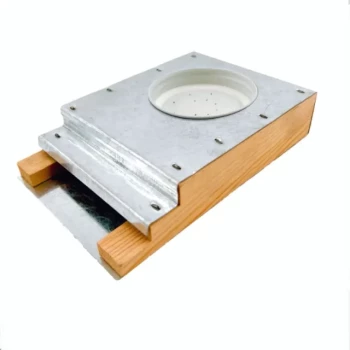
Automatic feeding devices significantly enhance honey production by artificially simulating a consistent, natural nectar flow during the spring. This precise, quantitative delivery of syrup triggers a biological response in the hive, shifting the colony into high-production mode earlier than nature alone would allow.
By decoupling colony growth from local weather conditions, automatic feeding ensures a peak worker population is ready exactly when the main nectar flow begins.
The Biological Chain Reaction
To understand how a feeding device impacts the final jar count, you must look at the biological chain reaction it initiates within the hive.
Simulating Nature
Automatic devices provide a quantitative supply of syrup, mimicking the steady availability of nectar found in nature.
This convinces the colony that resources are abundant, even if the actual spring bloom has not yet fully peaked.
Triggering the Queen
The primary effect of this simulated flow is on the queen bee.
Sensing the abundance of resources, she is induced to increase her egg-laying rate immediately.
Expanding the Brood
As the queen lays more eggs, the brood area—the section of the hive dedicated to developing larvae—significantly expands.
This accelerates the colony's growth cycle, moving it out of winter dormancy and into an active development phase.
Population Accumulation
The ultimate goal of this process is the rapid accumulation of a large population of worker bees.
By starting this process early via stimulation feeding, the colony builds a massive workforce before the main natural nectar flow actually starts.
Precision and Consistency
Beyond simple volume, the technology behind automatic feeding plays a crucial role in the quality and consistency of the output.
Standardized Delivery
Using standardized feeding equipment ensures that the syrup delivery is uniform and controlled.
This removes the variables associated with manual feeding, preventing "feast or famine" cycles that can disrupt colony rhythm.
Consistency in Additives
For beekeepers producing specialized products, such as herb-infused honey, this precision is vital.
Professional mixing tools and automatic feeders ensure that herbal extracts are uniformly distributed throughout the syrup.
Stabilizing Chemical Composition
Controlled feeding directly determines the concentration of active compounds, such as phenolic acids and flavonoids, in the final product.
This ensures that different batches of honey maintain consistent antioxidant activity and trace mineral levels, which is difficult to achieve with manual methods.
Understanding the Operational Requirements
While the benefits to yield are clear, relying on automatic stimulation feeding requires a commitment to infrastructure.
The Necessity of Professional Equipment
You cannot achieve these results with ad-hoc methods; standardized equipment is necessary to maintain the "quantitative" aspect of the supply.
Without professional tools, you risk uneven distribution, which can lead to inconsistent brood rearing or variable concentrations in infused products.
The Focus on Infrastructure
It is worth noting that efficiency in honey production relies on preserving the hive's infrastructure.
While feeders build the population, other mechanical processes (like honey presses) that destroy combs can negate these gains by forcing bees to rebuild rather than forage. Automatic feeding is most effective when paired with extraction methods that preserve the comb.
Making the Right Choice for Your Goal
When implementing automatic spring stimulation, tailor your approach to your specific production targets.
- If your primary focus is maximum volume: Use automatic feeders to start stimulation early, ensuring a maximum population density coincides with the start of the main nectar flow.
- If your primary focus is specialized/infused honey: Rely on the precision of the equipment to ensure uniform distribution of herbal extracts and consistent antioxidant levels across batches.
Automatic feeding transforms beekeeping from a reactive response to nature into a proactive management strategy for higher yields.
Summary Table:
| Feature | Impact on Colony | Benefit to Production |
|---|---|---|
| Resource Simulation | Mimics natural nectar flow | Triggers early spring biological activity |
| Queen Induction | Increases egg-laying rate | Rapid expansion of the brood area |
| Population Timing | Builds worker workforce early | Peak population ready for main flow |
| Precision Delivery | Eliminates feeding fluctuations | Consistent concentration of active compounds |
| Additive Mixing | Uniform extract distribution | Standardized quality for specialized honey |
Scale Your Beekeeping Success with HONESTBEE
At HONESTBEE, we specialize in empowering commercial apiaries and distributors with the professional infrastructure needed for high-volume success. From precision automatic feeding devices that trigger peak colony performance to advanced honey-filling machines and hive-making equipment, our comprehensive wholesale catalog covers every aspect of modern apiculture.
Why partner with HONESTBEE?
- Full Spectrum Supply: Access everything from specialized machinery to essential industry consumables.
- Precision Engineering: Ensure consistent honey quality and antioxidant levels with our standardized tools.
- Expert Support: We cater specifically to the needs of large-scale operations and global distributors.
Ready to transform your production from reactive to proactive? Contact us today to explore our wholesale solutions and see how our hardware can drive your honey yields to new heights.
References
- Mahir Murat Cengiz, Cemal Dülger. Gezginci ve Sabit Arıcılık İşletmelerinde Kontrollü Şartlarda Yetiştirilen Ana Arılarla Oluşturulan Balarısı (Apis Mellifera L.) Kolonilerinin Bazı Fizyolojik Özelliklerinin Belirlenmesi. DOI: 10.17094/ataunivbd.309110
This article is also based on technical information from HonestBee Knowledge Base .
Related Products
- HONESTBEE Entrance Bee Feeder Efficient Hive Front Liquid Feeding Solution for Beekeeping
- Professional Hive Top Bee Feeder for Beekeeping
- Classic Boardman Entrance Bee Feeder Hive Front Feeding Solution
- Automated Rotary Bottle Unscrambler for Honey Production Line
- HONESTBEE Professional Hive Top Bee Feeder Feeding Solution
People Also Ask
- What types of bee feeders are available for beginners? Start with the Simple Entrance Feeder
- What are the advantages and disadvantages of using an entrance feeder for bees? Balance Convenience and Hive Security.
- What is a bee entrance feeder and what are its drawbacks? Essential Guide to Hive Security and Feeding Efficiency
- How does a bee entrance feeder work? A Simple Guide to Convenient Hive Feeding
- How to make an entrance feeder for bees? A DIY Guide for Safe & Effective Feeding