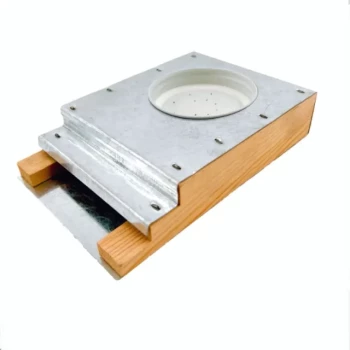
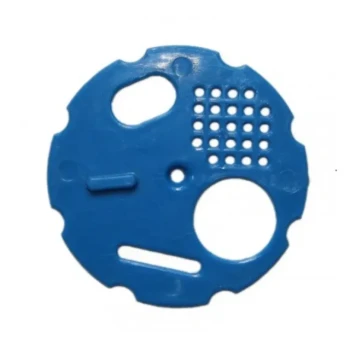
Beehive entrance reducers act as a precise physical filter. By constricting the hive's opening to specific dimensions, these devices allow smaller honeybees to enter and exit freely while creating an impassable barrier for larger-bodied wasps. This simple mechanical adjustment provides an immediate first line of defense against intrusion.
Entrance reducers are essential defense tools that leverage body-size differences to protect colonies—especially weaker ones—preventing predatory wasps from accessing vulnerable larvae and honey stores.
The Mechanics of Hive Defense
Exploiting Physical Dimensions
The primary function of an entrance reducer is narrowing the hive entrance. By reducing the aperture to a specific size, the device exploits the size differential between the honeybee and its predators.
While the opening remains large enough for the resident bees to pass, it is physically too small for larger wasp species to navigate. This effectively locks the intruders out based solely on their anatomy.
Increasing Defensive Capability
Narrowing the entrance does more than just block large insects; it significantly increases the colony's defensive efficiency.
A wide entrance requires a large number of guard bees to patrol and secure the perimeter. By funneling traffic through a smaller gap, the reducer allows the colony to concentrate its defensive forces, making it much harder for any intruder to slip past.
When Protection is Critical
Protecting Weak Colonies
The reference highlights that reducers are particularly vital for weak colonies. These colonies often lack the population numbers required to defend a standard, full-width hive entrance.
Without a reducer, a weak colony is vulnerable to being overwhelmed. The reducer acts as a force multiplier, allowing a smaller population to successfully defend their home.
Safeguarding Vulnerable Assets
Wasps are not just entering to occupy space; they are hunting specific resources. The primary targets are the colony's larvae and honey stores.
During periods of high brood-rearing pressure, the hive is rich with larvae, making it an attractive target. The reducer ensures these critical assets are shielded from predation and theft.
Understanding the Trade-offs
Impact on Foraging Traffic
While restricting the entrance blocks predators, it creates a bottleneck for the colony itself.
During peak foraging times, a heavily reduced entrance can cause congestion as returning bees wait to deposit nectar and pollen. This traffic jam can temporarily reduce the colony's overall efficiency.
Ventilation Considerations
Narrowing the physical opening inevitably restricts airflow into the hive.
While this is beneficial for retaining heat in cooler weather, it can be a disadvantage during extreme heat. Beekeepers must balance the need for security against the colony's need for ventilation and temperature regulation.
Making the Right Choice for Your Goal
To effectively utilize entrance reducers, you must assess the specific state of your colony.
- If your primary focus is supporting a recovering population: Install a reducer to minimize the defensive surface area the weak colony must patrol.
- If your primary focus is protecting brood during wasp season: Use the reducer to create a physical barrier that prevents large predators from reaching the larvae.
- If your primary focus is maximizing foraging flow: Monitor the entrance for congestion and consider widening the reducer slightly if bees are backing up during peak hours.
By matching the entrance size to the colony's strength and the external threat level, you ensure security without compromising productivity.
Summary Table:
| Feature | Impact on Hive Defense |
|---|---|
| Physical Filtering | Blocks larger predators like wasps while allowing bee passage |
| Guard Concentration | Allows fewer bees to defend a smaller opening efficiently |
| Resource Shielding | Protects vulnerable larvae and honey stores from intrusion |
| Target Utility | Critical for supporting weak colonies against robbing |
| Trade-offs | Requires monitoring for ventilation and traffic congestion |
Secure Your Colonies with HONESTBEE Wholesale Solutions
Protecting your apiary from predators is vital for commercial success. HONESTBEE caters to commercial apiaries and distributors with a comprehensive range of professional beekeeping tools. From durable entrance reducers and essential consumables to advanced hive-making and honey-filling machinery, we supply the full spectrum of equipment you need to thrive.
Ready to scale your operations? Contact us today to learn how our premium wholesale offerings and specialized hardware can enhance your efficiency and safeguard your honeybee assets.
References
- Ana Diéguez‐Antón, M. Carmen Seijo. Monitoring Study in Honeybee Colonies Stressed by the Invasive Hornet Vespa velutina. DOI: 10.3390/vetsci9040183
This article is also based on technical information from HonestBee Knowledge Base .
Related Products
- Steel Round Disc Entrance Reducer for Flexzion Bee Hive Nuc Box Gate
- Beehive Entrance Reducer Guardian Metal Hive Entrance for Bees
- HONESTBEE Entrance Bee Feeder Professional Hive Nutrition Solution for Beekeeping
- Beehive Entrance Discs Plastic Bee Entrance Disc for Bee Hives
- Professional Hive Front Entrance Bee Feeder
People Also Ask
- What is the purpose of an entrance reducer for a beehive? Strengthen Colony Defense and Prevent Robbery
- Why are entrance reducers used to counter hornet infestations? Protect Your Hive with Strategic Choke Points
- Why is it critical to maintain a smaller entrance for a newly established bee hive? Boost Colony Growth and Security
- Under what conditions should a beekeeper adjust the size of a beehive entrance? Seasonal & Defense Management Tips
- What is the function of an entrance reducer on a beehive? Strengthen Colony Defense and Climate Control