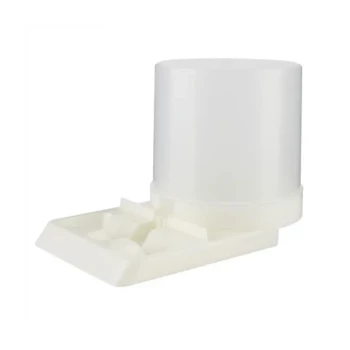
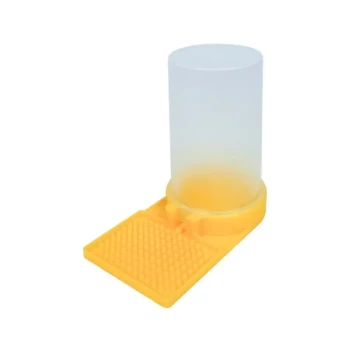
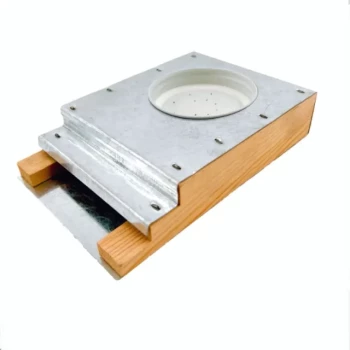
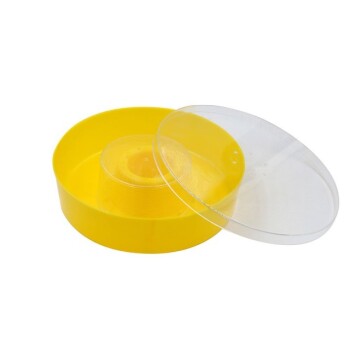
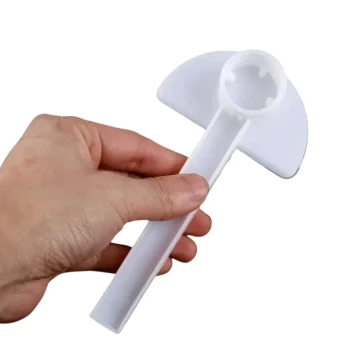
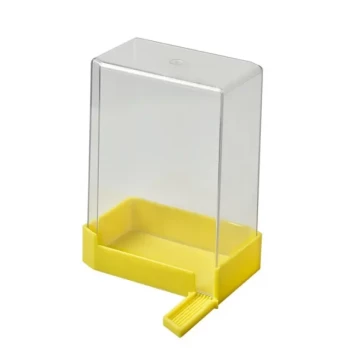
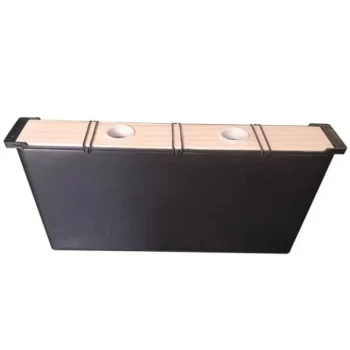
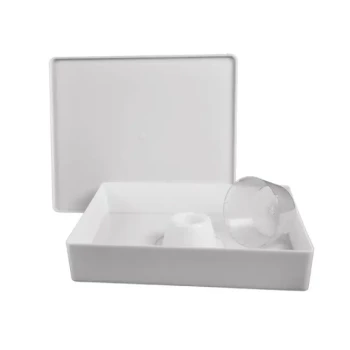
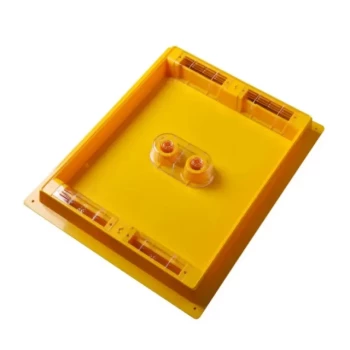
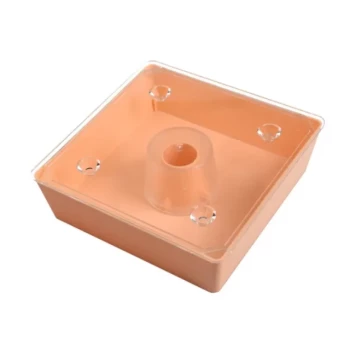
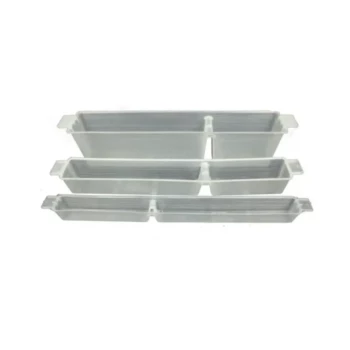
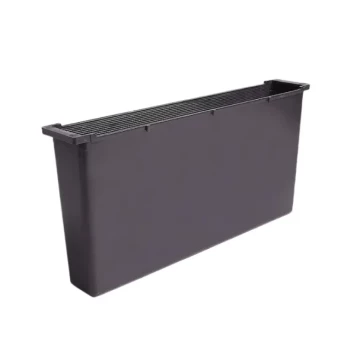
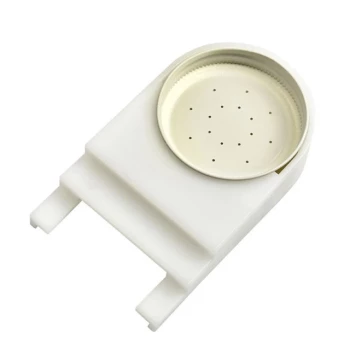
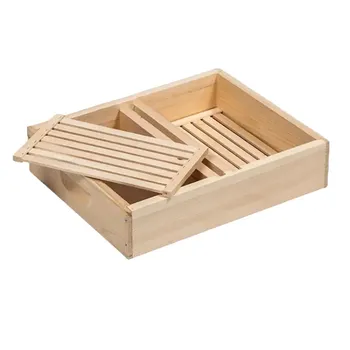
The key difference is where the feeder sits and how bees access the syrup. Rapid feeders and bucket feeders are installed above the hive, offering relatively high capacity with minimal brood-nest disturbance. Frame feeders occupy space inside the brood chamber, placing syrup close to the cluster but reducing available frame space and usually requiring more frequent refilling.
Rapid and bucket feeders prioritize capacity and labor efficiency, while frame feeders prioritize proximity to the colony. The best choice depends on season, colony strength, hive configuration, and whether the apiary values rapid feeding, low maintenance, or close access during cold conditions.
How the Three Feeder Styles Are Designed
Rapid feeders: large-capacity hive-top access
Rapid feeders, including Miller and Ashforth designs, sit directly on top of the hive, usually above the crown board or upper hive body. Bees enter through an access area and collect syrup from internal compartments designed to limit drowning risk.
Their large capacity supports fast syrup delivery without repeatedly opening the brood chamber. This makes them particularly useful when colonies must build stores quickly, especially during rapid autumn feeding.
Bucket feeders: simple vacuum-fed containers
Bucket feeders use an inverted container, commonly a one-gallon plastic pail, positioned over a hole in the crown board or inner cover. Small openings in the lid allow syrup to flow gradually while the vacuum inside the container helps regulate delivery.
The design is mechanically simple, inexpensive, and easy to scale. A pail may hold approximately one gallon of syrup, reducing refill frequency compared with smaller internal feeders.
Frame feeders: internal replacements for hive frames
Frame feeders, also called division board feeders, are narrow containers suspended inside the brood chamber in place of one or more frames. The syrup is therefore located immediately beside the colony’s cluster.
Typical frame feeders hold substantially less syrup than top-mounted systems—often around one to two pints, depending on the design. Their proximity is their principal advantage, but the occupied frame position and smaller capacity can increase servicing requirements.
How Placement Changes Practical Use
Top-mounted feeders minimize brood-nest disruption
Rapid and bucket feeders can generally be filled or inspected from above without removing frames from the brood chamber. This is valuable when the objective is to feed aggressively while avoiding unnecessary disturbance to the queen, brood, and central cluster.
A Miller-style rapid feeder can also be installed across the hive footprint, providing substantial feeding capacity without requiring bees to leave the hive to access syrup.
Frame feeders keep food beside the cluster
In cold spring conditions, bees may be reluctant or unable to move upward to a top feeder. A frame feeder places the food within the brood chamber, making it easier for the colony to reach when temperatures restrict movement.
This makes frame feeders useful for small or developing colonies, emergency feeding, and situations where feed must remain close to the cluster.
External entrance feeders have a different role
Entrance or Boardman feeders use an inverted jar at the hive entrance. They are inexpensive and allow the beekeeper to check the syrup level without opening the hive.
However, their small capacity means frequent refilling. Food at the entrance can also encourage robbing and may be ineffective when cold weather prevents bees from accessing it reliably.
Comparing Capacity, Labor, and Seasonality
Rapid feeders support urgent, high-volume feeding
Rapid feeders are the strongest fit when colonies need to take in a substantial amount of syrup in a short period. Their high capacity reduces refill labor and supports efficient autumn preparation.
They are especially practical for commercial operators managing many colonies, provided the hive configuration accommodates the feeder and the access design protects bees from drowning.
Bucket feeders reduce routine servicing
Bucket feeders are well suited to large-scale, low-maintenance feeding. Their vacuum-fed operation and one-gallon capacity can reduce the number of apiary visits compared with frame or entrance feeders.
They are also relatively economical to purchase and deploy across a large number of hives, making them attractive to distributors and commercial beekeepers seeking standardized equipment.
Frame feeders favor access over capacity
Frame feeders are most valuable when access to the syrup matters more than storage volume. Their position near the cluster can be decisive in cool spring conditions or when a colony cannot effectively use a top-mounted feeder.
The trade-off is clear: smaller capacity means more frequent refilling, while the lost frame position can reduce the brood chamber’s usable space.
Bee Safety and Feeding Control
Safe access is a design requirement
Top feeders should provide controlled access through floats, rafts, screens, or comparable structures that reduce drowning risk. A feeder’s nominal capacity is not useful if bees cannot reach the syrup safely.
Rapid feeders and quality hive-top feeders typically incorporate internal access arrangements for this purpose. Bucket feeders regulate syrup through small openings, limiting uncontrolled exposure.
Frame feeders require closer inspection
Frame feeders can carry a drowning risk if the interior lacks an effective ladder, float, roughened surface, or other escape provision. Their narrow shape does not automatically make them safe.
Beekeepers and resellers should assess the access system, material quality, lid fit, and ease of cleaning rather than selecting solely by price or capacity.
Robbing resistance depends on containment
Internal and top-mounted feeders keep syrup inside the hive, generally reducing exposure compared with entrance feeding. This is important when colonies are weak or neighboring colonies are actively searching for food.
A poor seal, spilled syrup, or exposed feeder can still create robbing pressure. Installation quality and apiary management remain as important as feeder style.
Understanding the Trade-offs
Capacity versus proximity
Rapid and bucket feeders provide more syrup with fewer refills, but they place the food above the colony. Frame feeders provide immediate proximity but hold less syrup and use valuable brood-chamber space.
This is the central selection decision: high-volume efficiency or close cluster access.
Labor efficiency versus flexibility
Large top feeders are advantageous for commercial apiaries because standardized equipment can reduce handling time and simplify inventory. Frame feeders offer greater flexibility for individual colonies but may require more frequent attention.
For wholesalers and distributors, offering both categories is more useful than promoting one universal feeder. Customers often need different equipment for spring buildup, autumn stores, nucleus colonies, and emergency feeding.
Purchase cost versus operating cost
Bucket feeders are generally cost-effective to deploy at scale, while rapid feeders may justify their price through larger capacity and faster feeding. Frame feeders can be inexpensive individually but may create higher labor costs through frequent refilling.
The correct commercial comparison should therefore include unit price, refill frequency, cleaning, durability, shipping volume, and replacement demand.
Standardization versus hive compatibility
Top feeders and buckets must match the hive’s crown board, inner-cover openings, and box configuration. Frame feeders must match the frame dimensions and brood-chamber layout.
Before bulk purchasing, distributors should confirm compatibility across the target market. A competitively priced feeder that does not fit common hive equipment creates avoidable returns and service issues.
Making the Right Choice for Your Goal
The most effective product portfolio combines high-capacity top feeders with close-access internal options, allowing customers to match equipment to seasonal and operational needs.
- If your primary focus is rapid autumn feeding: Choose a large-capacity rapid feeder that allows controlled access without opening the brood chamber.
- If your primary focus is low-maintenance commercial operation: Choose bucket feeders for economical, scalable deployment and reduced refill frequency.
- If your primary focus is cold-weather spring feeding: Choose a frame feeder that positions syrup beside the cluster.
- If your primary focus is emergency feeding for a small colony: Choose a frame feeder or another internal feeder that keeps food close and contained.
- If your primary focus is minimizing apiary labor: Prioritize feeder capacity, secure installation, safe bee access, and easy filling.
- If your primary focus is product distribution: Stock complementary feeder styles, replacement components, and compatible hive accessories rather than relying on a single format.
The right feeder is not simply the largest or cheapest option—it is the one that best matches colony access, seasonal demand, labor capacity, and hive compatibility.
Summary Table:
| Feeder Type | Placement | Capacity | Best For | Key Trade-off |
|---|---|---|---|---|
| Rapid Feeder | On top of hive | High | Rapid autumn feeding, large-scale operations | Requires compatible crown board, may need anti-drowning features |
| Bucket Feeder | On top of crown board | Medium (1 gal) | Low-maintenance, economical bulk feeding | Needs vacuum seal, may be less accessible in cold weather |
| Frame Feeder | Inside brood chamber | Low (1-2 pints) | Cool-weather feeding, small colonies | Uses frame space, frequent refilling |
Optimize your apiary with the right feeding equipment. At HONESTBEE, we supply a full range of bee feeders and hive accessories tailored for commercial apiaries and distributors. Benefit from our one-stop sourcing, rapid response, and ultra-fast delivery. Contact us today to discuss your bulk needs and ensure your colonies thrive year-round.
Related Products
- Rapid Bee Feeder White Plastic 2L Round Top Feeder for 8 or 10-Frame Bee Hives
- White Plastic 0.5L Beekeeping Entrance Feeder for Bees
- HONESTBEE Entrance Bee Feeder Professional Hive Nutrition Solution for Beekeeping
- HONESTBEE Professional Entrance Bee Feeder Hive Nutrition Solution
- Boardman Entrance Bee Feeder Durable Galvanized Steel and Wood Construction for Beekeeping
People Also Ask
- What should be done with feeders and equipment after feeding bees? Essential Steps for Apiary Health
- What should be done if feed in a feeder is not consumed by the bees? Prevent Hive Mold with Prompt Feed Management
- What is the necessity of specialized internal or entrance feeders? Secure Your Hive with Professional Feeding Tools
- How do bee feeders work to preserve colony health during nectar shortages? Essential Guide for Beekeepers
- How quickly does a medium to strong colony usually empty a feeder? A Beekeeper's Guide to Hive Health