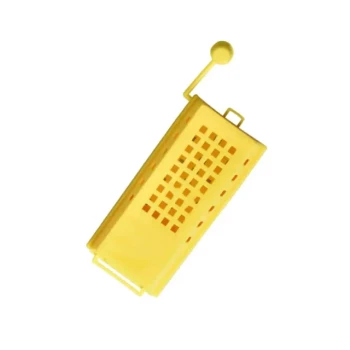
Cappings cages turn an overlooked by-product into recoverable revenue. Installed directly inside a centrifugal honey extractor, a cappings cage spins residual honey out of uncapping wax without unnecessarily destroying its structure. The result is additional marketable honey, cleaner beeswax, and a more efficient harvesting workflow for commercial apiaries.
A cappings cage improves total harvest efficiency by separating trapped honey from wax through centrifugal force. It helps apiaries recover value from both products while preserving clean cappings for higher-grade beeswax processing.
How Cappings Cages Recover Residual Honey
They target honey trapped in the cappings
Uncapping removes the thin wax layer sealing mature honey, but the cappings retain a significant amount of honey. If they are discarded or sent directly to melting, that honey becomes a preventable product loss.
A cappings cage holds the wax inside the extractor while centrifugal force drives the residual honey outward. The recovered honey can then be collected, filtered, and transferred into the apiary’s normal processing and storage system.
They integrate with existing extraction equipment
A cappings cage is fitted directly into a centrifugal honey extractor rather than requiring an entirely separate recovery line. This makes it practical for apiaries seeking higher output without adding unnecessary handling steps.
For commercial operators, equipment compatibility matters. A cage that matches the extractor’s dimensions, capacity, and operating method can improve throughput while keeping the existing extraction workflow largely intact.
They preserve the wax structure
The cage separates honey from the cappings without treating the wax as waste material. Much of the wax remains available for controlled rinsing, filtering, and rendering.
This is important because clean cappings wax is generally more valuable than wax recovered from old brood combs, which can contain greater amounts of debris and darker residues.
Why the Recovered Beeswax Has Commercial Value
Cappings wax can produce a higher-grade raw material
After the honey has been removed, cappings can be rinsed and rendered separately. Keeping them apart from old brood comb helps preserve the light color and cleanliness associated with premium raw beeswax.
Depending on operating conditions, cappings may yield approximately 1 to 2 kilograms of wax per 100 kilograms of extracted honey. Actual recovery varies with uncapping practices, wax thickness, honey content, and processing efficiency.
It supports multiple downstream products
Recovered beeswax can be sold as filtered raw wax or processed into foundation sheets. It can also become an input for candles, soaps, cosmetics, food wraps, and other commercial products.
For distributors and B2B resellers, this broad application range makes beeswax-processing equipment relevant to more than honey producers. It can support customers seeking additional revenue streams from the same apiary output.
Separate processing protects product quality
Cappings should be collected over drip trays so free-flowing honey can drain before further processing. The remaining wax can then be rinsed with lukewarm water and rendered using suitable equipment.
Solar wax melters, steam presses, water-bath melters, and filtration units each serve different production requirements. Fine mesh strainers or presses help remove debris, while controlled heating reduces the risk of degrading the wax.
How the Equipment Fits into a Commercial Processing System
Extraction equipment recovers the primary product
The honey extractor uses centrifugal force to remove honey while leaving the comb structure largely intact. This helps reduce mechanical damage and supports efficient reuse of drawn comb.
A cappings cage extends the same principle to the uncapping stage. Instead of treating cappings as a low-value residue, the apiary recovers their remaining honey before rendering the wax.
Filtration protects honey quality
Recovered honey may contain small wax particles and other fine material. It should pass through an appropriate filtration stage before entering storage or bottling.
A complete processing setup may therefore include extractors, cappings cages, filtration equipment, storage tanks, wax melters, and filling or bottling machinery. Matching these components helps maintain hygiene and reduce unnecessary transfers.
Rendering equipment determines capacity and purity
Small operations may use solar melters for gentle, energy-efficient processing. Larger apiaries often require steam-heated extractors, steam presses, hot-water tanks, or dedicated filtration systems to handle higher volumes.
The correct choice depends on processing volume, available energy, desired wax purity, and whether the apiary plans to sell blocks of wax or manufacture finished products.
Understanding the Trade-offs
A cappings cage adds equipment and handling requirements
A cage requires suitable extractor compatibility, cleaning, loading, and unloading procedures. It also introduces an additional equipment decision for operations that currently discard or manually drain cappings.
However, the investment should be evaluated against total product recovery rather than the purchase price alone. The cage can recover both additional honey and a cleaner wax stream.
Recovery depends on operating discipline
A cappings cage cannot recover honey that has already been lost through poor collection or excessive drainage. Cappings should be captured promptly over drip trays and handled in a way that limits contamination.
The best results come from combining the cage with orderly uncapping, clean collection surfaces, proper filtration, and controlled wax rendering.
Wax quality can be reduced by mixed or overheated material
Combining clean cappings with old brood comb may lower the quality and appearance of the finished wax. Excessive heating can also affect color and processing performance.
For higher-value applications, commercial apiaries should process cappings separately and use temperature-controlled melting and filtration methods.
Capacity must match the apiary’s workflow
An undersized cage can create bottlenecks during peak harvest periods. An oversized or poorly matched system can increase capital cost without improving practical throughput.
Distributors and resellers should assess extractor dimensions, batch size, operating frequency, power requirements, and downstream wax-processing capacity before recommending a configuration.
Making the Right Choice for Your Goal
The most effective solution is a coordinated product package rather than an isolated accessory.
- If your primary focus is recovering more saleable honey: Use a compatible cappings cage inside the centrifugal extractor to remove residual honey before the wax is rendered.
- If your primary focus is producing premium beeswax: Collect cappings over drip trays, process them separately from old brood comb, and use controlled melting and fine filtration.
- If your primary focus is increasing commercial processing capacity: Match the cage, extractor, filtration system, storage equipment, and wax melter to the apiary’s batch volume and workflow.
- If your primary focus is serving B2B customers: Offer a full-spectrum equipment portfolio with compatibility guidance, responsive technical support, and efficient fulfillment for complete processing lines.
A well-integrated cappings recovery system helps commercial apiaries convert residual honey and clean beeswax into measurable additional value.
Summary Table:
| Advantage | Impact |
|---|---|
| Recovers residual honey | Increases marketable honey yield |
| Preserves wax structure | Produces higher-grade beeswax |
| Integrates with existing extractors | Cost-effective upgrade |
| Broad application of beeswax | Creates additional revenue streams |
| Improves overall harvest efficiency | Boosts operational profitability |
Partner with HONESTBEE for Comprehensive Beekeeping Solutions
At HONESTBEE, we supply the full spectrum of beekeeping tools, machinery, and equipment, including specialized cappings cages, extractors, filtration systems, and wax melters. Our one-stop sourcing capability ensures you get everything you need to maximize honey and beeswax recovery. For distributors and B2B resellers, we offer competitive profit margins, OEM/ODM support, and international certifications. With rapid response times, dedicated customer service, and ultra-fast delivery, we guarantee supply reliability. Let's discuss how we can help you boost your operational efficiency and profitability.
Contact us today for a tailored solution that meets your specific needs!
Related Products
- Professional Queen Bee Introduction and Transport Cage
- Professional Queen Catcher and Introduction Queen Cage
- Hexagonal Direct Comb Introduction Queen Bee Cage
- Classic Wooden and Mesh California Queen Cage
- Wood and Mesh Push-In Queen Cage
People Also Ask
- Why are specialized queen bee cages used for the banking of mated queen bees? Maximize Commercial Apiary Storage Efficiency
- What is the mechanism of action for using temporary queen bee cages? Master Successful Queen Introduction
- How is a queen bee released from a queen cage? Ensure Safe Colony Integration & Hive Success
- What materials are required to install a queen bee's cage into a hive? Essential Tools for Successful Queen Integration
- How long should a queen bee stay in the cage before being released? Ensure a Successful Introduction