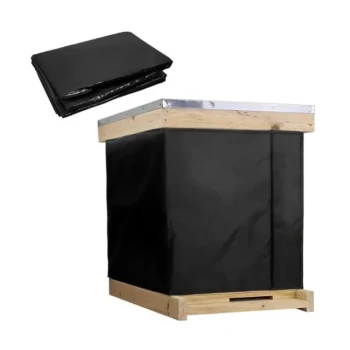
Hive entrance reducers and thermal insulation wraps protect wintering colonies by controlling exposure, not by sealing the hive completely. Entrance reducers narrow the lower opening to limit drafts and deter robbing bees, pests, and rodents. Insulation wraps reduce heat loss through the hive walls and roof, while properly maintained upper ventilation allows warm, moist air to escape and helps prevent condensation, mold, and colony damage.
The winter objective is balance: retain the heat produced by the bee cluster, restrict uncontrolled airflow and intruders, and preserve a safe route for moisture and air to leave the hive.
How Hive Entrance Reducers Protect Colonies
They reduce uncontrolled airflow
A reduced entrance limits the size of the lower opening, helping protect the colony from cold drafts and excessive air exchange.
It does not make the hive airtight. Bees still require airflow, and the upper ventilation route must remain functional throughout winter.
They help prevent robbing
A smaller entrance is easier for a winter colony to defend than a wide opening.
This is particularly important when outside colonies or intruder bees attempt to access stored honey during periods when the resident colony is less active.
They block common hive pests
Entrance reducers can also make it more difficult for pests and rodents to enter the hive.
In areas with rodent pressure, a metal mouse guard can be installed over the lower entrance while preserving necessary air passage and bee access.
They support winter entrance management
Snow, ice, and debris can obstruct a full-size entrance. A properly managed reduced opening helps maintain controlled access, but it must be inspected regularly to ensure it has not become blocked.
How Thermal Insulation Wraps Reduce Winter Stress
They retain cluster-generated heat
Foam insulation, hive quilts, dark tar paper, and other wrap materials create a thermal barrier around the hive body and top.
This reduces heat loss from the sides and roof, helping the cluster maintain a more stable internal environment with less energy expenditure.
They reduce temperature fluctuations
Insulation acts as a buffer against rapid changes in outdoor temperature.
That stability helps protect the brood area and reduces the physical effort adult bees must use to generate heat through clustering and wing vibration.
They lower unnecessary food consumption
When less heat escapes, the colony may require less stored honey to replace lost energy.
This can help preserve food reserves for the later winter period, when colonies may still be unable to forage reliably.
They block wind and capture solar warmth
External wraps provide an additional windbreak against freezing drafts.
Dark exterior materials, including black tar paper and dark hive wraps, can also absorb solar radiation on sunny winter days, helping warm the hive and support occasional cluster movement toward food stores.
Why Ventilation Must Remain Open
Moisture is a winter hazard
Bee respiration produces warm, moist air. If that moisture becomes trapped, it can condense on cold interior surfaces and drip back onto the cluster.
A wet cluster can suffer more than a dry cluster exposed to cold because moisture increases heat loss and contributes to mold and poor hive conditions.
Upper ventilation provides an escape path
Upper ventilation openings should remain unobstructed when wraps are installed.
Some beekeepers also create a small upper air gap by slightly propping the inner cover open—approximately 3/8 inch, or 1 centimeter—to help moisture escape and provide an alternative exit if snow blocks the lower entrance.
Insulation and ventilation work together
Insulation retains heat; ventilation manages moisture. Using one without the other can create problems.
A tightly wrapped hive with blocked ventilation may develop condensation, while a well-ventilated hive with no protection may lose heat too quickly.
Preparing the Hive as a Complete System
Reduce unnecessary internal volume
Removing empty honey supers reduces the space the colony must heat.
The bees can then concentrate their resources around the cluster and remaining food stores rather than maintaining a large, underused interior volume.
Protect the top and sides
The hive roof and upper boxes are major areas of potential heat loss.
Insulation should cover the exterior sides and top securely, without blocking the entrance, upper ventilation holes, or other required openings.
Secure all external layers
Winter winds can dislodge lids, wraps, and insulation boards.
Heavy-duty cover straps help keep the complete assembly in place and prevent freezing drafts from entering through shifted materials.
Encourage water drainage
A hive can be tilted slightly forward so that rain and melting snow drain away from the bottom board.
This reduces the risk of standing water entering or accumulating around the lower portion of the hive.
Understanding the Trade-offs
Excessive restriction can reduce access
An entrance reducer that is too small, incorrectly positioned, or blocked by snow can interfere with normal movement and ventilation.
The opening should be selected according to colony strength, local weather, and pest pressure rather than reduced as far as possible.
Excessive insulation can trap moisture
More insulation is not automatically better.
If wraps cover ventilation openings or prevent moist air from escaping, condensation can accumulate inside the hive and undermine the protection the wrap was intended to provide.
Dark wraps are climate-dependent
Dark materials can absorb useful solar heat in sunny, cold climates.
However, the value of solar absorption depends on local conditions, hive orientation, and seasonal weather. Wind protection and thermal resistance remain important even when sunlight is limited.
Winter equipment requires inspection
Reducers, mouse guards, straps, and wraps can shift, become damaged, or be covered by snow.
A winter preparation plan should include periodic checks for blocked entrances, displaced insulation, water intrusion, and signs of pest activity.
Selecting and Supplying Winter Hive Protection
Match products to the operating environment
Distributors and beekeepers should consider climate, wind exposure, pest pressure, colony size, and hive configuration when selecting entrance reducers and wraps.
A product that performs well in a dry, cold region may require different ventilation provisions in a damp or highly variable climate.
Treat components as a coordinated range
A practical winter-protection portfolio can include entrance reducers, metal mouse guards, foam boards, insulated quilts, dark tar paper, inner-cover shims, hive cover straps, and related securing accessories.
Offering compatible components through one supply channel simplifies purchasing and reduces the risk of combining products that interfere with one another.
Prioritize fit and fulfillment reliability
Winter preparation is time-sensitive. Consistent dimensions, dependable material quality, responsive technical support, and rapid order fulfillment are valuable because missing one small component can compromise the entire hive-protection system.
For B2B buyers, supplier expertise matters as much as product availability.
How to Apply This to Your Project
Use the following priorities when preparing or sourcing winter hive-protection equipment:
- If your primary focus is airflow and pest control: Select an appropriately sized entrance reducer, add a metal mouse guard where rodents are a concern, and keep the opening clear throughout winter.
- If your primary focus is heat retention: Use thermal insulation around the hive sides and top, reduce unnecessary internal space, and secure all layers against wind.
- If your primary focus is moisture management: Keep upper ventilation openings unobstructed and provide a controlled path for warm, moist air to escape.
- If your primary focus is commercial sourcing: Build a coordinated product range with reliable quality, responsive service, and fast fulfillment across reducers, wraps, ventilation accessories, and securing hardware.
Effective winter protection comes from balancing heat retention, controlled entry, ventilation, and reliable equipment selection.
Summary Table:
| Protection Measure | Primary Function | Key Benefits | Critical Considerations |
|---|---|---|---|
| Hive Entrance Reducer | Restricts lower opening | Reduces drafts, prevents robbing, blocks pests, supports entrance management | Must not block airflow; keep clear of snow/debris |
| Thermal Insulation Wrap | Insulates hive sides/top | Retains cluster heat, reduces temperature fluctuations, lowers food consumption, blocks wind | Must not block upper ventilation; inspect regularly |
| Upper Ventilation | Allows moist air to escape | Prevents condensation, mold, and wet cluster | Keep unobstructed when wraps installed |
| Combined Use | Balances heat retention and airflow | Maintains stable environment without trapping moisture | Avoid over-restriction or over-insulation |
Equip your commercial apiary with reliable winter protection. At HONESTBEE, we supply a full range of entrance reducers, thermal wraps, mouse guards, and ventilation accessories designed for B2B buyers. Our one-stop sourcing, rapid delivery, and expert support ensure your colonies stay healthy through winter. For distributors, we offer OEM/ODM support and consistent quality to boost your profit margins. Contact us today to secure your supply and protect your bees.
Related Products
- Professional Insulated Winter Hive Wrap for Beekeeping
- Beehive Entrance Reducer Guardian Metal Hive Entrance for Bees
- Steel Round Disc Entrance Reducer for Flexzion Bee Hive Nuc Box Gate
- Professional Reversible Beehive Hive Entrance
- Inner Beehive Cover for Beekeeping Bee Hive Inner Cover
People Also Ask
- What are the steps to properly wrap a beehive for winter? Ensure Your Colony Survives the Cold
- When is the best time to wrap a beehive for winter? A Guide to Perfect Winterization Timing
- How do professional insulation wraps provide protection for bee colonies? Optimize Winter Survival & Energy Efficiency
- What are the technical benefits of using winter wraps for beehive insulation? Boost Colony Survival & Hive Health
- What are the benefits of using insulated covers for hives? Ensure Colony Survival and Health