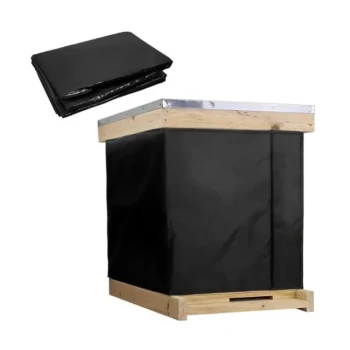
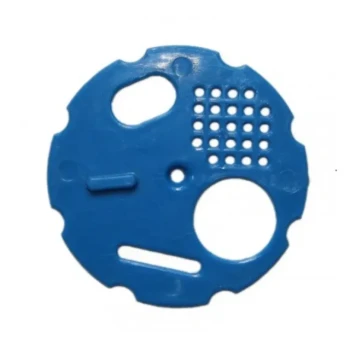
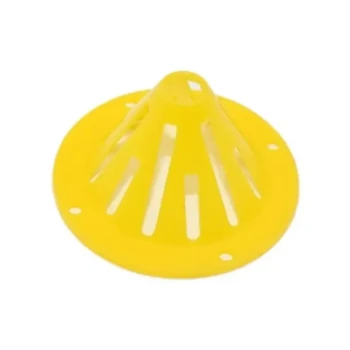
Winter hive protection depends on controlling access, airflow, and moisture. Entrance reducers limit cold drafts and make the entrance easier for bees to defend, while mouse guards physically block rodents from entering and damaging comb, frames, and hive interiors. Ventilation accessories release excess humidity from the winter cluster, helping prevent condensation, mold, and moisture-related colony stress.
The most effective winter hardware works as a system: restrict the entrance without sealing the hive, exclude rodents with a correctly sized barrier, and provide controlled ventilation that removes damp air without creating damaging drafts.
How Winter Hardware Protects the Hive
Entrance reducers conserve heat
An entrance reducer contracts the hive opening, reducing cold air movement into the brood chamber. This helps the winter cluster maintain temperature and can reduce the honey stores consumed for thermoregulation.
A smaller entrance also gives guard bees less area to defend. This is particularly valuable for weaker colonies or during periods when robbing pressure comes from yellowjackets and other pests.
Mouse guards protect internal equipment
Mice enter hives in search of warmth, shelter, and food when bee activity declines during late autumn and winter. Once inside, they can chew wax comb, wooden frames, and foundation while disturbing the cluster.
Their nesting material, waste, and odor also contaminate the hive interior. A metal mouse guard or mouse-proof entrance reducer creates a physical barrier without introducing chemical residues into the hive.
Ventilation accessories control humidity
The winter cluster generates moisture as bees consume honey and metabolize energy. If damp air condenses on the inner cover or hive walls, water can drip onto the cluster and contribute to mold, chilled bees, and deteriorating wooden equipment.
Ventilation slots and screened openings allow humid air to escape. Properly positioned ventilation supports a drier hive environment while preserving the colony’s ability to retain adequate warmth.
Matching Each Accessory to Its Function
Use reducers to manage entrance size
A reducer with a smaller notch is generally used during winter, early spring, or with weaker colonies. The larger opening—or complete removal of the reducer—is more appropriate during warm periods when colonies require greater airflow and worker traffic capacity.
A reducer should not be treated as an automatic substitute for a mouse guard. The critical measurement is the entrance height: an opening of approximately 9.5 mm (3/8 inch) is commonly used to exclude mice while still allowing bees to pass.
Use mouse guards for reliable rodent exclusion
Metal mouse guards provide a dedicated and durable defense against rodents. They restrict the entrance while maintaining a passage suitable for bees.
This is especially important where mouse pressure is high or where wooden reducers may not provide sufficient protection. Distributors and resellers should offer both standard reducers and dedicated metal guards because apiary conditions and beekeeper preferences vary.
Use ventilation accessories without creating drafts
Ventilation should be controlled rather than excessive. Upper ventilation holes, screened slots, or other approved openings should allow humid air to leave while avoiding a direct wind tunnel through the brood chamber.
Ventilation openings must remain clear of wraps, insulation, snow, and debris. External winter wraps can reduce wind exposure, but they should not cover the main entrance or necessary upper ventilation points.
How the System Supports Colony Health
It reduces thermal stress
The winter cluster naturally compresses and expands in response to temperature. A protected entrance reduces unnecessary drafts, allowing bees to spend more energy maintaining the cluster and less energy responding to uncontrolled air movement.
The objective is not to make the hive airtight. Bees still require oxygen and a pathway for humid air to escape.
It preserves food stores
A stable hive environment can reduce the energy cost of thermoregulation. By limiting cold drafts and preventing pest access to stored resources, winter hardware helps preserve the honey reserves the colony depends on for survival.
Mouse exclusion is particularly important because rodents can consume or contaminate food stores in addition to damaging comb.
It protects hive components
Comb, frames, foundation, and wooden boxes represent long-term apiary investments. Mouse guards and correctly configured entrance reducers help prevent chewing, nesting, contamination, and structural damage.
Ventilation accessories also protect equipment by reducing persistent moisture that can cause mold growth and accelerate deterioration of wooden components.
Understanding the Trade-offs
Too little ventilation traps moisture
Sealing every opening may appear to conserve heat, but trapped humidity can be more harmful than moderate cold air. Condensation can chill bees from above and promote mold inside the hive.
Winter protection should therefore prioritize controlled airflow, not complete closure.
Too much ventilation can create drafts
Large or poorly positioned openings may expose the cluster to excessive airflow and increase heat loss. Ventilation components should be sized and positioned to remove moisture without producing direct drafts across the bees.
Local climate, hive design, colony strength, and winter wrapping practices all affect the appropriate configuration.
An oversized entrance can admit mice
A standard warm-season entrance may be large enough for mice to pass through. A reducer or guard must be checked for the actual opening height rather than selected by product name alone.
A mouse-proof opening near 9.5 mm (3/8 inch) is a useful specification, but installation should still account for gaps, warped wood, and damage around the entrance.
Incorrect installation can block bees or airflow
Hardware that is misaligned, clogged, or covered by insulation can restrict bee movement or prevent moisture from escaping. Beekeepers should inspect entrances and ventilation points after installation and during winter weather events.
For B2B suppliers, clear sizing information, compatible product combinations, installation guidance, and responsive technical support are as important as the hardware itself.
Selecting and Supplying the Right Winter Components
Build a complete product range
A practical wintering portfolio should include wooden and plastic entrance reducers, metal mouse guards, screened ventilation accessories, replacement parts, and compatible hive insulation or wrap solutions.
This one-stop approach allows distributors and wholesalers to serve different hive formats, climates, and management systems without forcing customers to source each component separately.
Prioritize compatibility and specifications
Product descriptions should clearly state entrance dimensions, materials, mounting method, hive compatibility, and whether an opening is designed primarily for draft reduction or mouse exclusion.
Reliable specifications reduce installation errors, returns, and customer uncertainty during the short seasonal window when winter preparation must be completed.
Support seasonal fulfillment
Winter hardware is often purchased in concentrated periods before cold weather arrives. Fast order processing, dependable inventory, rapid response times, and efficient delivery help resellers meet seasonal demand and protect their beekeeper customers from preparation delays.
How to Apply This to Your Project
Choose the hardware combination according to colony condition, local pest pressure, climate, and hive design:
- If your primary focus is heat conservation: Use a winter entrance reducer to limit drafts, while retaining sufficient ventilation for safe air exchange.
- If your primary focus is rodent exclusion: Select a mouse-proof entrance or metal mouse guard with an opening height of approximately 9.5 mm (3/8 inch).
- If your primary focus is moisture control: Install screened or upper ventilation accessories and keep their openings clear of wraps, snow, and debris.
- If your primary focus is equipment protection: Combine entrance control, mouse exclusion, and controlled ventilation to protect frames, comb, wooden boxes, and stored honey.
- If your primary focus is distribution efficiency: Source compatible reducers, guards, and ventilation products from a supplier offering complete product coverage, dependable specifications, rapid service, and fast fulfillment.
With the right winter hardware configured as a balanced system, beekeepers can protect both colony health and the long-term value of their apiary equipment.
Summary Table:
| Accessory | Primary Function | Key Benefit |
|---|---|---|
| Entrance Reducer | Reduces entrance size | Conserves heat and reduces drafts, saving energy |
| Mouse Guard | Blocks rodent entry | Prevents damage to comb and frames |
| Ventilation Accessories | Controls humidity | Prevents condensation and mold |
Protect your hives this winter with our comprehensive range of entrance reducers, mouse guards, and ventilation systems. At HONESTBEE, we supply commercial apiaries and distributors with top-quality beekeeping equipment, ensuring fast delivery and OEM/ODM support. Our one-stop sourcing covers everything from hive-making machinery to essential winter hardware, with rapid response times and tailored solutions to boost your profit margins. Contact us today to secure reliable winter protection for your bees and your business!
Related Products
- Steel Round Disc Entrance Reducer for Flexzion Bee Hive Nuc Box Gate
- Beehive Entrance Reducer Guardian Metal Hive Entrance for Bees
- Professional Reversible Beehive Hive Entrance
- Beehive Entrance Discs Plastic Bee Entrance Disc for Bee Hives
- Professional Insulated Winter Hive Wrap for Beekeeping
People Also Ask
- What is the purpose of an entrance reducer for a beehive? Strengthen Colony Defense and Prevent Robbery
- Why are entrance reducers used to counter hornet infestations? Protect Your Hive with Strategic Choke Points
- Why is it critical to maintain a smaller entrance for a newly established bee hive? Boost Colony Growth and Security
- Under what conditions should a beekeeper adjust the size of a beehive entrance? Seasonal & Defense Management Tips
- What is the function of an entrance reducer on a beehive? Strengthen Colony Defense and Climate Control