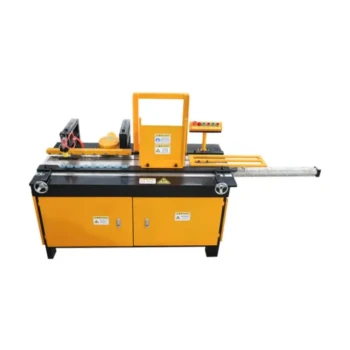
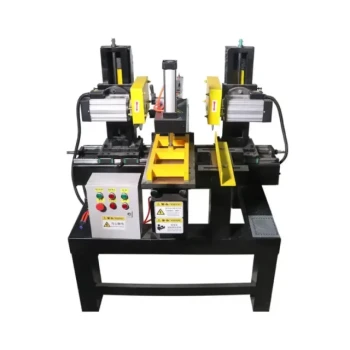
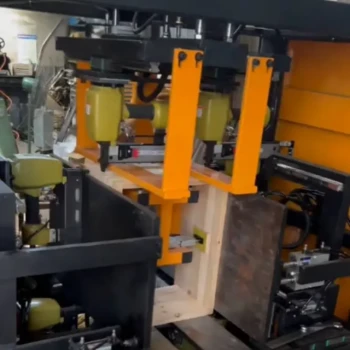
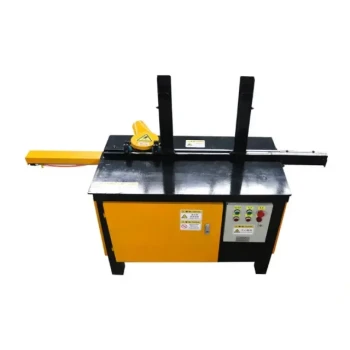
Hive-making machines drive standardization by replacing manual variation with industrial-grade precision, ensuring every hive component meets exact dimensional specifications. This uniformity is the prerequisite for high-density urban beekeeping, allowing modular hives to be stacked and arranged efficiently in space-constrained areas like rooftops while ensuring the tight seals necessary to protect colonies from unique city microclimates.
The Core Insight In commercial urban environments, space is the scarcest resource. Machine-driven standardization moves beekeeping from an artisanal craft to a scalable infrastructure, enabling modular density and automated management that manual construction simply cannot support.
The Engineering of Urban Scalability
Precision Dimensions for Space Efficiency
In urban settings, apiaries are often restricted to small footprints, such as public green spaces or high-rise rooftops. Hive-making machines produce components with zero variance, allowing for modular arrangements that maximize vertical and horizontal space.
Because every box and frame is identical, beekeepers can create high-density layouts without worrying about irregular fits or wasted gaps. This allows commercial operators to fit more production capacity into a limited square footage.
Component Interchangeability
Standardization is critical for logistics in distributed urban apiaries. Machine-produced parts ensure that a frame, bottom board, or super from one hive fits perfectly onto any other hive in the operation.
This eliminates the need for custom fitting during maintenance. If a component is damaged, it can be swapped immediately with a spare, streamlining operations and reducing the time beekeepers spend on rooftops or in public spaces.
Protection Against Environmental Stressors
Superior Sealing and Weather Resistance
Urban environments often create "microclimates" characterized by wind tunnels and heat islands. The high-precision cutting and assembly provided by hive-making machines result in tighter joints and better overall sealing compared to hand-made hives.
This precision improves the hive's thermal insulation, protecting the colony from temperature fluctuations. A tightly sealed hive is crucial for overwintering success and reduces the energy bees must expend to regulate their internal temperature.
Structural Integrity for Mobility
Commercial urban beekeeping often requires hives to be moved or manipulated. Professional-grade hive chests produced by machines are designed to support significant weight—approximately 40 kilograms—and withstand vibrations.
Machine assembly ensures consistent structural strength across all units. This reliability is vital for safety when hives are located in high-traffic urban areas or elevated positions.
Enabling Modern Management Systems
The Foundation for Automation
Standardization is the gateway to mechanization. Automated honey harvesting systems and maintenance equipment rely on predictable, uniform dimensions to function correctly.
Machine-made hives provide the consistent physical foundation required for these advanced tools. This allows large-scale urban operators to mechanize routine tasks, significantly improving economic efficiency and labor allocation.
Optimizing Bee Health and Biology
Machine precision ensures that internal "bee space"—the critical gaps bees need to move freely—is maintained accurately. When dimensions align perfectly with bee biology, it enhances the colony's natural behaviors.
Furthermore, uniform equipment facilitates scientific management. Regular inspections and disease monitoring are faster and less disruptive when equipment is standardized, directly contributing to better colony health and disease resistance.
Understanding the Trade-offs
Initial Capital vs. Operational Efficiency
Implementing machine-standardized hives requires an investment in industrial-grade hardware or purchasing from specialized manufacturers. While the upfront cost is higher than rudimentary construction, the long-term durability and interoperability offset this by reducing replacement frequency and labor costs.
Rigidity of Design
Standardization inherently limits customization. Machine-made hives are built to specific, widespread standards (such as Langstroth dimensions). While this is excellent for compatibility, it may offer less flexibility for experimental hive designs or niche beekeeping methods that require non-standard geometries.
Making the Right Choice for Your Goal
- If your primary focus is maximizing yield in small spaces: Prioritize machine-standardized modular hives that allow for safe vertical stacking to increase density per square meter.
- If your primary focus is operational efficiency and automation: Ensure your hive machinery produces components with strict tolerances to guarantee compatibility with mechanized harvesting equipment.
Standardization is not just about convenience; it is the structural framework that makes commercial urban beekeeping viable, scalable, and secure.
Summary Table:
| Key Aspect | Contribution of Hive-Making Machines | Urban Impact |
|---|---|---|
| Dimensional Precision | Zero-variance production of boxes and frames | Maximizes vertical density on rooftops |
| Interchangeability | Standardized components across all units | Streamlines logistics and part replacement |
| Weather Resistance | High-precision joints and superior sealing | Protects colonies from city microclimates |
| Structural Strength | Consistent assembly for heavy load support | Ensures safety in high-traffic/elevated areas |
| Automation Ready | Uniform dimensions for mechanical harvesting | Increases labor efficiency and economic yield |
Elevate Your Commercial Operation with HONESTBEE
Transitioning from artisanal methods to industrial scalability is essential for modern beekeeping success. HONESTBEE specializes in empowering commercial apiaries and distributors with the high-precision tools necessary to dominate the market.
From industrial hive-making machines and honey-filling equipment to our full spectrum of wholesale beekeeping consumables and hardware, we provide the infrastructure you need to grow. Whether you are managing high-density urban rooftops or large-scale rural honey production, our solutions ensure your operations are efficient, standardized, and profitable.
Ready to scale? Contact HONESTBEE today to discuss our comprehensive wholesale offerings and machinery tailored to your business needs.
References
- Agnieszka Bielska–Brodziak, Marek Suska. Pszczoły miodne w prawie miejscowym. DOI: 10.31743/sp.8883
This article is also based on technical information from HonestBee Knowledge Base .
Related Products
- High-Efficiency Pneumatic Bee Hive Making Machine for Rapid Box Assembly
- Mini Desktop Bee Hive Frame Forming Making Machine
- Beehive Handle and Frame Rest Cutting Machine: Your Specialized Hive Machine
- Beehive Machine Double End Saw for Precision Hive Component Manufacturing
- Automatic High-Speed Bee Hive Box Stapling Machine
People Also Ask
- How does the introduction of professional beehive-making machinery benefit sustainable beekeeping? Scale Your Apiary
- Why is specialized beehive-making machinery critical for low-defense breeding? Enhance Selection with Precision Tools
- How does the introduction of specialized beehive making machinery contribute to increasing the scale of regional beekeeping industries?
- What is the importance of specialized beehive making machinery in a circular bio-economy? Build Local Sustainability
- Why is specialized beehive-making machinery essential? Scale Your Apiary with Precision Industrial Standards