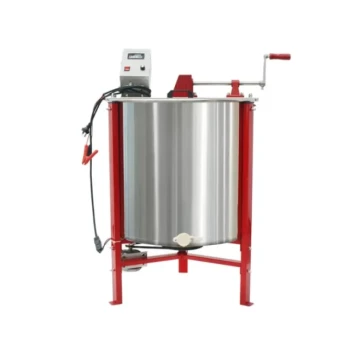
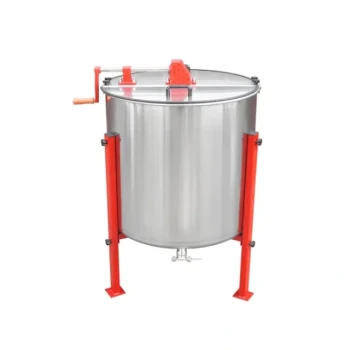
Honey extractors and related post-processing tools fundamentally transform apicultural operations by shifting the focus from manual labor to mechanized precision. These tools primarily utilize centrifugal force to separate honey from the comb without damaging the structure, while downstream equipment automates the bottling and sealing process to ensure hygiene and consistency.
Core Insight: The primary driver of efficiency is not just the speed of harvest, but the conservation of biological energy. By preserving the honeycomb structure for reuse, extractors eliminate the need for bees to consume honey to produce new wax, directly increasing future yields and allowing operations to scale commercially through standardized packaging.
The Mechanics of Extraction Efficiency
Utilizing Centrifugal Force
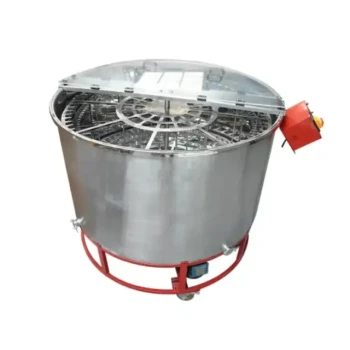
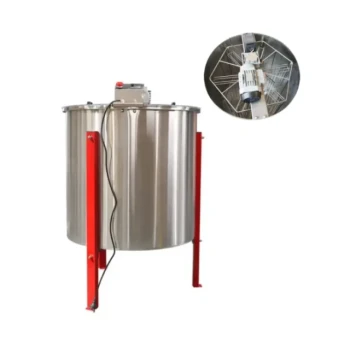
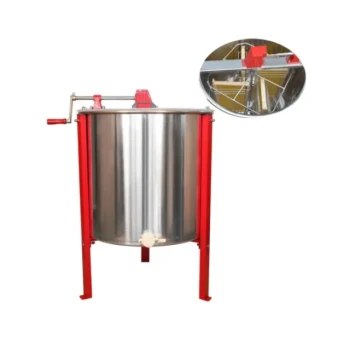
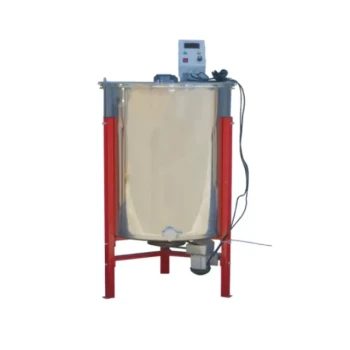
Modern extractors operate on the physical principle of centrifugal force. By spinning frames at high speeds, the machine forces honey out of the comb cells and against the extractor walls without the need for crushing or heating.
Preserving the Honeycomb Structure
The critical advantage of this method is that it leaves the wax honeycomb intact. Traditional methods that crush the comb destroy the bees' storage infrastructure, forcing a restart of the building process after every harvest.
The Biological Energy Multiplier
When bees are given intact combs to reuse, they do not need to secrete new wax. Since bees consume a significant amount of honey to produce a small amount of wax, preserving existing combs allows the colony to direct its energy solely toward foraging and honey production, substantially increasing the annual yield per hive.
Optimizing Post-Processing and Bottling
Precision and Waste Reduction
Automated filling equipment replaces manual pouring with quantitative bottling. This ensures that every container receives an exact net weight, significantly reducing material waste caused by overfilling and minimizing the variation inherent in manual packing.
Hygiene and Market Standards
Automatic sealing and bottling machines maintain strict hygiene standards required for commercial distribution. By minimizing human contact during the packaging phase, these tools protect the purity of the raw product and ensure compliance with food safety regulations.
Scaling Commercial Distribution
Industrial processing tools allow apiaries to convert bulk honey into standardized retail products rapidly. This capability is essential for operations looking to move beyond local sales and enter larger commercial markets where consistency and volume are prerequisites.
Maximizing Value from Byproducts
Turning Waste into Commodities
Specialized beeswax processing equipment, which utilizes temperature control and multi-stage filtration, allows beekeepers to recover high-purity wax from old combs. Without this machinery, old wax is often discarded as waste.
Economic Utilization of Resources
By processing beeswax into a clean, high-value commodity, operations create a secondary revenue stream. This maximizes the economic potential of the hive, ensuring that every byproduct of the apiary contributes to the overall profitability of the business.
Understanding the Trade-offs
Manual vs. Electric Investments
Manual extractors are portable and hand-cranked, making them ideal for small harvests or off-grid locations where electricity is unavailable. However, they rely heavily on physical labor and time, limiting the volume one person can process.
Operational Scalability
Electric extractors use motors to automate the spinning cycle, saving significant physical effort and time. While they require a higher upfront investment and a power source, they are virtually mandatory for commercial apiaries aiming to scale production without a linear increase in labor costs.
Making the Right Choice for Your Goal
To select the right equipment, you must align your toolset with your production volume and market targets.
- If your primary focus is maximizing honey yield: Prioritize a high-quality centrifugal extractor to ensure comb preservation and reduce the biological load on your bees.
- If your primary focus is retail scalability: Invest in automated filling and sealing equipment to ensure precise weight control and strict hygiene compliance.
- If your primary focus is off-grid or small-batch production: Utilize a manual extractor to maintain portability and lower overhead costs while still preserving comb integrity.
Efficiency in beekeeping is achieved when you combine the biological conservation of the colony with the mechanical precision of the processing line.
Summary Table:
| Equipment Type | Key Mechanism | Core Benefit to Operation |
|---|---|---|
| Centrifugal Extractor | High-speed spinning | Preserves wax combs for reuse; saves bee energy |
| Filling Machines | Quantitative bottling | Ensures precise weight; eliminates honey waste |
| Sealing Equipment | Automated packaging | Maintains hygiene standards for commercial retail |
| Wax Processing Tools | Filtration & heating | Converts waste into secondary revenue (pure wax) |
| Electric Systems | Motorized automation | Reduces labor costs; enables commercial scaling |
Maximize Your Apiary's Productivity with HONESTBEE
Transitioning from manual labor to mechanized precision is the key to scaling your beekeeping business. At HONESTBEE, we specialize in empowering commercial apiaries and distributors with the high-performance tools needed to succeed in a competitive market.
Why partner with HONESTBEE?
- Full Spectrum Solutions: From centrifugal extractors and hive-making machinery to advanced honey-filling and sealing lines.
- Wholesale Excellence: We provide a comprehensive range of beekeeping tools, machinery, and essential consumables designed for durability.
- Value-Added Growth: Beyond hardware, we offer honey-themed cultural merchandise to help you diversify your brand's reach.
Ready to enhance your harvest efficiency and product consistency? Contact us today to explore our wholesale catalog and let us help you build a more profitable apicultural operation.
References
- Alíz Feketéné Ferenczi, Andrea Bauerné Gáthy. Evaluation of the Pollination Ecosystem Service of the Honey Bee (Apis mellifera) Based on a Beekeeping Model in Hungary. DOI: 10.3390/su15139906
This article is also based on technical information from HonestBee Knowledge Base .
Related Products
- HONESTBEE 72 Frame Industrial Electric Honey Extractor for Beekeeping
- Commercial Electric 12 Frame Honey Extractor Spinner Motorized Honey Extractor
- HONESTBEE 6 Frame Self Reversing Electric Honey Extractor for Beekeeping
- HONESTBEE 3-Frame Manual Acrylic Honey Extractor
- Stainless Steel Manual 8 Frame Radial Honey Extractor Machine for Beehives
People Also Ask
- What is the importance of balancing honeycomb frames within a honey extractor? Ensure Stability and Protect Machinery
- How is honey separated from the frames after they are uncapped? Efficient Extraction Methods for High Yields
- What are the main benefits of using a honey extractor? Maximize Yields and Protect Your Honeycomb
- What are the recommended methods for removing honey from the honeycomb? Top Extraction Techniques for Maximum Efficiency
- How do manual honey extractors compare to electric honey extractors? Choosing the Right Tool for Your Apiary Growth