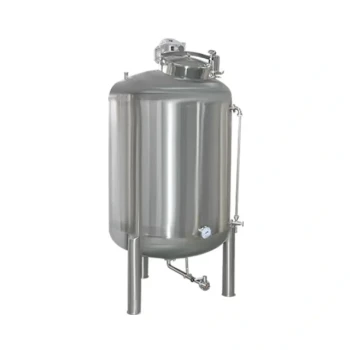
Maintaining the integrity of honey at scale requires more than just space; it requires active chemical management. Metal storage containers, when integrated with precise temperature control systems, prevent the chemical decomposition of fructose and the formation of hydroxymethylfurfural (HMF). This technical synergy preserves the honey’s natural color, bioactive enzymes, and complex flavor profiles, ensuring the product remains compliant with stringent international quality standards throughout the distribution cycle.
High-performance storage systems act as a critical barrier against chemical degradation and environmental fluctuations, directly safeguarding the market value and shelf-life of bulk honey assets.
The Science of Chemical Preservation
Inhibiting HMF Formation and Fructose Decay
Metal storage systems are designed to regulate the naturally acidic environment of honey, which otherwise accelerates the decomposition of fructose. By maintaining a stable thermal environment, these systems inhibit the production of hydroxymethylfurfural (HMF), a key indicator of heat damage and aging.
Controlling Maillard Reactions and Discoloration
Fluctuating or high temperatures trigger Maillard reactions, leading to the undesirable darkening of honey's natural color. Integrated temperature control prevents these reactions, ensuring the honey retains its characteristic clarity and hue, which are vital for premium market positioning.
Preserving Bioactive Compounds
Honey contains heat-sensitive enzymes, phenolic compounds, and antioxidants that provide its antibacterial properties. Professional systems keep temperatures below critical thresholds—specifically avoiding heat above 42 degrees Celsius—to ensure these therapeutic components remain active and intact.
Operational Advantages for Large-Scale Distribution
Strategic Market Timing and ROI
Advanced storage allows distributors to hold inventory for 7 to 12 months without quality degradation. This capability enables wholesalers to store honey during periods of low market prices and release it during peak demand, maximizing economic returns.
Precise Management of the Aging Cycle
Certain specialty honeys contain unstable toxins that require a regulated aging period to degrade into safe ranges. Industrial-grade temperature control allows for the precise management of this cycle, ensuring product safety before the honey enters the retail market.
Preventing Fermentation and Contamination
Professional-grade metal containers offer superior sealing that prevents moisture absorption, which is the primary cause of honey fermentation. These airtight environments also block external odor contamination, preserving the natural aromatic compounds that define high-quality honey.
Understanding the Trade-offs and Risks
The Risk of Metallic Reactivity
The naturally acidic pH of honey can react with certain metals if the containers lack protective food-grade linings. If the surface is damaged or unlined, the honey may develop off-flavors or undergo significant color changes due to chemical leaching.
Maintenance and Microbial Risks
While metal is durable, it requires rigorous and specialized cleaning protocols to prevent spoilage. If containers are not thoroughly sanitized between batches, residual microbial activity can compromise the entire volume of a large-scale storage tank.
Energy Costs vs. Quality Gains
Implementing high-precision temperature control introduces higher operational overhead in terms of energy consumption. However, this cost is typically offset by the increased compliance rate and the ability to access premium international markets that reject honey with high HMF levels.
How to Apply This to Your Inventory Strategy
Recommendations for B2B Success
Choosing the right storage infrastructure is a balance between your specific market goals and the technical requirements of the honey variety you handle.
- If your primary focus is international export compliance: Prioritize systems with automated temperature logging to prove that HMF levels and enzyme activities have been maintained within legal limits.
- If your primary focus is long-term inventory holding: Invest in high-capacity, lined metal tanks with redundant cooling systems to protect the product's color and flavor over a 12-month period.
- If your primary focus is rapid order fulfillment: Utilize smaller, professional-grade metal turnover buckets that offer both durability for transport and the sealing capabilities required for short-term storage.
By integrating professional storage technology with expert logistics management, you ensure that every kilogram of honey delivered maintains the premium quality your customers demand.
Summary Table:
| Storage Factor | Impact on Honey Quality | Technical Insight |
|---|---|---|
| Temperature Control | Prevents HMF & fructose decay | Keep below 42°C to preserve enzymes |
| Metal Containers | Blocks moisture & odors | Food-grade linings prevent metallic leaching |
| Airtight Sealing | Inhibits fermentation | Essential for maintaining low moisture levels |
| Thermal Stability | Controls Maillard reactions | Prevents darkening; maintains premium color |
| Regulated Aging | Neutralizes specific toxins | Precision management for safety compliance |
Scale Your Honey Business with HONESTBEE’s Professional Solutions
Maintaining honey quality at scale is the difference between premium margins and lost inventory. As a leading partner for commercial apiaries and B2B distributors, HONESTBEE provides the comprehensive infrastructure you need to succeed.
Our one-stop sourcing model offers everything from specialized hive-making and honey-filling machinery to durable storage equipment and essential industry consumables. We empower wholesalers with:
- Comprehensive Full-Spectrum Portfolio: From hardware to honey-themed cultural merchandise.
- Deep Industry Expertise: Technical support to help you meet international export standards (HMF/Enzyme levels).
- Operational Efficiency: Ultra-fast delivery and rapid response times to keep your supply chain moving.
- Premium Trading Services: Dedicated support tailored to the needs of resellers and large-scale operators.
Ready to optimize your storage and maximize your market value?
Contact HONESTBEE Today for a Wholesale Consultation
References
- Rohini Sharma, Mangla Ram Bajiya. Honey, its Quality and Composition and their Responsible Factors. DOI: 10.23910/1.2023.3278a
This article is also based on technical information from HonestBee Knowledge Base .
Related Products
- Professional Honey Storage Tank with Agitation System
- Stainless Steel Honey Storage and Settling Tank with Double Strainer
- Stainless Steel Honey Storage Tank with Lid for Honey
- Plastic Honey Gate Spout with Wing Nut for Beekeeping Honey Bucket
People Also Ask
- What economic role do honey storage tanks play? Boost Your Revenue Through Strategic Inventory Management
- What roles do industrial honey storage tanks and filtration meshes play in processing? Ensure Purity & Consistency
- What is the purpose of a honey storage tank? Streamline Your Honey Processing for Quality & Efficiency
- What are honey storage tanks used for? Essential Features for Quality Preservation and Profit
- How do large honey storage tanks and gravity fall filling systems improve honey packaging efficiency and safety?