Honey storage equipment acts as a financial lever, allowing producers to decouple the sale of their product from the immediate harvest timeline. By storing honey until market supply decreases, producers can bypass the price dips typical of peak harvest seasons and capitalize on scarcity-driven price premiums later in the year.
Storage tanks function as a technical tool for converting time into economic value. They allow producers to withhold supply when prices are low and release it when the market is favorable, all while preserving the biological integrity necessary for high-end retail and export standards.
Transforming Honey from Perishable to Asset
The Mechanics of Time-Value Conversion
The primary economic role of storage equipment is to enable a strategy of "delayed marketing." During peak harvest, the market is often flooded with product, driving prices down.
Storage infrastructure allows the producer to hold inventory physically without selling it immediately. This converts the passage of time into increased revenue per kilogram as the market shifts from abundance to scarcity.
Avoiding "Distress Selling"
Without adequate storage, producers are forced to sell immediately upon harvest, regardless of the current market rate. This lack of infrastructure forces them to be "price takers."
Possessing storage capacity empowers the producer to become a "price maker" or at least a strategic seller. They can wait for the market to stabilize or improve before liquidating their stock.
Protecting Revenue Through Quality Control
Preventing Economic Loss from Spoilage
Honey is hygroscopic; it naturally absorbs moisture from the air, which can lead to fermentation and total product loss. Professional storage tanks provide sealed, airtight environments that prevent moisture intrusion.
By preventing fermentation, storage tanks ensure that 100% of the harvested volume remains saleable. This protects the producer's bottom line from the massive devaluation associated with spoiled or sour honey.
Retaining Value in Premium Markets
High-value markets require honey to retain specific bio-active substances, such as heat-sensitive enzymes (diastase) and flavonoids. Improper storage in standard containers can degrade these compounds.
Temperature-controlled storage facilities maintain the honey's "raw" status and chemical profile. This allows the product to meet strict regulatory indicators for biological activity, granting access to premium pricing tiers that bulk, low-grade honey cannot reach.
Standardization as a Gateway to Scale
Homogenization for Export Consistency
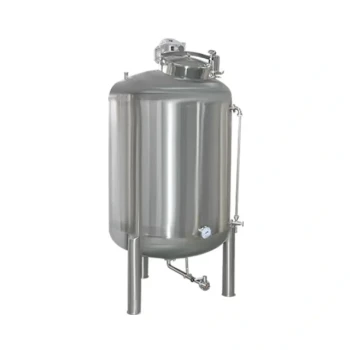
Industrial-grade storage tanks are often equipped with stirring and heating systems designed to homogenize large volumes. This blends different batches to ensure consistent color, moisture content, and flavor.
From an economic standpoint, consistency is currency. Large-scale buyers and exporters require uniform product specifications; without homogenization capabilities, a producer is limited to selling smaller, inconsistent lots at lower prices.
Ensuring Hygiene and Material Safety
Food-grade stainless steel tanks prevent contamination from heavy metals or plastic residues, which can occur with inferior storage methods. This equipment ensures the product is safe for human consumption and meets export standards.
Compliance with these safety standards is a prerequisite for entering formal retail channels. Storage equipment therefore acts as the physical bridge between raw agricultural production and commercial branded operations.
Understanding the Trade-offs
Capital Expenditure vs. Operational Flexibility
Investing in professional storage requires significant upfront capital for stainless steel tanks and temperature control systems. This creates a barrier to entry for very small producers.
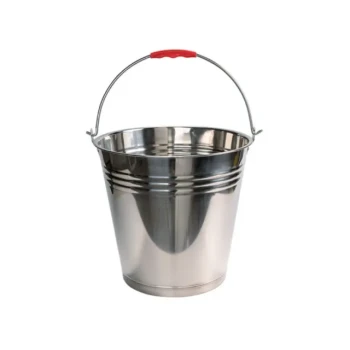
However, relying on cheap, improvised storage (like plastic buckets) limits the shelf-life of the honey. The producer saves money upfront but loses the ability to hold the asset long-term for better market prices.
Complexity of Management
Advanced storage introduces the need for monitoring temperature and humidity. Mismanagement of these systems (e.g., overheating to prevent crystallization) can destroy the enzymes mentioned earlier.
While storage enables higher revenue, it converts the business from simple extraction to complex inventory management. The producer must weigh the cost of energy and maintenance against the potential price increase of the stored honey.
Making the Right Choice for Your Business
To maximize the return on your honey production, align your storage strategy with your specific market goals:
- If your primary focus is Price Maximization: Invest in capacity that equals your peak harvest volume to hold stock for 3-6 months until market prices recover.
- If your primary focus is Export or Retail: Prioritize stainless steel tanks with homogenization and temperature control to ensure batch consistency and enzyme retention.
- If your primary focus is Risk Mitigation: Focus on airtight sealing and moisture control to prevent fermentation and total loss of inventory.
Strategic storage transforms honey from a perishable commodity into a durable financial asset that appreciates over time.
Summary Table:
| Economic Function | Technical Feature | Financial Benefit |
|---|---|---|
| Time-Value Conversion | High-capacity sealed tanks | Allows selling during scarcity for higher price premiums |
| Loss Prevention | Airtight, moisture-proof design | Prevents fermentation and spoilage, protecting 100% of volume |
| Market Access | Homogenization & heating systems | Ensures batch consistency required for high-value export markets |
| Quality Preservation | Temperature-controlled stainless steel | Retains bioactive enzymes to meet premium "raw" honey standards |
Maximize Your Harvest's Value with HONESTBEE
Don't let market fluctuations or spoilage erode your hard-earned profits. HONESTBEE provides commercial apiaries and distributors with the professional infrastructure needed to transform honey from a perishable crop into a high-value asset. From industrial-grade stainless steel storage tanks and homogenization machinery to precision honey-filling equipment, we offer a comprehensive wholesale portfolio designed to enhance your operational scale and consistency.
Whether you are looking to upgrade your extraction facility or source reliable industry consumables, our team is ready to support your growth. Contact us today to discuss your equipment needs and secure your competitive edge!
References
- Besha Teresa Borena. HONEY VALUE CHAIN ANALYSIS: THE CASE OF ABUNA GINDEBERET DISTRICT OF OROMIA REGIONAL STATE, ETHIOPIA. DOI: 10.22159/ijags.2023.v11i3.46713
This article is also based on technical information from HonestBee Knowledge Base .
Related Products
- Stainless Steel Honey Storage Tank with Lid for Honey
- Stainless Steel Honey Storage and Settling Tank with Double Strainer
- Professional Honey Storage Tank with Agitation System
- Stainless Steel Honey Tank Stand for Honey Storage
- Premium Stainless Steel Honey Tank Bucket Pail with Reinforced Handle and Polished Finish
People Also Ask
- What roles do industrial honey storage tanks and filtration meshes play in processing? Ensure Purity & Consistency
- What is the purpose of a honey storage tank? Streamline Your Honey Processing for Quality & Efficiency
- What are honey storage tanks used for? Essential Features for Quality Preservation and Profit
- How do large honey storage tanks and gravity fall filling systems improve honey packaging efficiency and safety?
- How do industrial-grade stainless steel honey storage tanks maintain product quality? Ensure Purity & Export Standards