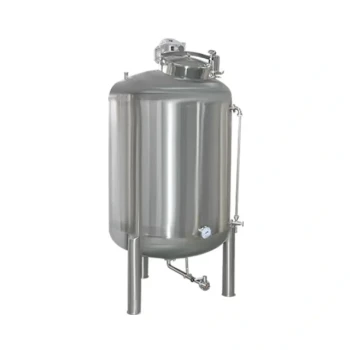
Honey storage tanks are specialized industrial vessels designed to securely hold large volumes of honey after processing but before final packaging and distribution. They serve as the critical infrastructure that bridges the gap between extraction and the consumer market.
Core Insight: A honey storage tank is not just a passive container; it is an active quality control system. Its primary purpose is to stabilize the product’s biological properties—preventing crystallization and fermentation—while giving producers the economic leverage to wait for favorable market prices.
The Anatomy of a Storage Tank
Material Composition and Durability
To handle the unique chemical properties of honey, these tanks are typically constructed from food-grade stainless steel.
Honey is naturally acidic and corrosive; long-term storage in ordinary metal containers can lead to heavy metal contamination. Stainless steel (and occasionally high-grade food polymers) offers the chemical inertness required to prevent reactions that would alter the honey's flavor or safety.
Integrated Environmental Controls
Industrial-grade tanks often feature heating and stirring systems or constant temperature controls.
These features are not optional extras for large-scale operations; they are essential for homogenization. They allow producers to mix different batches to ensure consistent color, moisture content, and flavor profiles, which is a strict requirement for export-grade products.
Airtight Sealing Mechanisms
Superior airtight sealing is a defining feature of a proper storage tank.
Because honey is hygroscopic (it absorbs moisture from the air), exposure to humidity can dilute the honey and trigger fermentation. A high-quality tank creates a hermetic environment that locks out external moisture and maintains the honey's diastase activity and specific gravity.
Processing and Purification Functions
Clarification Through Gravity
Many storage tanks function as settling and filtration units.
By allowing the honey to stand undisturbed, gravity forces air bubbles, wax fragments, and larval debris to separate from the liquid. This sedimentation process, often combined with multi-layer filtration, ensures the final bottled product achieves the high clarity and purity demanded by consumers.
Preventing Crystallization
Long-term storage poses the risk of physical state changes.
Controlled heating systems within the tank effectively prevent crystallization (granulation) during extended storage periods. This ensures the honey remains in a liquid, pumpable state, ready for packaging without the need for aggressive reheating that could damage its nutritional value.
Strategic Economic Advantages
Converting Time into Value
Storage tanks provide a vital economic buffer for producers.
During peak harvest seasons, market supply is high, driving prices down. Storage equipment allows producers to hold their inventory without quality loss. They can then sell during periods of market scarcity, effectively increasing revenue per kilogram without changing the product itself.
Understanding the Trade-offs
The Risk of Material Selection
While stainless steel is the gold standard, it represents a significant upfront investment.
However, attempting to cut costs by using non-food-grade or ordinary metal containers is a critical error. These materials lack corrosion resistance, leading to product contamination and spoilage that can result in total financial loss.
Complexity of Temperature Management
Active temperature control is a double-edged sword.
While heating prevents crystallization, excessive or uneven heating can degrade the honey's quality, specifically increasing HMF (Hydroxymethylfurfural) levels. Operators must balance the need for liquidity against the risk of heat damage.
Making the Right Choice for Your Goal
Selecting the right storage solution depends on your position in the supply chain and your specific objectives.
- If your primary focus is large-scale export: Prioritize tanks with heating and stirring systems to ensure batch homogenization and consistent compliance with international standards.
- If your primary focus is product clarity and purity: Choose tanks designed specifically for settling and filtration to remove impurities naturally via gravity.
- If your primary focus is economic leverage: Invest in high-capacity, airtight vessels that allow you to hold inventory long-term, bypassing low harvest-season prices.
The right storage tank does not just hold your product; it preserves the chemical integrity and market value of your hard work.
Summary Table:
| Feature | Function & Purpose | Key Benefit |
|---|---|---|
| Food-Grade Stainless Steel | Resists honey's natural acidity and prevents contamination. | Ensures food safety and chemical inertness. |
| Heating & Stirring Systems | Facilitates homogenization and prevents granulation. | Maintains pumpable liquid state and batch consistency. |
| Airtight Sealing | Prevents moisture absorption (hygroscopy). | Stops fermentation and maintains shelf life. |
| Settling & Filtration | Uses gravity to separate wax, debris, and air bubbles. | Increases product clarity and purity for export. |
Scale Your Honey Production with HONESTBEE
At HONESTBEE, we specialize in empowering commercial apiaries and distributors with the heavy-duty infrastructure needed to dominate the market. Our comprehensive wholesale range includes premium food-grade honey storage tanks, advanced honey-filling machines, and high-capacity hive-making equipment.
Whether you are looking to stabilize your harvest, achieve international export standards, or secure economic leverage through bulk storage, we provide the specialized hardware and industry consumables to help you succeed. Contact us today to explore our wholesale solutions and elevate your operations!
Related Products
- Stainless Steel Honey Storage Tank with Lid for Honey
- Stainless Steel Honey Storage and Settling Tank with Double Strainer
- Professional Honey Storage Tank with Agitation System
- Stainless Steel Honey Tank Stand for Honey Storage
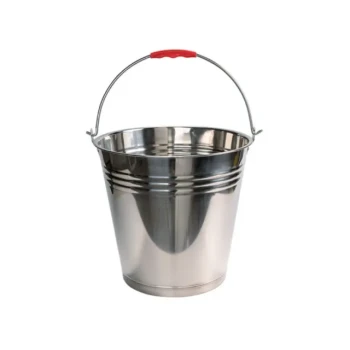
- Premium Stainless Steel Honey Tank Bucket Pail with Reinforced Handle and Polished Finish
People Also Ask
- What economic role do honey storage tanks play? Boost Your Revenue Through Strategic Inventory Management
- What roles do industrial honey storage tanks and filtration meshes play in processing? Ensure Purity & Consistency
- What is the purpose of a honey storage tank? Streamline Your Honey Processing for Quality & Efficiency
- How do large honey storage tanks and gravity fall filling systems improve honey packaging efficiency and safety?
- How do industrial-grade stainless steel honey storage tanks maintain product quality? Ensure Purity & Export Standards