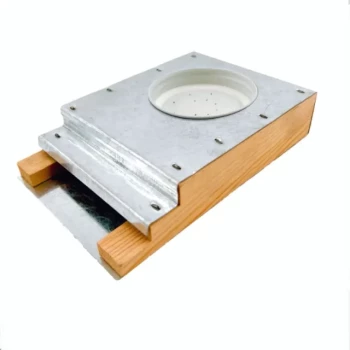
Open-style bee feeders with Z-shaped channels utilize environmental thermal energy by physically extending the water's flow path. By forcing water to travel a longer distance across an inclined plane, the design significantly prolongs the duration of exposure to sunlight. This extended dwell time allows solar radiation to naturally pre-warm the water before the bees consume it.
The Z-shaped design acts as a passive solar heater, utilizing geometry to increase sunlight absorption time. This prevents physiological stress on bees during colder months by minimizing the internal metabolic energy they must expend to process cold fluids.
The Mechanics of Solar Absorption
Extending Flow Duration
The primary function of the Z-shaped guide channel is to alter the trajectory of the water. Rather than flowing directly down a slope, the water is forced to navigate a winding path.
This artificially increases the distance the water must travel. Consequently, the water remains on the feeder surface for a longer period, maximizing its exposure to sunlight.
Leveraging the Inclined Plane
These feeders utilize an inclined plane structure to facilitate flow. This angle does more than simply move water; it orients the fluid toward the sun.
The combination of the slope and the Z-pattern transforms the feeder into a solar collector. The water absorbs thermal energy from the sun as it slowly descends, raising its temperature relative to the ambient air.
The Biological Impact on the Hive
Reducing Energy Loss
Bees are ectothermic (cold-blooded) and sensitive to temperature changes. Consuming cold water causes an immediate drop in their body temperature.
To regain homeostasis, a bee must burn energy reserves. By providing pre-warmed water, this design significantly reduces the energy loss bees suffer from thermal shock.
Encouraging Early Spring Consumption
In low-temperature seasons, such as early spring, bees are often reluctant to drink cold water. This can lead to dehydration despite available resources.
The thermal boost provided by the Z-channels makes the water more palatable. This encourages bees to drink, ensuring the hive remains hydrated and active during critical seasonal transitions.
Understanding the Limitations
Dependency on Sunlight
It is important to note that this is a passive system. It relies entirely on the presence of solar radiation to generate heat.
Inconsistency in Overcast Conditions
On cloudy days or during the night, the Z-shape provides no thermal advantage. The warming effect is variable and directly tied to current weather conditions, unlike active heating systems which provide consistent temperatures.
Making the Right Choice for Your Goal
Selecting this feeder design is a strategic choice for managing colony energy budgets during cold snaps.
- If your primary focus is colony health in early spring: Use this design to encourage drinking and reduce metabolic stress when ambient temperatures are low.
- If your primary focus is consistent water temperature: Be aware that this passive method fluctuates with the weather and offers limited benefits without direct sun.
By leveraging simple geometry to capture solar energy, you can significantly reduce the physiological burden on your hive during critical transition periods.
Summary Table:
| Feature | Mechanism | Benefit to Colony |
|---|---|---|
| Z-Shaped Channel | Extends water flow path & dwell time | Maximizes sunlight exposure for natural heating |
| Inclined Plane | Orients fluid toward solar radiation | Enhances thermal energy absorption efficiency |
| Passive Heating | Converts solar energy to fluid heat | Reduces energy loss from thermal shock |
| Thermal Regulation | Minimizes internal metabolic expenditure | Prevents physiological stress during cold months |
Elevate Your Beekeeping Operation with HONESTBEE
Maximize your colony's health and operational efficiency by choosing professional-grade equipment. HONESTBEE specializes in supporting commercial apiaries and distributors with a robust wholesale catalog.
Whether you need precision-engineered feeders that leverage environmental energy, advanced hive-making and honey-filling machinery, or essential industry consumables, we provide the full spectrum of beekeeping tools to scale your business.
Ready to upgrade your inventory or apiary? Contact us today to discover how our high-performance hardware and honey-themed cultural merchandise can bring superior value to your target market.
References
- А. Ф. Кузнецов, V. V. Achilov. Hygiene water and water supply in beekeeping. DOI: 10.52419/issn2782-6252.2024.3.102
This article is also based on technical information from HonestBee Knowledge Base .
Related Products
- In-Hive Dual Compartment Frame Bee Feeder for Targeted Colony Nutrition
- Boardman Entrance Bee Feeder Durable Galvanized Steel and Wood Construction for Beekeeping
- Professional Hive Front Entrance Bee Feeder
- Rapid Bee Feeder White Plastic 2L Round Top Feeder for 8 or 10-Frame Bee Hives
- HONESTBEE Entrance Bee Feeder Efficient Hive Front Liquid Feeding Solution for Beekeeping
People Also Ask
- What are the advantages of using a frame feeder for bee colonies? Boost Growth and Prevent Robbing Efficiently
- Why should sugar syrup or dry sugar not be left out in the open when feeding bees? Avoid a Dangerous Feeding Frenzy
- What precautions should be taken when feeding bees inside the hive? Safeguard Your Colony from Robbing and Leaks
- How do in-hive feeders support honey bee colonies during autumn? Ensure Overwintering Success for Your Apiary
- How do high-quality in-hive feeders assist in managing bee colonies during pesticide contamination? Protect Your Apiary