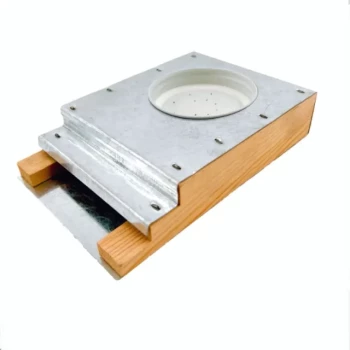
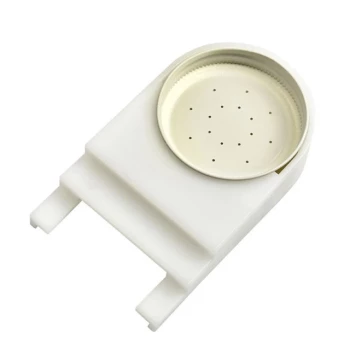
An entrance feeder is a two-part hydration and nutrition device commonly used in apiaries for its simplicity and accessibility. It consists of a feed jar—typically glass or plastic with a perforated lid—that sits outside the hive body, and a specialized feeding tray that slides directly into the hive’s front entrance.
While entrance feeders are inexpensive and allow for effortless visual monitoring of food levels, they expose the colony to significant risks regarding weather vulnerability and inciting aggression from other hives.
The Mechanics of the Entrance Feeder
Components and Assembly
The device relies on a simple gravity-feed system. An inverted jar filled with syrup or water rests on a plastic or wooden base. This base acts as a tray, extending through the entrance reducer and into the hive.
The Delivery Method
Syrup drips from the perforated lid onto the internal section of the tray. This allows the bees to access the liquid safely from inside the hive without needing to leave the safety of the colony.
Key Operational Advantages
Instant Visual Monitoring
The primary benefit of this design is visibility. Because the jar remains outside the hive, you can track feed consumption levels instantly without smoking the bees or cracking the propolis seal on the covers.
Spring Hydration
The primary reference notes that these feeders are particularly effective for providing water in the spring. This helps the colony regulate temperature and dilute stored honey without requiring them to forage in unstable weather.
Cost and Accessibility
These units are generally the most inexpensive feeder option available. Their simple design makes them easy to clean and refill without disturbing the colony's internal cluster.
Critical Risks and Trade-offs
The Threat of "Robbing"
The most significant drawback is the potential to incite robbing behavior. Because the syrup source is located at the hive's entrance, the scent can attract scout bees from stronger, neighboring colonies. This can lead to aggressive invasions where stronger colonies overpower weak ones to steal the syrup.
Exposure to the Elements
Unlike internal frame feeders, the entrance feeder is exposed to ambient air temperature. In cold months, the syrup in the external jar is highly susceptible to freezing, rendering the food inaccessible to the cluster.
Pest Attraction
The external nature of the jar does not just attract robber bees; it also acts as a beacon for other pests. Ants and small animals are frequently drawn to the exposed sugar source, which can stress the colony.
Making the Right Choice for Your Goal
While entrance feeders are user-friendly, their use depends heavily on the season and the strength of your colony.
- If your primary focus is spring hydration or monitoring: Use an entrance feeder for water or light syrup, as it allows you to check levels daily without disturbing the brood nest.
- If your primary focus is feeding a weak colony: Avoid this feeder type, as the scent at the entrance makes the weak colony a prime target for robbing by stronger hives.
- If your primary focus is winter feeding: Choose an internal feeder instead, as the entrance feeder is likely to freeze and become useless in low temperatures.
Use the entrance feeder for convenience during fair weather, but switch to internal methods when pests or cold temperatures threaten the hive.
Summary Table:
| Feature | Description | Pros/Cons |
|---|---|---|
| Mechanism | Gravity-fed jar with perforated lid on a tray base | Simple & Inexpensive |
| Visibility | Jar sits outside the hive for instant monitoring | High Accessibility |
| Best Use | Spring hydration and light syrup feeding | Convenient in Fair Weather |
| Primary Risk | Syrup scent at the entrance attracts scout bees | High Robbing Risk |
| Climate | Exposed to ambient air and temperature changes | Susceptible to Freezing |
Scale Your Apiary Operations with HONESTBEE
Are you looking to supply your customers with reliable feeding solutions or upgrade your commercial apiary's efficiency? HONESTBEE specializes in catering to commercial apiaries and distributors with a comprehensive wholesale offering.
Our extensive portfolio includes:
- Beekeeping Tools & Machinery: From precision hive-making to automated honey-filling machines.
- Essential Consumables: A wide array of high-quality hardware and industry-standard supplies.
- Cultural Merchandise: Unique honey-themed products to diversify your retail offerings.
Whether you need bulk feeding equipment or specialized production machinery, our team is dedicated to providing the tools that drive industry growth. Contact us today to discuss your wholesale needs and let us help you optimize your beekeeping business.
Related Products
- HONESTBEE Entrance Bee Feeder Professional Hive Nutrition Solution for Beekeeping
- HONESTBEE Entrance Bee Feeder Efficient Hive Front Liquid Feeding Solution for Beekeeping
- Boardman Entrance Bee Feeder Durable Galvanized Steel and Wood Construction for Beekeeping
- Classic Boardman Entrance Bee Feeder Hive Front Feeding Solution
- Professional Hive Front Entrance Bee Feeder
People Also Ask
- What types of bee feeders are available for beginners? Start with the Simple Entrance Feeder
- What are the advantages and disadvantages of using an entrance feeder for bees? Balance Convenience and Hive Security.
- What is a bee entrance feeder and what are its drawbacks? Essential Guide to Hive Security and Feeding Efficiency
- How does a bee entrance feeder work? A Simple Guide to Convenient Hive Feeding
- How to make an entrance feeder for bees? A DIY Guide for Safe & Effective Feeding