Queen breeding facilities enhance economic efficiency by systematically mass-producing superior genetic stock through advanced artificial rearing techniques. By supplying apiaries with queens bred specifically for high productivity, disease resistance, and gentle temperament, these facilities act as the foundation for higher honey yields and more robust, scalable colony health.
The Core Reality: Commercial success in beekeeping relies on treating queen bees as vital biological assets rather than just hive components. Breeding facilities leverage specialized rearing techniques and controlled environments to maximize genetic potential, directly scaling honey harvest potential and operational stability.
The Role of Genetic Superiority
Mass Production of Desirable Traits
Facilities do not simply reproduce bees; they utilize artificial rearing techniques to engineer better stock. Through selective breeding, they mass-produce queens that exhibit high-value traits such as disease resistance and gentle temperaments.
The Queen as a Biological Asset
A superior queen acts as a performance multiplier for the colony. When these high-quality queens are distributed to apiaries, they significantly improve the genetic characteristics of the honeybee colonies. This genetic upgrade is the primary driver for enhancing the honey harvest potential of the entire operation.
Optimizing Production via Rearing Techniques
Maximizing Vertical Space
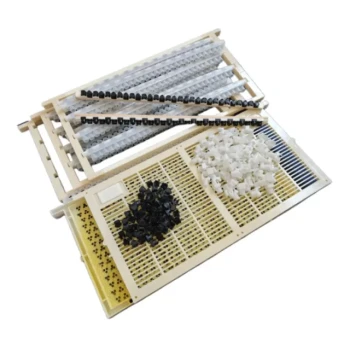
Efficiency within the breeding facility is achieved through the use of multi-layered queen-rearing bars. This technique allows breeders to maximize the vertical space within the hive, significantly increasing the number of grafted larvae—and consequently the yield of queens—per single rearing colony.
Leveraging Hive Microclimates
Placing rearing bars at specific heights exploits the optimal thermal environments and humidity gradients found in the center of the beehive. This precise positioning results in higher larval acceptance rates and the development of heavier, higher-quality queen bees.
Infrastructure and Standardization
Enhancing Survival and Speed
Advanced facilities utilize standardized modern beehive systems to control internal environments via ventilation and temperature regulation. This control is critical for increasing colony overwintering survival rates and accelerating spring breeding speeds, ensuring colonies are populous and ready for the season.
Enabling Industrial Scale
The modular design of standardized hives supports industrial competitiveness by enabling large-scale migratory beekeeping. This infrastructure allows for efficient mechanized honey harvesting, serving as the core framework for maintaining stable production and high colony populations.
Understanding the Trade-offs
Management Complexity
Implementing multi-layered rearing systems requires high-level technical expertise. Breeders must precisely monitor the thermal gradients and humidity; failure to maintain these narrow environmental windows can lead to poor acceptance rates or inferior queen quality.
Capital Intensity
Transitioning to standardized modern hives and mechanized harvesting systems involves significant upfront investment. While these systems enhance economic efficiency long-term through scale and survival rates, they require substantial capital to implement compared to traditional, low-tech methods.
Integrating Breeding Advances into Your Operation
To maximize the economic return of your apiary, you must align your breeding strategy with your operational goals.
- If your primary focus is yield maximization: Prioritize sourcing queens reared on multi-layered bars to ensure you are receiving heavy, high-quality stock capable of maximum production.
- If your primary focus is operational scalability: Invest in standardized, modular hive systems to leverage mechanization and improve overwintering survival rates for your new genetic stock.
By combining superior genetics with advanced rearing infrastructure, beekeepers transform their colonies from simple livestock into high-performance biological assets.
Summary Table:
| Key Factor | Economic Impact | Technical Advantage |
|---|---|---|
| Genetic Selection | Higher honey yields & disease resistance | Mass production of superior biological assets |
| Vertical Rearing | Increased queen output per colony | Optimized thermal gradients & humidity for quality |
| Standardized Hives | Lower labor costs & higher survival | Enables mechanized harvesting & migratory scale |
| Environmental Control | Accelerated spring breeding | Specialized ventilation & temperature regulation |
Elevate Your Commercial Success with HONESTBEE
To transform your apiary into a high-performance operation, you need more than just bees—you need the right infrastructure and equipment. HONESTBEE empowers commercial apiaries and distributors with professional-grade solutions. From specialized queen-rearing tools and hive-making machinery to advanced honey-filling systems, we provide the full spectrum of equipment needed to maximize your genetic potential.
Ready to scale your business with industry-leading technology? Contact HONESTBEE today to explore our comprehensive wholesale offerings and cultural merchandise designed for beekeeping professionals.
References
- Cooper Schouten, Mawe Bacchi Gonapa. History of Beekeeping in Papua New Guinea. DOI: 10.1080/0005772x.2020.1760070
This article is also based on technical information from HonestBee Knowledge Base .
Related Products
- Jenter Queen Rearing Kit Complete Set for Bee Breeding
- Premium Nicot Style Queen Rearing Kit with Hair Roller Bee Cages
- Brown Nicot Queen Cell Cups for Breeding Queen Bees Beekeeping
- Twin Queen Styrofoam Honey Bee Nucs Mating and Breeding Box
- Stainless Steel Beekeeping Queen Grafting Tool for Honey Bee Rearing
People Also Ask
- What is the primary function of a queen rearing kit? Eliminate Manual Grafting for Superior Bee Breeding
- What are some alternative methods to grafting for queen cell production? Discover Graft-Free Queen Rearing Systems
- How do specialized queen rearing kits and queen management tools improve the success rate of bee colony expansion?
- How do you prepare the frame for the Queen Rearing kit? Boost Queen Acceptance & Larval Quality
- How is 'active' queen rearing defined in beekeeping? Master Intentional Colony Management & Genetic Control