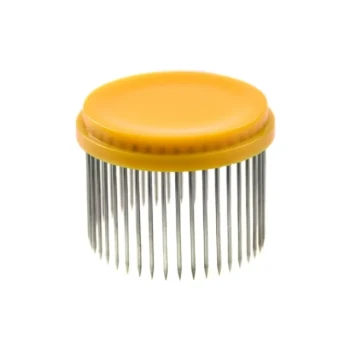
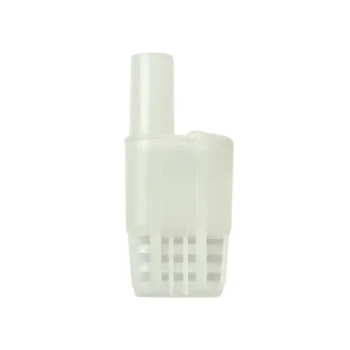
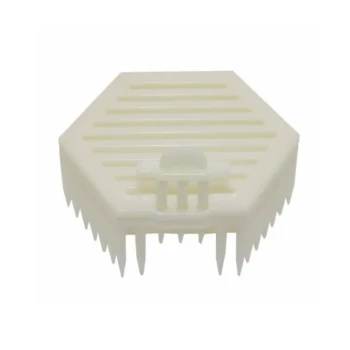
Queen Cages function as a specialized isolation tool designed to safeguard newly emerged queens within a queenless colony structure. By utilizing a specific physical design, these cages allow worker bees to feed the queen through gaps in the bars while physically preventing lethal attacks from rival queens or aggressive workers.
The core purpose of a Queen Cage is to facilitate a safe transition period. It creates a "permeable barrier" that sustains the queen’s life through worker feeding while suspending natural aggressive instincts, ensuring she survives for data collection or artificial insemination.
The Mechanics of Protection
Physical Isolation
The primary mechanism of protection is strict confinement. In a natural setting, newly emerged queens will immediately seek out and destroy rival queens.
The cage physically restricts the queen's movement, preventing her from engaging in lethal combat with other queens emerging in the same experimental setup.
The Permeable Barrier
While isolation is necessary for safety, total separation would result in starvation. Queen Cages are designed with spaced bars or mesh.
This design allows worker bees to extend their proboscises through the gaps to feed the queen. It ensures she receives necessary nutrition without being exposed to physical threats.
Preventing Worker Aggression
In a queenless colony used for experiments, worker bees may initially view a new queen as an intruder. Without protection, they might "ball" the queen—clustering around her to overheat or sting her to death.
The cage acts as a shield against this behavior. It allows the workers to become accustomed to the queen's pheromones over time without the ability to physically harm her.
The Role of Cages in Experimental Data
Preserving Subjects for Analysis
In experimental rearing, researchers often need to measure specific biological markers, such as ovariole counts.
To obtain accurate data, the subject must remain in prime condition until the moment of analysis. Cages ensure the specimen is not damaged or killed by colony dynamics before data collection can occur.
Staging for Artificial Insemination
High-precision breeding programs often require artificial insemination. This process cannot happen immediately upon emergence.
Queen Cages provide a secure holding environment. They keep the virgin queen healthy and safe during the waiting period required for her to reach sexual maturity.
Distinguishing Protective Tools
Individual vs. Colony-Level Protection
It is critical to distinguish between the Queen Cage and the Queen Excluder, as they serve different protective roles.
The Queen Cage protects a specific individual queen from immediate physical harm.
Zoning Management
Conversely, the Queen Excluder protects the rearing process. It is used to partition the colony into a queenless "nursing zone" and a queen-right "maintenance zone."
This ensures that the dense population of nurse bees can focus on feeding transplanted larvae without interference from the egg-laying original queen. While the excluder facilitates mass production, the cage is what protects the specific queen once she emerges.
Understanding the Trade-offs
Temporary Solution Only
Queen Cages are not designed for long-term housing. They are a temporary intervention meant for transition or holding.
Limited Biological Function
While caged, a queen cannot perform her primary biological function: egg-laying. Extended isolation can eventually impact her acceptance by the colony or her physiological development if maintained too long beyond the experimental window.
Making the Right Choice for Your Goal
To ensure the success of your rearing project, apply the correct isolation method based on your specific objective:
- If your primary focus is protecting a specific adult queen: Use Queen Cages to isolate her for data collection or artificial insemination while maintaining her nutrition.
- If your primary focus is rearing larvae for mass production: Use Queen Excluders to create a queenless nursing zone that maximizes feeding efficiency without queen interference.
Successful experimental rearing relies on balancing the physical safety of the queen with the biological needs of the colony.
Summary Table:
| Feature | Protection Mechanism | Experimental Purpose |
|---|---|---|
| Physical Isolation | Prevents lethal combat between rival queens | Preserves specimen integrity for analysis |
| Permeable Mesh | Allows worker feeding while blocking attacks | Keeps queen healthy for artificial insemination |
| Pheromone Barrier | Shields queen from worker 'balling' aggression | Facilitates safe colony introduction |
| Zoning Control | Separates the queen from the nursing area | Maximizes larval feeding efficiency |
Maximize Your Colony Success with HONESTBEE
At HONESTBEE, we understand that high-precision breeding and experimental rearing require the highest quality tools to protect your most valuable assets. Whether you are managing a commercial apiary or supplying the beekeeping industry, our comprehensive wholesale portfolio has you covered.
From specialized queen cages and queen excluders to advanced honey-filling machines and hive-making equipment, we provide the full spectrum of hardware and consumables tailored for professional success.
Ready to upgrade your apiary’s efficiency? Contact us today to discuss our wholesale offerings and discover how our expertise can support your growth.
References
- Buajiram Ahmat, Cheng Zong. Increased Mass-Rearing of Queens in High Royal-Jelly-Producing Honey Bee Colonies (Apis mellifera ligustica) Generates Smaller Queens with Comparable Fecundity. DOI: 10.3390/agriculture14020264
This article is also based on technical information from HonestBee Knowledge Base .
Related Products
- Durable Galvanized Steel Spring Queen Bee Cage
- Professional Queen Cage with Sliding Gate and Feeder Plug
- Classic Wooden and Mesh California Queen Cage
- Professional Queen Bee Introduction and Transport Cage
- Professional Multi-Functional Queen Bee Cage
People Also Ask
- Why are specialized queen bee cages used for the banking of mated queen bees? Maximize Commercial Apiary Storage Efficiency
- What is the mechanism of action for using temporary queen bee cages? Master Successful Queen Introduction
- What is the step-by-step process for installing a queen bee's cage onto a frame? Ensure Hive Acceptance Safely
- What is the optimal placement for a queen bee cage? Essential Strategies for Successful Re-queening
- What are the advantages and disadvantages of introducing a queen bee by embedding the cage? Boost Your Queen Acceptance