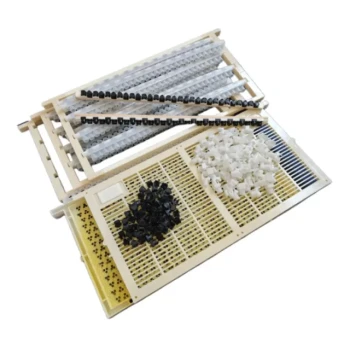
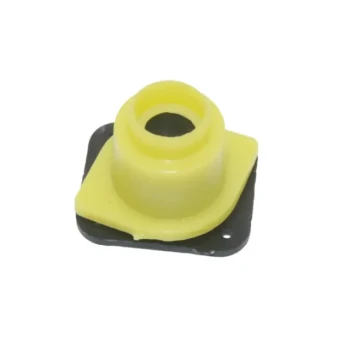
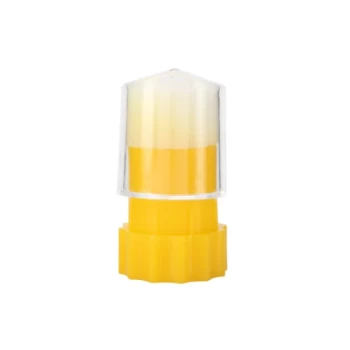
Queen rearing and marking systems serve as the primary mechanism for reproductive control in commercial beekeeping. By facilitating the timely replacement of older queens with young, vigorous successors, these systems actively suppress the colony's natural impulse to swarm. This intervention ensures that the colony’s energy and resources are directed toward nectar collection and honey production rather than the creation of new, competing colonies.
The core value of these systems lies in resource redirection. By systematically rotating queens and tracking their lineage, beekeepers maintain colony cohesion and prevent the biological triggers of swarming, effectively converting reproductive energy into productive output.
The Physiology of Swarm Prevention
Replacing the Reproductive Engine
The primary driver of swarming is often the presence of an older queen. Queen rearing systems allow beekeepers to breed and introduce young queens on a scheduled basis.
Suppressing the Swarm Instinct
Young queens release strong pheromones that inhibit the workers' desire to build swarm cells. By utilizing rearing tools to ensure a constant supply of young queens, the apiary effectively "resets" the biological clock of the hive, significantly lowering the probability of natural swarming.
Maximizing Nectar Collection
When a colony swarms, it loses a significant portion of its workforce and honey stores. By preventing this split through queen rotation, the colony maintains maximum population strength. This ensures the workforce remains focused on foraging and nectar accumulation rather than raising a replacement colony.
The Role of Genetic Selection
Breeding for Desirable Traits
Advanced rearing equipment, including artificial insemination tools, allows for precise control over genetics. Beekeepers can select for specific traits such as high productivity and gentle temperament.
Enhancing Environmental Adaptation
Rearing systems enable the production of local queens tailored to specific climatic conditions, such as cold resistance. This localization eliminates the need to import queens, which reduces biosecurity risks and ensures the stock is better suited to survive and thrive in its specific environment without the stress that often precipitates swarming or absconding.
Operational Control and Identification
Precision Tracking via Marking
Marking systems extend beyond simple paint dots on a queen's thorax. In large-scale operations, mnemonic identification systems are used on hives to track the life cycle and output of specific colonies.
Reducing Management Errors
Accurate identification allows the beekeeper to know the exact age and lineage of a queen without invasive inspections. This reduces the frequency of hive openings, lowering stress levels for the bees and preventing the management oversights that often lead to unexpected swarms.
Understanding the Trade-offs
The Cost of Brood Interruption
Some specialized rearing tools, such as specific caging grids, are designed to isolate the queen and stop egg-laying completely. While this creates a brood-less state ideal for eliminating Varroa mites, it temporarily halts population growth.
Balancing Treatment and Production
This isolation technique forces mites out of sealed cells, making chemical treatments highly effective. However, the beekeeper must carefully time this "brood break" to ensure the population dip does not coincide with a major nectar flow, which would undermine productivity.
Making the Right Choice for Your Goal
To leverage these systems effectively, align your strategy with your specific operational needs:
- If your primary focus is Maximum Honey Yield: Prioritize a strict rotation schedule to keep queens young and pheromones strong, suppressing the swarm instinct during peak flows.
- If your primary focus is Biosecurity and Health: Utilize rearing tools for local breeding to avoid imports and employ caging systems to create brood breaks for targeted Varroa management.
- If your primary focus is Operational Efficiency: Implement a robust mnemonic identification system to track queen age and colony status without unnecessary physical inspections.
Success in commercial apiaries relies not just on having strong colonies, but on the systematic control of their reproductive cycles to ensure predictable, high-volume production.
Summary Table:
| System Component | Function in Swarm Management | Primary Benefit |
|---|---|---|
| Queen Rearing Tools | Facilitates timely replacement with young, vigorous queens. | Suppresses swarm instinct via strong pheromones. |
| Genetic Selection | Allows breeding for high productivity and low swarming traits. | Improves colony stability and environmental adaptation. |
| Marking Systems | Enables precise tracking of queen age and lineage. | Reduces management errors and hive inspection stress. |
| Caging Grids | Isolates queens to create a strategic brood break. | Enhances Varroa mite control and health management. |
Elevate Your Apiary’s Productivity with HONESTBEE
Effective swarm management is the backbone of a profitable commercial operation. At HONESTBEE, we empower commercial apiaries and distributors with the professional-grade tools needed to master queen rearing and colony control.
Our comprehensive wholesale offering includes:
- Specialized Machinery: Hive-making and honey-filling machines for seamless scaling.
- Precision Rearing Equipment: Everything from queen marking tools to advanced breeding hardware.
- Essential Consumables: A full spectrum of beekeeping tools and industry supplies.
- Cultural Merchandise: Unique honey-themed products to diversify your portfolio.
Whether you are looking to streamline your internal operations or expand your distribution inventory, HONESTBEE provides the quality and scale you require. Contact us today to discuss your wholesale needs and see how our expertise can drive your success.
References
- Svetlana A. Rosseykina. COMPARATIVE CHARACTERIZATION OF ECONOMICALLY SIGNIFICANT INDICATORS OF BEE COLONIES OF THE MIDDLE RUSSIAN BREED. DOI: 10.17223/978-5-94621-931-0-2020-57
This article is also based on technical information from HonestBee Knowledge Base .
Related Products
- No Grafting Queen Rearing Kit: System for Royal Jelly Production and Queen Rearing
- Nicot Queen Rearing Kit for Beekeeping and Grafting in Nicot System
- Plastic Long Marker Device for Catching and Marking Bees Queen Bee Marking Tube and Cage
- Premium Nicot Style Cell Bar Holder and Queen Cell Cup Holder System
- JZBZ Langstroth Queen Rearing Frame for Beekeeping
People Also Ask
- What is the primary function of a queen rearing kit? Eliminate Manual Grafting for Superior Bee Breeding
- How do specialized queen rearing kits and queen management tools improve the success rate of bee colony expansion?
- What are some alternative methods to grafting for queen cell production? Discover Graft-Free Queen Rearing Systems
- Are queen rearing systems generally suitable for all honeybee species? Master Efficient Breeding Methods
- Are queen rearing systems suitable for all beekeepers? Modern Tools for Every Experience Level