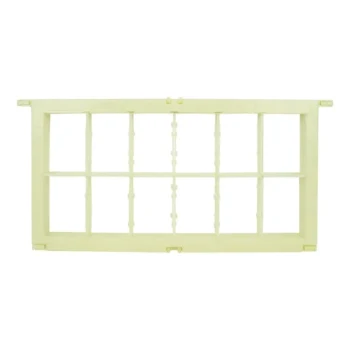
Small Cell Combs (SMCombs) act as a physical signal amplifier for the hive's hygiene defenses. By reducing the physical space around the developing bee, these combs force a higher concentration of distress pheromones to accumulate, making it significantly easier for worker bees to detect and locate compromised brood.
Core Takeaway: The mechanism of SMCombs is geometric rather than biological: by minimizing air volume around the pupa, the comb physically concentrates volatile chemical signals, triggering a faster and more accurate hygienic response from worker bees.
The Physics of Detection
Reducing Air Volume
The fundamental advantage of SMCombs lies in their geometry. These combs provide a tighter fit for the developing pupa compared to standard combs.
This structure significantly reduces the volume of air trapped between the pupa's body and the hexagonal cell walls.
Increasing Signal Saturation
Because there is less air to dilute chemical signals, any volatiles released by the pupa become more concentrated.
This physical constraint creates a localized environment where scent molecules saturate the air gap much faster than they would in larger cells.
The Chemical Mechanics
Identifying the Distress Signals
When a pupa is dead, damaged, or infected, it emits specific volatile pheromones.
The primary chemical markers identified in this process are beta-ocimene and oleic acid.
Triggering the Worker Bees
Worker bees rely on olfactory cues to manage the brood.
The increased concentration of these specific pheromones in SMCombs allows workers to perceive the "scent of death" or infection through the wax capping more easily.
Impact on Colony Health
Rapid Identification
The primary benefit of this amplified signal is speed.
Worker bees can identify damaged brood more rapidly because the scent threshold required for detection is reached sooner.
Enhancing Social Immunity
Speed and accuracy in detection lead to prompt removal of the problem.
By removing infected or dead pupae quickly, the colony reduces the risk of pathogen spread, effectively improving the overall social immunity of the hive.
Understanding the Constraints
It relies on Signal Potency
It is important to understand that SMCombs do not generate the signal; they only concentrate it.
If a damaged pupa does not produce sufficient beta-ocimene or oleic acid, the cell size reduction alone may not be enough to trigger removal.
Detection vs. Removal
SMCombs facilitate detection, which is the first step in the hygienic process.
However, the actual removal of the brood still depends on the colony’s behavioral traits and the workers' responsiveness to those concentrated cues.
Making the Right Choice for Your Goals
While SMCombs offer clear mechanical advantages for detection, understanding your specific objective is key.
- If your primary focus is Disease Management: The higher concentration of oleic acid helps workers identify and remove infected brood before pathogens spread widely.
- If your primary focus is Colony Efficiency: The rapid detection facilitated by SMCombs reduces the energy and time the colony spends nurturing non-viable brood.
By physically amplifying the chemical cry for help, SMCombs empower the colony to maintain a cleaner, healthier environment.
Summary Table:
| Feature | Small Cell Combs (SMCombs) | Standard Cell Combs |
|---|---|---|
| Air Volume | Reduced/Tight fit | Larger/Loose fit |
| Signal Concentration | High (Rapid saturation) | Low (Diluted signals) |
| Primary Chemicals | Beta-ocimene & Oleic acid | Beta-ocimene & Oleic acid |
| Detection Speed | Fast (Early intervention) | Slower (Delayed response) |
| Impact on Immunity | High (Enhanced social immunity) | Standard |
| Primary Mechanism | Physical signal amplification | Natural biological pace |
Elevate Your Apiary's Health with HONESTBEE
Are you looking to enhance your colony's natural defenses? At HONESTBEE, we specialize in supporting commercial apiaries and distributors with premium beekeeping solutions. From high-precision hive-making machinery to essential industry consumables and specialized tools, our comprehensive wholesale offering is designed to scale your operations efficiently.
Our SMCombs and innovative equipment help your bees work smarter, not harder. Partner with us to access the full spectrum of beekeeping technology and honey-themed cultural merchandise that drives industry growth.
Ready to optimize your beekeeping business? Contact us today to explore our wholesale catalogs and discover how HONESTBEE can deliver unparalleled value to your distribution network.
References
- Piotr Dziechciarz, Krzysztof Olszewski. Dead Brood of Apis mellifera Is Removed More Effectively from Small-Cell Combs Than from Standard-Cell Combs. DOI: 10.3390/ani12040418
This article is also based on technical information from HonestBee Knowledge Base .
Related Products
- Heavy-Duty Ergonomic Grip Galvanized Pollen Shovel
- Premium Traditional Copper Bee Smoker with Bellows
- Solar Beeswax Melter Easy Solar Wax Melter for Beeswax
- HONESTBEE AC Powered Wire Embedder with Alligator Clips
- Miniature Stainless Steel Bee Smoker for Beekeeping
People Also Ask
- For what reasons do beekeepers collect bee pollen? Boost Hive Health and Unlock New Revenue Streams
- Why should commercial apiaries focus on the collection of diversified bee products? Maximize Your Hive’s Profit Potential
- How do bee pollen collection tools affect the quality of bee pollen used in functional dairy ice cream production?
- How does a specialized pollen collector facilitate the harvesting of diverse bee products? Automate High-Value Yields
- What is the impact of pollen collectors and associated equipment on the cost structure of pollen production? Maximize ROI