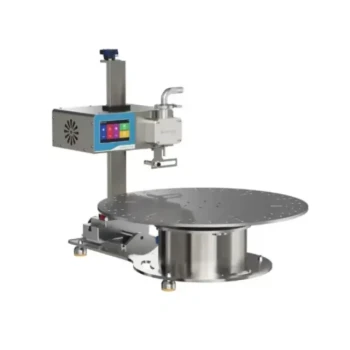
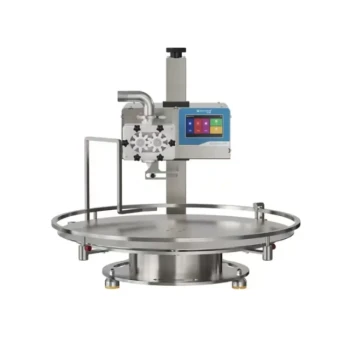
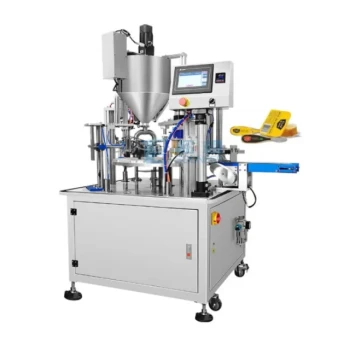
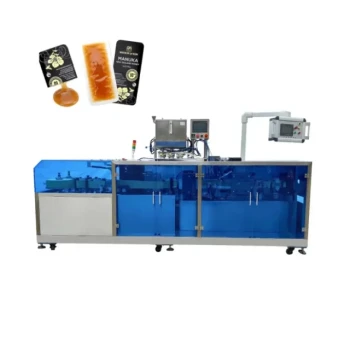
Specialized honey harvesting and filling machines streamline processing by combining efficient extraction, sanitary handling, precise dosing, and rapid sealing. Centrifugal extractors recover more honey from frames with less residue, while automated or semi-automated filling systems control flow, fill volume, package weight, and sealing consistency. By reducing manual contact and limiting exposure to air and the external environment, these machines help commercial apiaries, distributors, and resellers deliver hygienic, uniform, market-ready honey more efficiently.
The central advantage is process control: specialized equipment reduces contamination and product-loss risks while improving throughput, labor efficiency, fill accuracy, and packaging consistency.
How Specialized Equipment Streamlines Honey Processing
More Efficient Honey Recovery
Centrifugal honey extractors remove honey from combs efficiently and minimize residue left in the frames. This can improve recovery yield and provide a more consistent flow of honey to downstream filtering, storage, or filling operations.
The equipment also reduces the physical effort required for extraction, helping commercial beekeepers process larger harvests with fewer labor hours.
A Continuous Path from Harvest to Bottle
Integrated processing equipment creates a more standardized workflow from extraction through filling and sealing. This reduces unnecessary transfers between open containers and limits opportunities for spills, delays, or environmental contamination.
For wholesalers and distributors, a predictable workflow makes production planning easier and supports more reliable order fulfillment during seasonal demand peaks.
Lower Manual Handling
Automated and semi-automated systems reduce the number of times workers must handle honey, containers, caps, and filling tools directly. Less manual contact generally means fewer opportunities for contamination and fewer inconsistencies between production batches.
The result is a more repeatable process that can be documented and scaled across different product formats.
How Filling Machines Maintain Honey Quality
Precise Flow and Metering Control
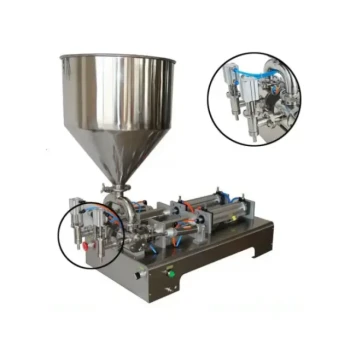
Honey varies in viscosity depending on its floral source, temperature, and storage conditions. Specialized filling machines use controlled pumping and metering systems to manage this variation and deliver consistent doses.
Accurate volumetric control helps maintain uniform package weights, reduce giveaway, and support dependable labeling and commercial specifications.
Reduced Air Exposure
Enclosed filling systems minimize the time honey is exposed to open air during bottling. This reduces the risk of environmental contamination and limits moisture absorption, which is important because honey can absorb moisture from humid surroundings.
Controlled filling also helps reduce excessive air incorporation that could affect appearance, aroma, or product stability.
Temperature and Pressure Management
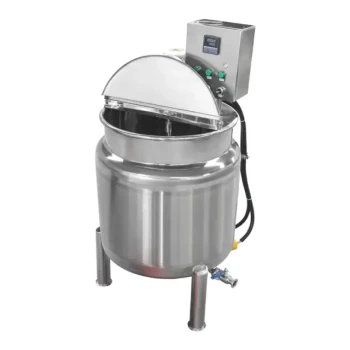
Appropriate control of temperature and filling pressure helps maintain a steady flow without subjecting the honey to unnecessary processing stress. Stable conditions are especially valuable when handling honeys with different viscosities or distinct aromatic profiles.
Equipment should be configured according to the honey type and operating requirements rather than using one setting for every product.
Rapid, Secure Sealing
Precision capping and sealing close the product quickly after filling. A secure seal protects the honey from external contamination, moisture ingress, and leakage during storage, transport, and retail handling.
Consistent sealing also improves the professional appearance of the finished package and supports customer confidence in the product.
Why Sanitary Design Matters
Hygienic Product Contact
Sanitary-grade pumps, food-contact components, and cleanable product pathways help maintain honey purity throughout processing. Equipment with accessible surfaces and appropriate cleaning procedures is easier to keep compliant with food-handling requirements.
The machine itself does not guarantee food safety; sanitation depends on equipment design, cleaning practices, maintenance, and operator discipline.
Physical Separation of Product Flow
Enclosed and compartmentalized equipment helps separate honey from surrounding work areas and reduces unnecessary exposure to people, tools, and airborne contaminants. This physical isolation supports more stable quality from extraction through final packaging.
The principle is straightforward: the fewer uncontrolled contact points in the process, the easier it is to manage hygiene consistently.
Protection of Natural Characteristics
Carefully controlled processing helps preserve honey’s natural flavor, aroma, appearance, and nutritional qualities. Precise handling is particularly important for products marketed as premium, single-origin, organic, or natural health products.
Filling equipment should complement suitable storage and processing conditions, since bottling alone cannot correct problems caused by excessive heat, poor storage, or unsuitable raw material.
Commercial Benefits for B2B Buyers
Higher Throughput with Lower Labor Demand
Automation allows operators to fill and seal more containers in a consistent sequence. This increases production capacity while reducing dependence on repetitive manual filling and weighing tasks.
Semi-automated systems can provide a practical balance for smaller apiaries, while fully automated lines are better suited to larger processors with sustained volume.
More Predictable Product Costs
Accurate dosing reduces overfilling and makes material usage easier to forecast. Lower labor requirements and fewer packaging inconsistencies can also improve the cost structure of each production run.
These efficiencies matter to distributors and resellers because dependable unit economics support more competitive pricing and clearer margin planning.
Stronger Market Presentation
Uniform fill levels, clean containers, secure closures, and consistent labeling create a more professional finished product. Packaging quality can influence retailer acceptance and help differentiate premium honey in crowded markets.
Reliable machinery also helps suppliers maintain the same presentation across multiple bottle sizes and product variants.
Easier Supply and Service Coordination
For B2B customers, machine value extends beyond the equipment itself. A capable supplier should support product selection, configuration, spare parts, technical guidance, customer service, and efficient delivery.
One-stop sourcing can simplify procurement when a business needs extractors, filling equipment, sealing components, and related processing supplies from a coordinated product portfolio.
Understanding the Trade-offs
Automation Requires Appropriate Setup
A filling machine must match the honey’s viscosity, container dimensions, required dose, production volume, and available power or workspace. An unsuitable configuration can create inconsistent flow, dripping, delays, or unnecessary maintenance.
Buyers should define operating requirements before selecting between manual, semi-automatic, and fully automatic equipment.
Sanitation Remains an Operating Responsibility
Automated equipment reduces handling risks but does not eliminate them. Product-contact parts still require scheduled cleaning, inspection, and maintenance, and operators must follow documented hygiene procedures.
Poor sanitation can compromise a well-designed machine just as easily as it can a manual process.
Higher Capability Can Mean Higher Investment
Fully automated systems generally require more capital, installation planning, operator training, and technical support. For a small beekeeper, the additional capacity may not justify the cost unless growth or contract production is expected.
A semi-automatic system may deliver better value when production volumes are moderate or product formats change frequently.
Quality Depends on the Entire Process
Extraction, filtration, storage, temperature management, filling, sealing, and transport all affect the final product. A precision filler cannot restore quality lost through prolonged air exposure, excessive heating, moisture exposure, or unsuitable storage conditions.
Equipment selection should therefore be part of a complete process-control strategy.
How to Apply This to Your Operation
The right system depends on your production scale, product range, quality requirements, and distribution commitments.
- If your primary focus is higher throughput: Choose automated extraction, filling, and sealing equipment that matches projected volumes and reduces repetitive manual labor.
- If your primary focus is premium product quality: Prioritize enclosed sanitary pathways, controlled flow, suitable temperature management, minimal air exposure, and rapid secure sealing.
- If your primary focus is accurate commercial packaging: Select precision metering and weighing controls that maintain consistent fill volumes while minimizing product giveaway.
- If your primary focus is regulatory and hygiene compliance: Evaluate food-contact materials, cleanability, sanitation procedures, documentation, and supplier technical support together.
- If your primary focus is flexible B2B distribution: Work with a supplier offering compatible extractors, fillers, sealing equipment, spare parts, and responsive service through one coordinated source.
With the right equipment and operating discipline, honey businesses can turn extraction into a faster, cleaner, and more dependable bottling process while protecting the product’s commercial value.
Summary Table:
| Aspect | Benefit |
|---|---|
| Efficient Recovery | Centrifugal extractors increase honey yield and reduce labor. |
| Process Control | Enclosed systems reduce contamination and improve batch consistency. |
| Precise Filling | Automated metering ensures uniform fill volumes and reduces giveaway. |
| Hygienic Design | Sanitary pathways protect honey purity and natural characteristics. |
| Secure Sealing | Rapid capping maintains freshness and professional presentation. |
| Commercial Scalability | Automation boosts throughput and lowers unit costs for B2B buyers. |
Ready to upgrade your honey processing line? HONESTBEE offers a comprehensive range of harvesting and filling machines tailored for commercial apiaries and distributors. Our one-stop sourcing, rapid delivery, and expert support help you maximize efficiency and quality. Contact us today to discuss your requirements and get a customized solution.
Related Products
- Precision Durable Efficient HONESTBEE Rotary Honey Filling Machine
- Automatic Honey Filling and Filtering Machine for Beekeeping Bottle Filling
- Fully Automatic Honey Filling Packaging Machine for Processing Line
- Commercial Rotary Honey Filling Machine for Production
- Economy Small Honey Filling Machine Honey Bottle Filler Packaging Machine
People Also Ask
- How do honey filling and processing machines aid native bee product conservation? Boost Value with HONESTBEE Technology
- What is a key feature of the new generation of the honey filling machine? The Advanced Electronic Control Unit
- How do high-precision honey filling machines ensure quality? Optimize Your Commercial Production with HONESTBEE
- What quality control role does professional honey filling equipment perform? Ensure Consistency and Product Stability
- How do honey filling machines work? Achieve Precision & Speed for Your Apiary