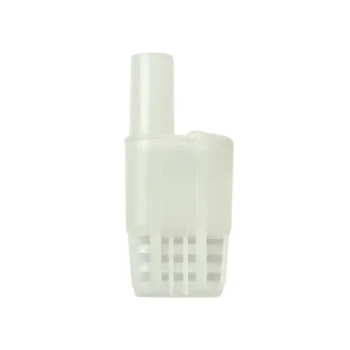
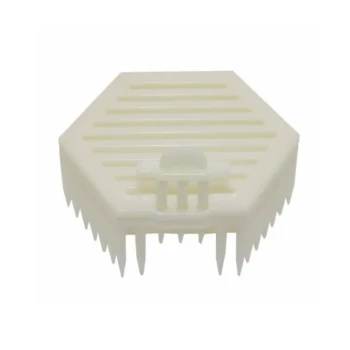
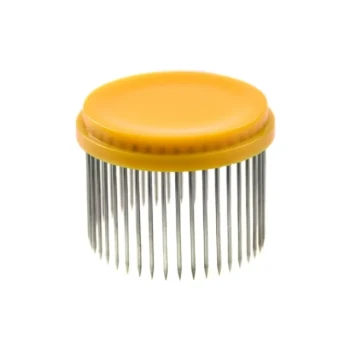
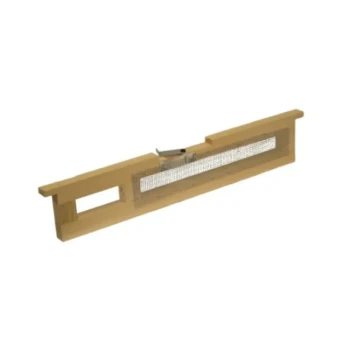
Specialized transferring cages function as a critical "slow-release buffer" between a new queen and a mating nucleus. By physically confining the virgin queen within the hive while maintaining separation from the workers, these cages allow her unique pheromones to gradually integrate with the colony's environment. This controlled exposure prevents immediate rejection, ensuring the workers accept her chemical signature before physical contact occurs.
Direct introduction of a queen often triggers aggression due to sudden hormonal discrepancies. Transferring cages solve this by enforcing a distinct adaptation period, allowing chemical harmonization that dramatically increases survival rates.
The Mechanics of Gradual Integration
Creating a Protective Barrier
The transferring cage facilitates an indirect introduction.
It acts as a physical shield, sometimes resembling a large clamp, that protects the queen from immediate contact with the colony.
This protection is vital because worker bees in a mating nucleus may view a new queen as an intruder if she is introduced suddenly.
The Physiology of Acceptance
Successful queen introduction is largely a matter of hormonal blending.
While confined, the queen's hormones drift through the cage mesh and mix with the air inside the mating nucleus.
Over an adaptation period of approximately two days, the colony's scent profile harmonizes with the queen's, effectively "tricking" the workers into recognizing her as their own.
Controlled Manual Release
Unlike methods that rely on bees eating through candy plugs, this specific technique often utilizes a manual release.
After the two-day adaptation window, the beekeeper returns to open the cage.
Because the chemical environment has stabilized, the release typically results in non-aggressive behavior and immediate acceptance by the worker bees.
Common Pitfalls and Considerations
The Risk of Premature Release
The success of this method hinges entirely on patience.
Opening the cage before the two-day adaptation period is complete can negate the benefits of the cage.
If the hormonal blending is incomplete, the workers may still perceive the queen as foreign and attack her upon release.
Workflow Interruption
This method requires a two-step process: placement and subsequent release.
You must disturb the mating nucleus a second time to manually open the cage.
While this ensures control, every hive inspection carries a small risk of disrupting the colony or chilling the brood, so the release must be done quickly and efficiently.
Making the Right Choice for Your Goal
To maximize the success of your mating nuclei, consider the following specific applications:
- If your primary focus is maximizing survival rates: Strictly adhere to the 48-hour confinement period to ensure full hormonal integration before release.
- If your primary focus is working with home-raised queens: Utilize the cage to protect valuable genetic stock, as these queens represent a significant investment of time and resources.
By leveraging the cage as a biological buffer, you transform a high-risk introduction into a routine, predictable procedure.
Summary Table:
| Feature | Function & Benefit |
|---|---|
| Mechanism | Physical barrier allowing gradual pheromone integration |
| Adaptation Period | Recommended 48 hours for full hormonal blending |
| Release Method | Controlled manual release to ensure non-aggressive behavior |
| Primary Goal | Prevents colony rejection and protects valuable genetic stock |
| Key Outcome | Transforms high-risk introduction into a predictable procedure |
Elevate Your Apiary Success with HONESTBEE Professional Equipment
At HONESTBEE, we understand that successful queen introduction is the heartbeat of a productive commercial apiary. As a premier provider for distributors and large-scale operations, we offer a comprehensive wholesale selection of high-quality beekeeping tools, specialized machinery, and essential consumables.
Whether you need precision queen rearing hardware, robust hive-making machinery, or efficient honey-filling solutions, our portfolio is designed to enhance your operational efficiency and survival rates. Let us help you safeguard your investment and scale your honey production with industry-leading equipment.
Ready to optimize your production? Contact us today to discuss our wholesale offerings and how our expertise can benefit your business.
References
- Ahmed M. Hassan, E. Tharwat. EFFECT OF GENOTYPE, WEIGHT OF HONEYBEE VIRGLN QUEENS AND BROOD STATUS ON SOME PARAMETERS USED FOR JUDGING THE QUEENS FROM THEIR INTRODUCTION UNTIL EGG-LAYING. DOI: 10.21608/ejarc.2004.225645
This article is also based on technical information from HonestBee Knowledge Base .
Related Products
- Professional Queen Bee Introduction and Transport Cage
- Professional Queen Cage with Sliding Gate and Feeder Plug
- Durable Galvanized Steel Spring Queen Bee Cage
- Professional Multi-Compartment Queen Cage with Sliding Lid
- JZBZ Style Professional Battery Box with 20 Shipping Cages
People Also Ask
- Why are specialized queen bee cages used for the banking of mated queen bees? Maximize Commercial Apiary Storage Efficiency
- What is the mechanism of action for using temporary queen bee cages? Master Successful Queen Introduction
- How is a queen bee released from a queen cage? Ensure Safe Colony Integration & Hive Success
- What materials are required to install a queen bee's cage into a hive? Essential Tools for Successful Queen Integration
- How long should a queen bee stay in the cage before being released? Ensure a Successful Introduction