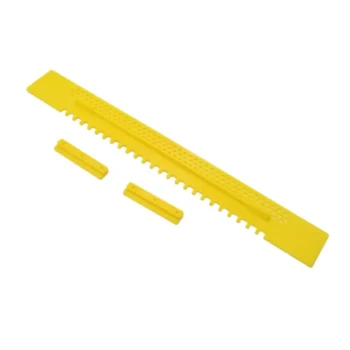
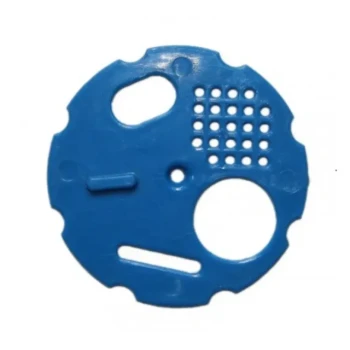
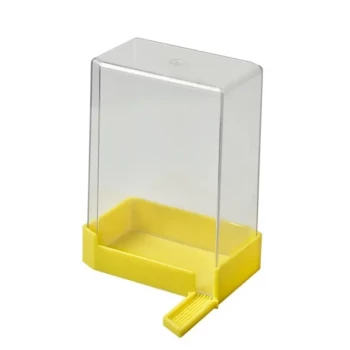
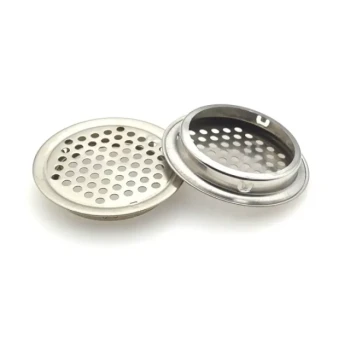
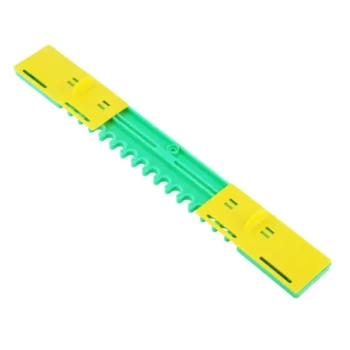
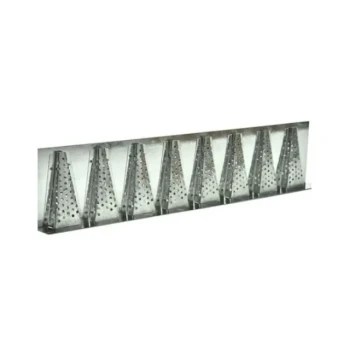
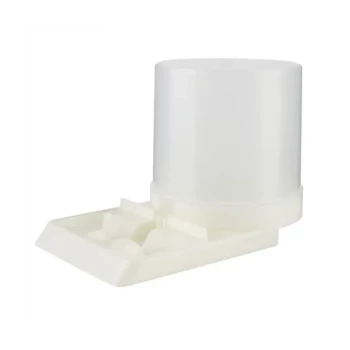
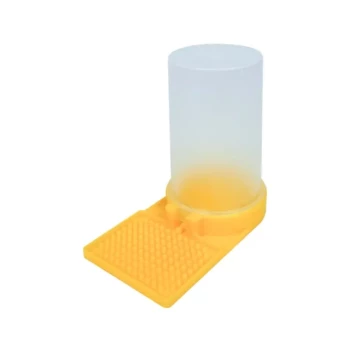
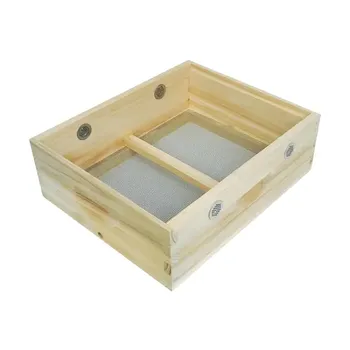
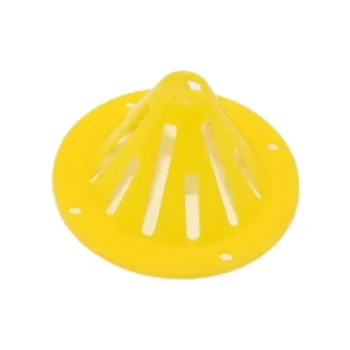
Species-specific fanning behavior directly affects how hive entrances and ventilation components should be configured. During nectar ripening, Apis cerana workers fan with their heads facing away from the entrance, while Apis mellifera workers face toward it. Because these orientations create different air-displacement patterns, entrance reducers, screened bottom boards, ventilated covers, and entrance guards should be selected and positioned to complement the managed species rather than treated as interchangeable hardware.
The correct ventilation accessory is not determined by hive dimensions alone. It must support the colony’s natural airflow direction while providing adequate protection, adjustability, and moisture control during heavy nectar flows.
Why Fanning Direction Matters
Fanning supports nectar ripening
Worker bees use their wings to circulate air through the hive and evaporate water from dilute nectar. This dehydration process helps convert collected nectar into stable honey.
Fanning also contributes to heat and moisture management inside the colony. Ventilation hardware should therefore assist air exchange without creating unnecessary drafts or restricting the bees’ preferred airflow path.
Wing orientation changes airflow behavior
Honeybees use both the forewings and hindwings during ventilation. The wings generate airflow even when the bees are stationary inside the hive or positioned at the entrance.
The important distinction is behavioral orientation: A. cerana workers fan while facing away from the entrance, whereas A. mellifera workers face toward it. This difference affects how air is drawn, circulated, or displaced around the entrance zone.
Entrance hardware becomes part of the airflow system
An entrance reducer or guard does more than limit access. Its opening size, geometry, and placement influence how effectively bees can establish and maintain ventilation.
A poorly matched accessory may obstruct the airflow pattern that workers naturally create. During peak nectar flow, that can increase the colony’s effort and contribute to internal moisture buildup.
Matching Accessories to the Managed Species
Entrance reducers and guards
Entrance reducers should provide an opening that supports normal traffic and fanning activity for the species being managed. The reducer must not unnecessarily block the area where workers congregate to ventilate the hive.
Adjustable models are particularly useful for distributors and beekeepers serving mixed operations. They allow the entrance to be tuned for colony strength, seasonal conditions, predator pressure, and the ventilation behavior of different Apis species.
Screened bottom boards
Screened bottom boards can improve air exchange and help reduce moisture accumulation beneath the brood chamber. Their effectiveness depends on the overall hive design and whether the resulting airflow complements, rather than disrupts, entrance fanning.
For species-specific selection, evaluate the screen’s open area, frame support, debris management, and compatibility with the colony’s entrance airflow. A screen that is too restrictive may limit ventilation; one that is too open may create excessive exposure or unwanted drafts in some operating conditions.
Ventilated inner covers
Ventilated inner covers provide an additional path for warm, humid air to move through the hive. They can complement entrance fanning during hot weather or heavy nectar flows.
The ventilation opening should be compatible with the hive configuration and local conditions. Excessive ventilation is not automatically beneficial if it produces drafts, complicates colony control, or conflicts with the entrance’s primary airflow route.
Entrance ventilation guards
Ventilation guards should protect the entrance while preserving usable airflow space. Their mesh or opening design must balance ventilation with exclusion of pests, predators, and unwanted intruders.
For species-specific applications, prioritize guards that offer clear airflow paths and, where possible, adjustable configurations. This is more practical than relying on a single fixed design for every species and colony environment.
How to Evaluate a Product Portfolio
Prioritize compatibility across hive systems
Distributors and wholesalers should assess compatibility with the hive bodies, bottom boards, entrance dimensions, and covers commonly used by their customers. A technically sound accessory is less useful if it requires extensive modification or does not fit standard equipment.
A full-spectrum portfolio should include entrance reducers, adjustable guards, screened bottom boards, and ventilated covers in compatible sizes and configurations. This supports one-stop sourcing for beekeepers managing different species or apiary conditions.
Look for adjustability
Species-specific airflow needs are not the only variable. Colony population, nectar flow intensity, temperature, humidity, and seasonal management also affect ventilation requirements.
Adjustable products allow the beekeeper to respond to these changing conditions. For B2B buyers, this flexibility can reduce the need to stock too many narrowly specialized items while still supporting different management practices.
Require clear technical specifications
Product information should state dimensions, materials, opening sizes, mesh specifications, compatibility, adjustment range, and installation requirements. These details help resellers recommend the correct component without relying on vague descriptions such as “high ventilation.”
Clear specifications also reduce order errors and improve rapid fulfillment. Technical documentation is therefore part of the product’s commercial value, not merely an engineering detail.
Understanding the Trade-offs
More ventilation is not always better
Ventilation accessories should reduce moisture buildup without creating uncontrolled drafts. Excessive openings can expose the colony to weather, pests, or temperature fluctuations, particularly when the equipment is used outside its intended configuration.
The objective is controlled airflow, not maximum airflow.
Standardized parts may not suit every species
A product designed around common Apis mellifera hive practices may not automatically support the fanning behavior of Apis cerana. The difference in worker orientation means that entrance geometry and ventilation pathways deserve specific attention.
Resellers should avoid presenting one accessory as universally optimal without confirming the managed species and hive design.
Hardware cannot replace colony observation
Accessories support natural ventilation behavior, but they do not eliminate the need to inspect colonies. Signs of condensation, overheating, congestion, or abnormal traffic may indicate that the configuration needs adjustment.
Product selection should therefore be paired with practical guidance on installation, seasonal adjustment, and monitoring.
Complex inventories create fulfillment challenges
Offering species-specific and adjustable equipment improves technical fit but can increase inventory complexity. Incorrect sizing, unclear product differentiation, and fragmented suppliers can create delays for wholesalers and commercial apiaries.
Reliable sourcing, responsive technical support, and efficient order fulfillment help offset this complexity. A supplier that can consolidate related ventilation products may reduce purchasing friction and improve delivery speed.
Making the Right Choice for Your Goal
Select ventilation hardware by considering species, hive design, climate, colony strength, and the intensity of the nectar flow—not by accessory category alone.
- If your primary focus is Apis cerana management: Prioritize entrance and ventilation components that preserve the airflow pattern created by workers fanning with their heads facing away from the entrance.
- If your primary focus is Apis mellifera management: Choose entrance reducers, screened boards, and ventilated covers that support the inward-facing fanning behavior described for this species without excessively restricting entrance traffic.
- If your primary focus is mixed-species distribution: Stock adjustable, clearly specified components in compatible sizes and provide species-specific installation guidance.
- If your primary focus is commercial apiary efficiency: Favor a coordinated product portfolio, dependable technical support, rapid response, and consolidated fulfillment for entrance and ventilation hardware.
- If your primary focus is moisture and heat control: Use controlled ventilation pathways and verify their effect through regular colony observation rather than assuming the largest opening is the best solution.
When ventilation hardware works with species-specific fanning behavior, it reduces unnecessary colony effort and gives beekeepers more precise control over hive climate and nectar ripening.
Summary Table:
| Species | Fanning Orientation | Recommended Accessories | Key Considerations |
|---|---|---|---|
| Apis cerana | Head away from entrance | Entrance reducers with clear airflow path, adjustable guards, mesh that doesn't obstruct outward airflow | Preserve outward airflow, ensure adequate opening for colony strength and nectar flow |
| Apis mellifera | Head toward entrance | Entrance reducers with larger openings, screened bottom boards with moderate open area, ventilated covers with controlled vents | Support inward airflow, avoid excessive drafts, balance ventilation with protection |
Ensure your ventilation hardware supports natural bee behavior. Explore HONESTBEE's full range of entrance reducers, screened bottom boards, ventilated covers, and adjustable guards—designed for both Apis cerana and Apis mellifera. As a one-stop supplier for commercial apiaries and distributors, we offer rapid response, technical expertise, and efficient fulfillment. Contact us today for tailored solutions that boost colony health and productivity.
Related Products
- Steel Round Disc Entrance Reducer for Flexzion Bee Hive Nuc Box Gate
- Professional Reversible Beehive Hive Entrance
- Multi-Functional Rotary Hive Entrance Disc for Beekeeping
- Beehive Entrance Discs Plastic Bee Entrance Disc for Bee Hives
- Beehive Entrance Reducer Guardian Metal Hive Entrance for Bees
People Also Ask
- What is the purpose of an entrance reducer for a beehive? Strengthen Colony Defense and Prevent Robbery
- Why are entrance reducers used to counter hornet infestations? Protect Your Hive with Strategic Choke Points
- Why is it critical to maintain a smaller entrance for a newly established bee hive? Boost Colony Growth and Security
- Under what conditions should a beekeeper adjust the size of a beehive entrance? Seasonal & Defense Management Tips
- What is the function of an entrance reducer on a beehive? Strengthen Colony Defense and Climate Control