Apis mellifera caucasica’s long-tongued, high-yielding colonies can require more winter-protection and disease-management equipment than their honey-production potential initially suggests. In cold or damp climates, slower spring buildup, weaker overwintering performance, and elevated Nosema risk increase the need for insulated hive components, moisture-control ventilation, feeding systems, monitoring tools, and strict sanitation. Commercial operations must therefore select equipment for both sides of the production cycle: winter colony survival first, high-capacity honey handling later.
The key purchasing principle is to match equipment to the subspecies’ biological weaknesses, not only its honey yield. For A. m. caucasica, winterization, moisture management, sanitation, and remote monitoring are core production tools; robust extraction equipment becomes essential once colonies recover and generate large seasonal flows.
Why Subspecies Biology Changes Equipment Requirements
Long proboscis increases production potential
Caucasica bees can exploit nectar sources with deeper corollas because of their relatively long proboscis. Where suitable forage is available, this can support substantial honey production and justify investment in commercial extraction and processing capacity.
However, high production potential does not eliminate the need for careful seasonal management. Equipment must support the colony during its vulnerable overwintering and spring-recovery periods before it can deliver commercial returns.
Slow spring buildup affects early-season planning
Slow population growth after winter can delay the point at which colonies are strong enough for intensive foraging, supers, or pollination contracts. This creates a risk that expensive production equipment remains underutilized early in the season.
Commercial apiaries should therefore prioritize colony monitoring and controlled feeding tools alongside honey-production equipment. These tools help identify weak colonies, manage stores, and avoid adding supers before the colony has sufficient population and thermal stability.
Winter Nosema risk makes sanitation operationally important
The primary concern is not simply whether a subspecies is “susceptible” in isolation. Nosema risk depends on genetics, climate, confinement, nutrition, colony stress, and hygiene, so the stated elevated susceptibility should be treated as a management warning rather than a universal biological rule.
In practical terms, commercial operations need feeding and inspection equipment that minimizes contamination between colonies. Cleanable feeders, dedicated tools where appropriate, hygienic syrup-handling systems, and disease-monitoring procedures become more important when colonies spend long periods confined during winter.
Equipment Priorities for Overwintering
Insulated hive covers and winterization components
Cold-climate operations may need insulated covers, properly fitted hive bodies, wind protection, entrance reducers, and other winterization components. These reduce drafts and help colonies maintain an efficient winter cluster without excessive energy expenditure.
Insulation should not be viewed as a substitute for ventilation. The objective is a stable, dry hive environment, not an airtight hive.
Moisture-reducing ventilation boards
Condensation can be as damaging as low temperature. Moisture-reducing ventilation boards, absorbent materials, and correctly configured upper ventilation can help prevent water from accumulating above the winter cluster and dripping onto bees.
The exact configuration should be adapted to local temperature, humidity, hive design, and colony strength. Excessive ventilation can create drafts, while insufficient ventilation can trap moisture.
Precision-manufactured hive components
Standardized hive bodies with tight-fitting joints and consistent tolerances make winter management more predictable. They reduce uncontrolled gaps while allowing beekeepers to use entrance reducers, insulation, and ventilation components consistently across an apiary.
For distributors and wholesalers, this increases the value of offering compatible hive systems, rather than isolated components with uncertain fit. Standard dimensions simplify replacement, inventory planning, and rapid fulfillment for commercial customers.
Internal winter monitoring
Temperature and weight sensors can indicate whether a colony is maintaining a viable cluster and whether food reserves are declining. Remote monitoring is especially valuable when frequent inspections would release heat or disturb colonies.
Monitoring does not replace physical inspection when intervention is necessary. Its main value is helping managers identify which colonies require attention and which can remain undisturbed.
Feeding and Sanitary Management Tools
Controlled supplemental feeding
Slow spring recovery may require carefully timed supplemental feeding, particularly when forage is delayed or winter stores are marginal. Suitable tools include internal feeders, feeder rims, syrup-handling equipment, and secure storage containers.
Feeding must be based on colony condition and local forage conditions. Unnecessary feeding can increase labor, create robbing pressure, and introduce hygiene problems.
Hygienic feeder design
Feeders should be easy to inspect, clean, and disinfect. Designs that reduce drowning, leakage, syrup fermentation, and bee-to-bee contamination are preferable for commercial use.
For large apiaries, the feeder system should also support consistent dosing and efficient servicing. A feeder that is biologically suitable but slow to refill can become a significant labor bottleneck.
Sanitary handling procedures
Nosema management depends on more than equipment. Clean water and syrup containers, controlled tool movement between colonies, replacement of heavily contaminated materials, and organized apiary workflows reduce avoidable transmission risks.
Distributors can support this requirement with a coordinated sanitation portfolio: washable feeders, hive tools, protective storage, cleaning supplies, and colony-health monitoring products.
Monitoring Tools for Commercial Apiaries
Weight scales support non-invasive decisions
Hive weight trends can reveal declining stores, feeding response, and major nectar-flow activity without opening the hive. This is useful when colonies are vulnerable to chilling or disturbance.
For commercial managers, networked scales can help prioritize site visits. Instead of inspecting every hive on a fixed schedule, teams can focus labor on colonies showing abnormal weight or temperature patterns.
Temperature monitoring reveals colony stress
Internal temperature sensors can help identify weak clustering, abnormal cooling, or irregular spring buildup. Readings should be interpreted as trends rather than treated as standalone diagnoses.
The most useful systems combine temperature data with weight, weather, and inspection records. This creates a clearer basis for deciding when to feed, ventilate, insulate, or inspect.
Disease surveillance should remain integrated
Nosema risk should be evaluated through appropriate diagnostic procedures and professional interpretation rather than inferred solely from subspecies identity. Monitoring supplies and testing workflows should therefore be integrated into routine winter and spring management.
The same principle applies to other colony-health concerns. Disease equipment is most effective when supported by standardized records, sampling procedures, and clear intervention thresholds.
Matching Honey-Handling Equipment to Recovery and Yield
High-capacity extraction equipment
Once colonies recover and enter a strong nectar flow, commercial apiaries may need robust extractors, uncapping equipment, honey pumps, settling tanks, filters, and storage containers sized for concentrated seasonal throughput.
The correct capacity depends on colony numbers, frame format, harvest timing, labor availability, and expected flow intensity. Purchasing an extractor solely on the basis of peak theoretical yield can create unnecessary capital expense.
Frame and box compatibility
Extraction equipment must match the hive format and frame dimensions used in the apiary. Standardized frames and compatible boxes reduce handling errors and simplify the movement of equipment between colonies.
For B2B suppliers, a full-spectrum offering is particularly valuable here. Hive bodies, frames, supers, queen excluders, extractors, pumps, and processing tanks should be specified as a compatible system.
Processing continuity matters
High-yield colonies can shift the operational constraint from bee management to honey processing. If uncapping, extraction, filtration, or storage capacity is insufficient, honey may remain in the field or harvested supers may accumulate faster than the facility can process them.
Commercial buyers should assess the complete flow from hive to finished storage, not just the extractor’s nominal capacity.
Understanding the Trade-offs
Winter protection versus ventilation
Adding insulation can conserve heat, but sealing a hive too tightly can retain condensation. Effective winter equipment must balance thermal retention with controlled moisture removal.
The correct solution is climate-specific. A product that performs well in a dry, cold region may be unsuitable in a damp maritime environment.
Disease control versus equipment complexity
Dedicated feeders, sanitation systems, sensors, and testing supplies can reduce biological risk, but they also increase purchasing, training, cleaning, and inventory requirements.
The goal is not to maximize equipment count. It is to standardize the tools that materially reduce winter losses, contamination, and unnecessary hive disturbance.
Yield capacity versus utilization
High-capacity extraction machinery is justified when colony numbers and harvest volumes support it. Smaller operations or apiaries with delayed spring buildup may obtain better economics from modular equipment that can expand as production grows.
Suppliers should offer both complete commercial lines and scalable configurations rather than assuming every caucasica operation has the same output profile.
Avoiding overgeneralization by subspecies
Subspecies traits are useful for planning, but they are not a substitute for local performance data. Colony source, hybridization, queen quality, nutrition, climate, and management can significantly change overwintering and Nosema outcomes.
Purchasing decisions should therefore combine genetic expectations with actual records from the target apiary and region.
How to Apply This to Your Project
Equipment selection should follow the colony’s seasonal risk profile and the apiary’s throughput requirements.
- If your primary focus is winter survival: Prioritize insulated covers, tight-fitting standardized hive components, entrance reducers, moisture-control ventilation boards, and remote temperature and weight monitoring.
- If your primary focus is Nosema risk reduction: Source cleanable feeding systems, sanitary syrup-handling equipment, dedicated or easily disinfected hive tools, and appropriate disease-monitoring supplies.
- If your primary focus is rapid spring recovery: Use internal feeders, feeder rims, colony scales, and inspection tools that support targeted intervention without excessive disturbance.
- If your primary focus is high seasonal honey output: Invest in compatible extractors, uncapping systems, pumps, filters, settling tanks, and storage equipment sized to the apiary’s realistic harvest volume.
- If your primary focus is procurement efficiency: Choose a supplier able to provide a compatible full-spectrum portfolio, fast technical responses, reliable stock availability, and coordinated delivery across hive, feeding, monitoring, sanitation, and processing categories.
The strongest commercial setup treats Apis mellifera caucasica as a high-potential but management-sensitive production line, pairing winter resilience and disease hygiene with scalable honey-processing capacity.
Summary Table:
| Consideration | Impact on Equipment Choice | Recommended Equipment |
|---|---|---|
| Slow spring buildup | Delays strong colonies; requires early feeding and monitoring | Internal feeders, feeder rims, colony scales, temperature sensors |
| Winter Nosema risk | Need for hygienic practices and sanitation | Cleanable feeders, disinfection supplies, disease monitoring tools |
| Overwintering in cold climates | Requires insulation and moisture control | Insulated covers, ventilation boards, entrance reducers, standard hive bodies |
| High honey yield potential | Justifies investment in extraction and processing | Extractors, uncapping tanks, pumps, filters, storage tanks |
Partner with HONESTBEE for Full-Spectrum Beekeeping Supplies
Are you a distributor or commercial beekeeper looking to optimize your apiary for subspecies-specific challenges? HONESTBEE offers a comprehensive wholesale portfolio—from hive-making and honey-filling machinery to insulated covers, ventilation boards, feeders, and monitoring systems. Our one-stop sourcing, rapid response, and dedicated service ensure you get the right tools for winter survival, Nosema control, and high-yield processing. Contact us today to discuss your needs and receive tailored solutions with fast delivery and competitive margins. Get in touch now!
Related Products
- HONESTBEE Anatomy Bee Model Detailed Anatomical Display for Education and Study
- Honey Bee Lifecycle Model: A Detailed Honeycomb Display of Bee Development
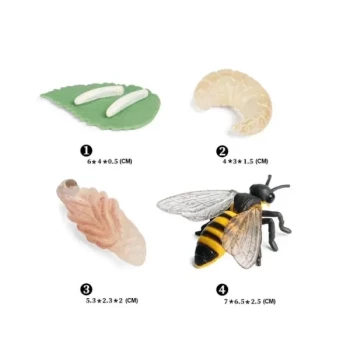
- Honey Bee Life Cycle Model 4 Stage Educational Set for Kids Learning
- High-Performance Langstroth Bee Hives for Global Professional Beekeeping
- Galvanized Beekeeping Smoker for Honey Bee and Apiculture
People Also Ask
- How do honey bees utilize water to regulate the internal temperature of the hive? Master Evaporative Cooling Methods
- Is it good to have honey bees in your yard? A Guide to Boosting Your Garden's Health
- What criteria should be considered in the selection process for honey bee breeding? Top Traits for Sustainable Apiaries
- What should be considered when learning the behavior of honey bees and their queens? Master Colony Management
- Why is maintaining specific relative humidity levels critical in caged honey bee experiments? Ensure Research Validity