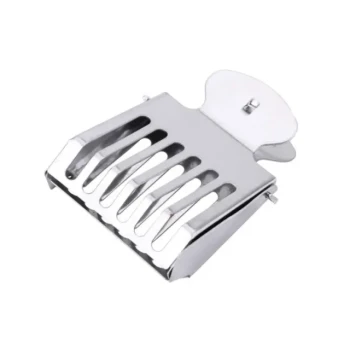
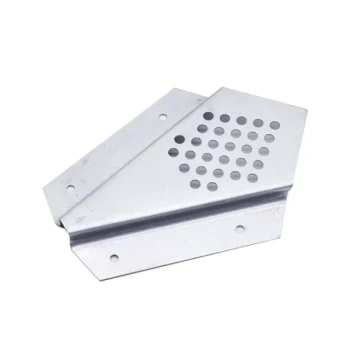
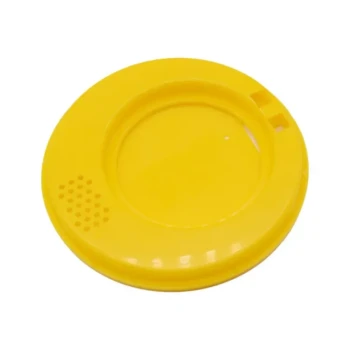
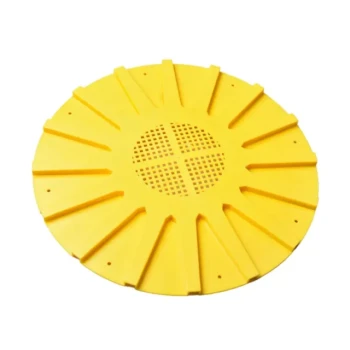
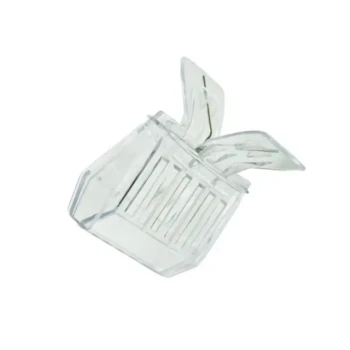
A queen excluder separates the queen from honey supers by using calibrated openings that workers can pass through but the larger queen cannot. Commercial excluders typically use parallel slots or wire spacing of approximately 4.0–4.2 mm. Worker bees, with abdomens around 3.2–3.5 mm wide, can move between the brood chamber and supers, while the queen, at roughly 4.4–4.5 mm, is confined below and cannot lay eggs in the honey-storage combs.
The excluder acts as a size-selective barrier: worker bees pass through to store and process honey, but the queen remains in the brood chamber, helping keep honey supers brood-free and easier to harvest.
How the Separation Mechanism Works
The excluder is installed between hive sections
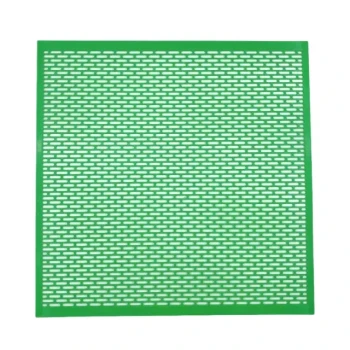
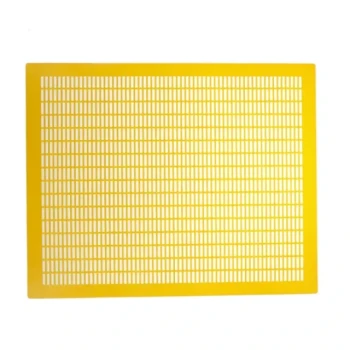
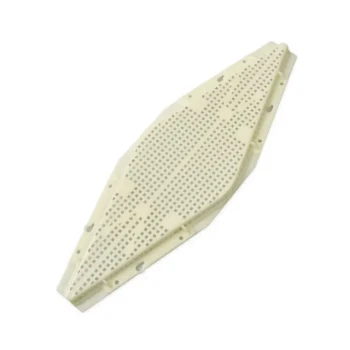
A queen excluder is a flat plastic or metal grid placed directly above the brood chamber and below the honey supers.
Its openings form a controlled passageway between the two areas. Workers can cross this boundary, but the queen is restricted to the lower brood area.
Slot width determines which bees can pass
The key design feature is the parallel slot or wire spacing. A common commercial specification is approximately 4.0–4.2 mm, although dimensions can vary by manufacturer, material, and excluder design.
The opening must be wide enough for worker bees to pass without excessive restriction, but narrow enough to prevent the mature queen from forcing her abdomen through.
Worker bees continue servicing the supers
Worker bees move through the excluder to perform normal honey-production duties. They carry nectar upward, feed and maintain the colony, draw comb, and eventually fill and cap honey cells in the supers.
The excluder therefore does not isolate the honey supers from the colony. It selectively limits queen access while preserving worker access.
The queen remains in the brood chamber
A mature queen has a larger abdomen—approximately 4.4–4.5 mm wide according to the reference dimensions—so the standard openings are too narrow for her to pass through.
Because she cannot reach the supers, she cannot lay eggs in the combs used for honey storage. Brood rearing remains concentrated in the lower brood chamber.
Why This Matters in Commercial Honey Production
It keeps harvested combs brood-free
The primary commercial benefit is maintaining brood-free honey supers. Without an excluder, the queen may move upward and lay eggs in frames intended for honey storage.
Brood in those frames complicates inspection, harvesting, uncapping, extraction, and product presentation.
It simplifies extraction and quality control
When supers contain primarily honey rather than eggs, larvae, or pupae, crews can remove and process frames more efficiently.
This supports cleaner separation between brood-management equipment and harvest equipment, reducing handling decisions during high-volume extraction.
It preserves worker access to the crop area
The excluder does not prevent workers from entering the supers. They can continue transporting nectar and storing honey above the barrier throughout the production cycle.
This is why slot geometry is central: the device must balance queen restriction with low worker obstruction.
It narrows the queen’s search area
Keeping the queen below the excluder also reduces the area that must be inspected when the queen needs to be located.
That can be useful for colony management, requeening, or confirming brood status, although the excluder’s main commercial role is protecting honey-super comb from brood.
The Role of Dimensions and Manufacturing Precision
Small dimensional differences have a major effect
The separation depends on a difference of roughly one millimeter or less between worker and queen body width.
That makes dimensional consistency important. Slots that are too narrow may obstruct workers, while slots that are too wide may allow the queen to pass.
Wire spacing must remain uniform
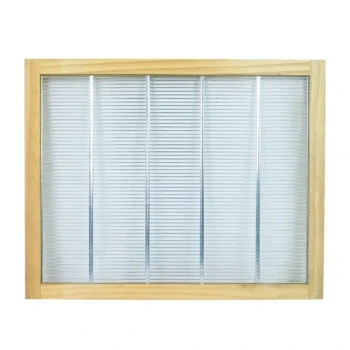
Wire excluders rely on accurately spaced parallel wires. Molded plastic excluders use formed or molded slots that must remain consistent across the grid.
Bent wires, damaged plastic, distorted frames, or manufacturing variation can create openings that do not perform as intended.
Orientation and fit matter
The excluder should sit flat and cover the full passage between the brood chamber and supers. Gaps around the perimeter can allow the queen to bypass the grid entirely.
For commercial operations, compatible hive dimensions, rigid construction, and reliable frame fit are as important as the nominal slot measurement.
Understanding the Trade-offs
Worker movement may be slowed
Even correctly sized excluders add a physical passage between hive bodies. Colonies may move through them more slowly than through an unrestricted hive opening, particularly when the excluder is newly installed.
This can affect how quickly workers occupy newly added supers, so placement and colony strength should be managed carefully.
Drones are generally blocked as well
Drones are larger than worker bees and are normally unable to pass through standard queen-excluder openings. This is a functional consequence of the size-selective design, not an indication that the excluder targets only the queen.
Incorrect spacing creates operational problems
An undersized opening can restrict worker traffic and reduce super occupancy. An oversized or inconsistent opening can allow the queen into the honey supers, defeating the purpose of the device.
Suppliers and commercial users should therefore evaluate published dimensions, material quality, dimensional tolerances, and field fit—not just the product name.
The excluder is not suitable for every colony situation
A weak colony may struggle to populate supers when worker movement is constrained. Beekeepers may also choose different management approaches depending on colony strength, nectar flow, brood arrangement, and local production practice.
The excluder is a management tool, not a substitute for adequate colony population and correct supering.
How to Apply This to Your Operation
The best choice depends on whether the priority is honey cleanliness, worker flow, equipment durability, or supply reliability.
- If your primary focus is brood-free honey supers: Use a correctly fitted excluder with approximately 4.0–4.2 mm openings to confine the queen below the harvest area.
- If your primary focus is worker access and colony performance: Select a precisely manufactured design that minimizes obstruction while maintaining consistent queen-blocking dimensions.
- If your primary focus is commercial purchasing: Compare slot spacing, dimensional tolerances, frame compatibility, material durability, and supplier fulfillment capability—not price alone.
- If your primary focus is operational efficiency: Standardize excluder specifications across apiaries so inspection, replacement, and inventory management remain simple.
- If your primary focus is broader hive management: Use the excluder as part of a planned system for queen location, brood control, requeening, and honey harvesting.
A properly dimensioned queen excluder turns a small difference in bee body size into a practical system for producing cleaner, more efficiently harvested honey.
Summary Table:
| Aspect | Worker Bee | Queen Bee | Slot Dimension |
|---|---|---|---|
| Abdomen Width | 3.2–3.5 mm | 4.4–4.5 mm | ~4.0–4.2 mm |
| Pass Through Excluder | Yes | No | N/A |
| Role in Hive | Collect nectar, store honey | Lay eggs in brood chamber | Barriers movement |
| Commercial Benefit | Maintains honey production | Prevents brood in supers | Ensures brood-free honey |
Ensure your honey supers stay brood-free with precision-engineered queen excluders. At HONESTBEE, we offer a full range of beekeeping equipment, including queen excluders with exact slot dimensions to meet commercial demands. As a one-stop supplier for apiaries and distributors, we provide premium products, fast delivery, and dedicated support. OEM/ODM services available. Contact us today at #ContactForm to source reliable equipment and boost your honey production efficiency.
Related Products
- High Performance Plastic Queen Excluder for Beekeeping and Apiary Management
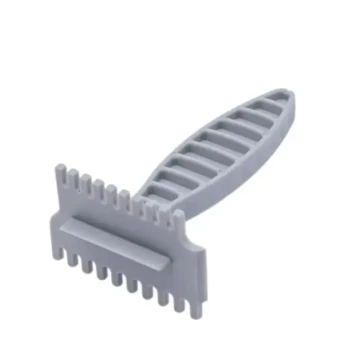
- Lightweight Durable Plastic Queen Excluder Scraper for Beekeeping
- Premium Wood Framed Metal Wire Queen Bee Excluder
- Professional Plastic Queen Excluder for Modern Beekeeping
- Metal Queen Bee Excluder for Beekeeping
People Also Ask
- What are the characteristics of a plastic queen excluder? Key Benefits for Cost-Effective Beekeeping
- What are the operational and cost advantages of using plastic queen excluders over metal or wire excluders in commercial hive management? Discover how they reduce labor, prevent wing damage, and lower total costs.
- What types of queen excluders are available for beekeepers? Choose the Right Tool for Your Hive
- Why are standardized hive frames and queen excluders essential for maintaining honey purity and quality? Scale Your Purity
- Do plastic queen excluders work? A Cost-Effective Solution for Modern Apiaries